When passengers board a plane, most of the communication taking place in the cockpit remains well out of earshot. Behind the scenes, pilots and air traffic controllers use a range of codes and terms designed to convey information quickly and precisely, particularly when something goes wrong during a flight. Some are numerical codes entered into a device called a transponder, while others are calls made over the radio.
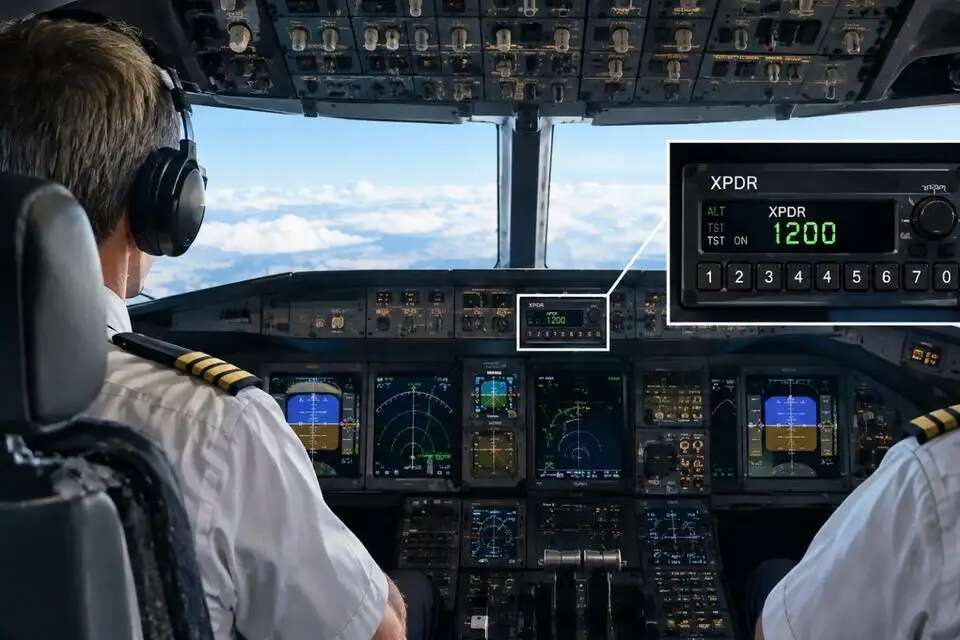
One of the best known is a "squawk," a four-digit code entered into the aircraft's transponder. The code allows air traffic control systems to identify and track the aircraft. Modern transponders also transmit information such as the aircraft's altitude and, in some systems, additional data about the plane. The codes use only the digits zero through seven, allowing for 4,096 possible combinations.
Air traffic controllers generally assign each aircraft its own code based on the flight and the airspace through which it is traveling. Several special codes, however, are reserved for emergencies and recognized internationally.
7500: Hijacking or unlawful interference
The best-known and perhaps most chilling of these codes is 7500. When a pilot enters it into the transponder, the aircraft is signaling to air traffic controllers that it is being hijacked or is subject to another form of unlawful interference. The signal is intended to be as discreet as possible. Rather than announcing a hijacking over the radio, the pilot can transmit the warning through the transponder, alerting air traffic controllers and security authorities on the ground that something is seriously wrong.

7600: Radio communications failure
Code 7600 is used when an aircraft loses two-way radio communication with the ground. In such a case, the pilots cannot communicate with air traffic controllers by radio, but the transponder code allows them to signal the problem without voice communication. Once controllers identify the code, they can prepare for the aircraft to operate under established procedures for a communications failure.
7700: Emergency
Code 7700 is the general transponder signal for an aircraft emergency. It does not identify a particular malfunction but alerts air traffic controllers that the aircraft requires assistance or special handling. It can be used in a wide range of circumstances, including an engine malfunction, fire, a serious medical problem or a major technical failure. Once the signal is received, air traffic controllers can give the aircraft priority and coordinate its landing and any necessary assistance on the ground.
In one recent case, an easyJet flight from Glasgow, Scotland, was forced to return to the airport after a cabin crew member was injured during turbulence. Flight EZY439, which was headed to Jersey on March 29, 2026, activated the 7700 emergency code, and medical personnel were waiting when it returned to Glasgow. The code is also used in other cases involving technical malfunctions or situations requiring an aircraft to change its planned flight.
It is important to stress that seeing an aircraft squawk 7700 does not necessarily mean it is about to crash. It is a general indication of an emergency, many of which end with an otherwise routine and safe landing.

What does "Mayday" mean?
Alongside numerical codes, pilots also use specific terms in radio communications. The best known is "Mayday," which is normally spoken three times in succession. Mayday is a distress call transmitted by an aircraft crew to air traffic controllers when there is a serious and imminent danger to the aircraft or those aboard and immediate assistance is required.
For example, in July 2025, United Airlines Flight 108, traveling from Washington Dulles International Airport to Munich, suffered an engine problem shortly after takeoff. The pilots issued a Mayday call and subsequently returned to Dulles, landing safely. All 219 passengers and 11 crew members left the aircraft safely.
In such a case, a Mayday call does not replace squawk code 7700. The two can be used simultaneously: Mayday is a verbal distress call transmitted by radio, while 7700 is an electronic signal transmitted by the aircraft's transponder and displayed on air traffic control systems.
PAN PAN: Urgent, but not a distress situation
There is also an intermediate category for problems that require attention but do not constitute an immediate distress situation. In those circumstances, pilots may use the call "PAN PAN," which is also normally repeated three times. PAN PAN indicates an urgent situation. It can be used when an aircraft is dealing with an incident requiring attention or priority but one that does not pose the same level of immediate danger as a Mayday situation.
On July 15, 2025, for example, easyJet Flight EZY8520 from Funchal, Madeira, to London Gatwick issued a PAN PAN call after a suspected bird strike. The crew requested a continuous descent and a clear runway ahead of landing. The aircraft ultimately landed safely.
What about "Code 300" and "Angel"?
Airlines also use internal codes to communicate discreetly aboard an aircraft or between crew members. Terms reported within the industry include "Code 300" and "Angel," which are used by some airlines in connection with a serious medical incident aboard a flight.
Unlike 7500, 7600 and 7700, however, these are not universal aviation codes. Their meanings can vary from one airline to another, so there is no reason to assume that every pilot or cabin crew around the world would use them in the same way.
1200 or 7000: Not every code is cause for concern
It is also worth remembering that not every number displayed by a transponder signals a problem. Pilots routinely use transponder codes during normal flights. In the US and Canada, for example, 1200 is commonly used for flights operating under Visual Flight Rules, or VFR, when the aircraft is not receiving certain air traffic control services.
In many European countries, 7000 is commonly used as a conspicuity code by aircraft not receiving an air traffic service. When an aircraft is under air traffic control or flying under an Instrument Flight Rules flight plan, controllers will generally assign it a specific transponder code.