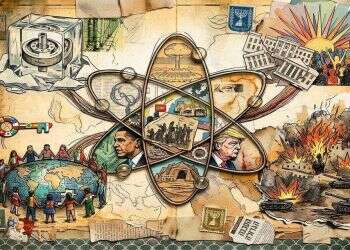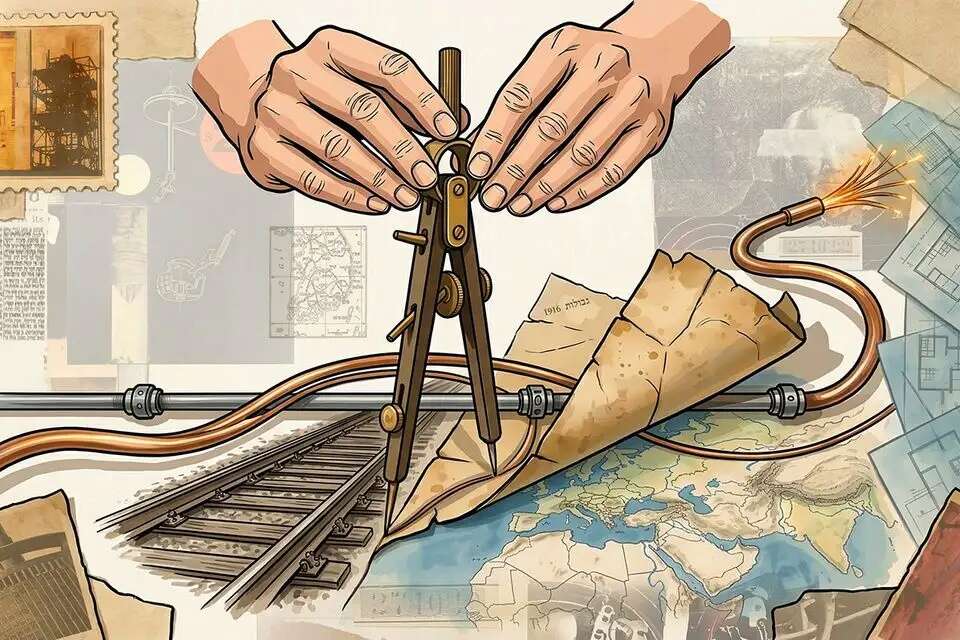
To understand the magnitude of this moment, Israel first needs to change the map.
The "Middle East" is a colonial term. It describes our region as seen from London: east of Europe, midway on the road to India. But the map now being spread across decision-makers' desks in New Delhi, Abu Dhabi and Baku is different. It is the map of West Asia.
On that map, Israel is not the western edge of a hostile region. It is the Mediterranean gateway to the fastest-growing continent in the world. The distinction is not semantic. It determines who the partners are, where the corridors run and where capital flows.
The term itself has a birth certificate. "Middle East" appears to have emerged in the mid-19th century in Britain's India Office in London as a bureaucratic designation for the territory between the "Near East" and the "Far East." It gained prominence in 1902 when American naval strategist Alfred Thayer Mahan wrote in London's National Review of "the Middle East, if I may adopt a term which I have not seen."
Mahan was not interested in the peoples who lived here or in their cultures. He defined the region around the Persian Gulf as a passage Britain had to control in order to block Russia's route toward India. In other words, the name we have carried for more than 120 years was devised to describe a corridor to India as it appeared from London.
There is poetic justice in the fact that modern India, one of the rising powers of this century, increasingly refers to the region by what may be its more natural geographic name: West Asia. The corridor has become a destination, and the map is coming home.
On this map, Israel's relevant neighbors are not merely the countries that share its borders, but those that trade with it and will shape the region's future: India, with its 1.4 billion people and an economy expected to become the world's third-largest by the end of the decade; the Gulf states, deep into an overhaul of their energy-based growth model and, for the first time in their modern history, having absorbed extremely painful military blows from Iran and its proxies; and Central Asia and the Caucasus, awakening from a century-long slumber.
Amid the conceptual paralysis that still grips much of the international system, all are trying to forge alliances that can lay the foundations for a new and sustainable economic and diplomatic order.
At the beginning of the Jewish year 5784, Israel entered a war. More than 1,000 days have since passed in which Israel and its partners have wielded force on a scale and with a sophistication we had not previously known: Hamas has been gravely weakened; the war plan against Hezbollah was put into effect, leaving it critically wounded and increasingly isolated; the Assad regime collapsed; and, of course, Israel demonstrated its willingness to confront the source of the axis itself, Iran's authoritarian regime, on Iranian soil.
The axis that threatened to strangle Israel from five fronts has broken apart. Those 1,000 days were not "another round." They were a turning point. The actor that defined West Asia over the past decade, Iran and its proxies, has been knocked from its position of strength, creating a strategic vacuum into which power, capital and infrastructure are now rushing. But vacuums, by their nature, do not wait. The country that created one is not necessarily the country that will fill it.
Options have expiration dates
That is the uncomfortable truth at the opening of the Jewish year 5787: Israel paid the blood price that created this opportunity, while others are racing to capitalize on it.
Ankara offers the clearest and most impressive example of competitive adaptation. Turkey moved quickly to recover from the blow it suffered on Feb. 28, 2026, and to reorganize its sources of power around a calibrated and relevant strategic idea. Its veto over the deployment of Kurdish forces in the Israeli war plan and NATO's convening in Ankara tell the story of an adaptive state determined to press ahead with its neo-Ottoman strategy.
Turkish President Recep Tayyip Erdoğan, who declared in 2023 that there could be "no corridor without Turkey," has not limited himself to rhetoric.

Turkey is vigorously promoting the Development Road from Iraq's Grand Faw Port to Europe, a project involving Qatar and the United Arab Emirates; it is positioning itself as the land bridge between Asia and the Mediterranean through the Middle Corridor from Central Asia; and it stands to benefit from the new Caucasus corridor, agreed under US auspices, linking Azerbaijan to Nakhchivan and onward to Kars in Turkey. Every kilometer of track laid is another hard fact established on the ground.
The corridor that was supposed to run through Israel, meanwhile, remains stalled. The India-Middle East-Europe Economic Corridor, known as IMEC, was announced at the G20 summit in New Delhi just weeks before Oct. 7, 2023. Yet by mid-2026 it still lacked binding financing commitments and implementation timetables.
Worse, Haifa Port, which is supposed to serve as the corridor's gateway to Europe, is the bottleneck in the entire project, the smallest link in the chain, with annual capacity of only about 1.5 million containers. While Israel's rivals lay railway tracks, we hold talks.
Turkey is not alone in this. The Gulf states are positioning themselves as financiers and operators of reconstruction in Syria and Lebanon, using economic and diplomatic activism to shape the space from which we drove Iran out.
China, hurt by the closure of the Strait of Hormuz and disruptions in the Red Sea, is accelerating investment in alternative overland routes.
Even Greece and Cyprus, our natural partners, are moving ahead with electricity and data connections eastward at a pace that embarrasses the Israeli bureaucracy.
Everyone understands the magnitude of this moment. The only question is whether Israel does. History is unforgiving toward countries that win the war and lose the day after. Military power bought us an option, yet options have expiration dates. The Jewish year 5787 must be the year in which we exercise it, in three fronts.
The return of chokepoints
To understand just how important this is, we need to look beyond our own fronts.
What happened in Hormuz did not remain in Hormuz. The closure of the strait and the US campaign to reopen it taught every capital in the world the same lesson: Chokepoints are back at the center of geopolitics, and freedom of navigation can no longer be taken for granted.
The world's attention immediately shifted eastward to the Strait of Malacca, through which roughly one-quarter of global trade and about 30% of seaborne oil pass. Its closure has long been one of Beijing's strategic nightmares.
On April 13, days after the ceasefire in Hormuz, the United States and Indonesia signed a major defense partnership expanding Washington's operational access around the strait. Within days, a US expeditionary sea base had already passed through it.
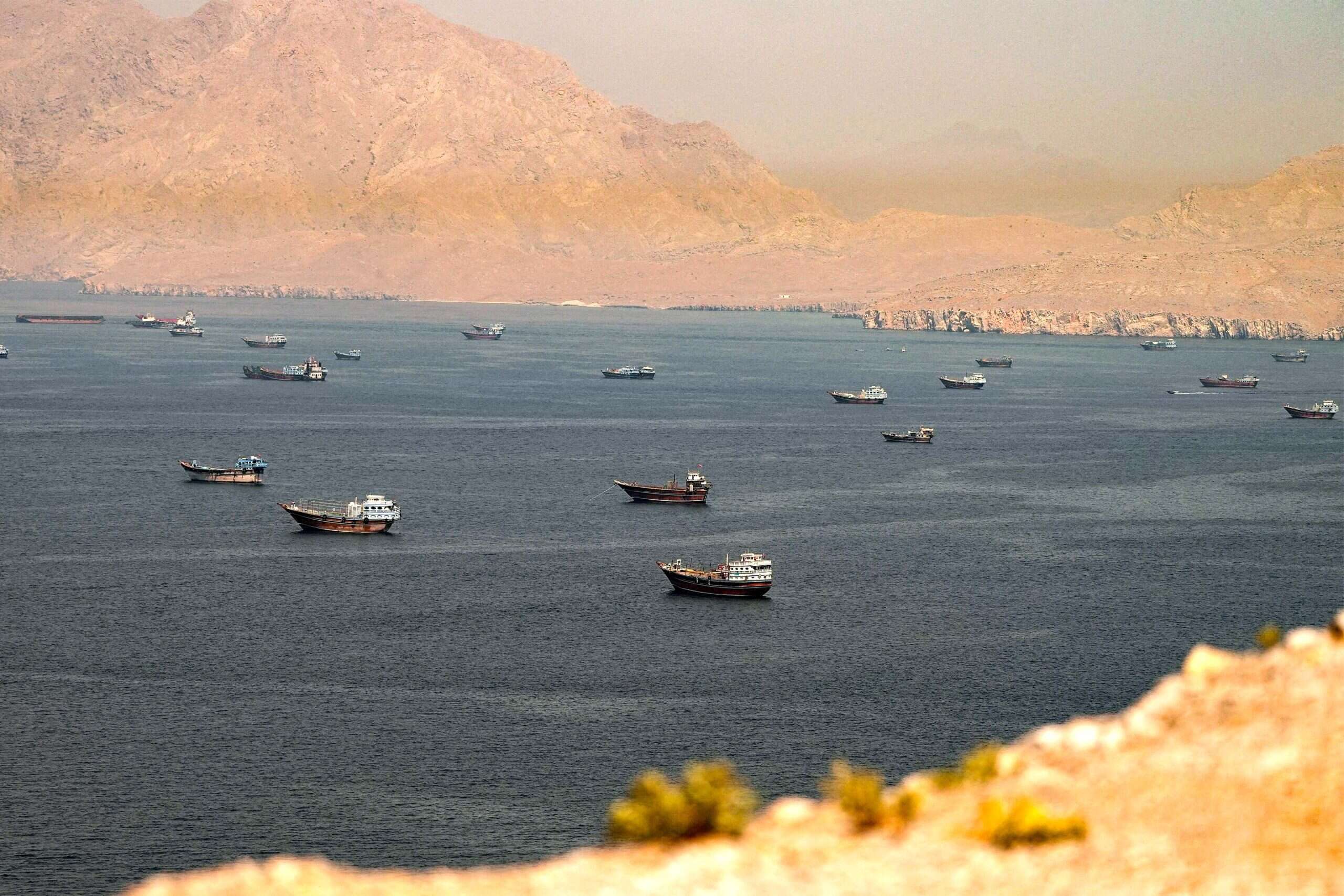
Hormuz was the first campaign. Malacca is preparing for the second.nAround the strait, every major player is changing shape.
Japan has changed prime ministers and is changing policy. Sanae Takaichi, who won a sweeping snap-election victory in February, is leading Japan through its deepest security transformation since World War II.
Within months, her government eased restrictions on the arms industry, established a national intelligence bureau, deployed long-range missiles on Kyushu that place parts of China itself within range, and pushed for revision of Article 9, the pacifist clause in Japan's Constitution.
At the same time, Tokyo is tightening its alliance with Washington, upgrading its security partnership with Australia and has signed its first-ever joint defense development project with India. And in Tokyo, a debate once considered taboo for generations is now taking place openly: the role of nuclear weapons in national security.
India is not waiting either. It has accelerated a $9 billion project on Great Nicobar Island, at the southwestern end of the Andaman and Nicobar island chain, overlooking the western entrance to the Strait of Malacca. The project includes a vast transshipment port alongside a military-grade airport.
India is building a position for itself at China's chokepoint, exactly as Mahan taught the British 120 years ago.
Japan's revolution is not merely military. It is monetary. And here lies one of the biggest stories of the year: the decline of one of the world's defining financial strategies, the yen carry trade.
For roughly three decades, Japan was the world's faucet of nearly free money. Borrow yen at almost no cost, buy dollar-denominated assets and pocket the difference. Trillions of dollars in global liquidity were built on one assumption: Japanese interest rates would never meaningfully rise.
That assumption has collapsed. The Bank of Japan pushed interest rates higher, bond yields climbed to levels not seen in decades, and the world had already received a preview of what an unwinding could look like when a Japanese rate increase in 2024 helped send Japanese stocks plunging roughly 20% within days.
This summer, the yen touched 164 to the dollar, near multidecade lows, ultimately prompting extraordinary efforts by Washington and Tokyo to stabilize the currency.
Another stone in the wall of the old order is crumbling. And what is China doing, with Malacca as its historic vulnerability? A large share of China's imported oil passes through the strait, and Beijing is quietly preparing for a world in which that artery could be closed. It is doing so on three fronts.
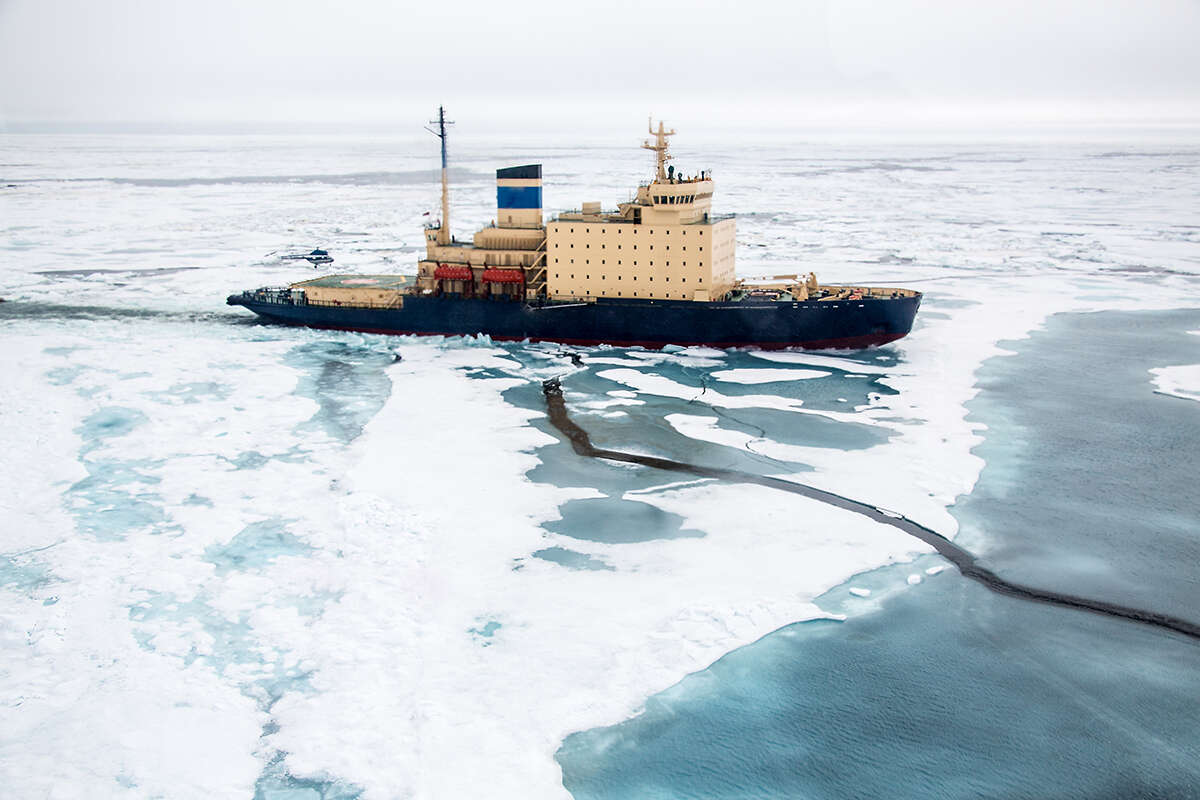
The first is geographic. This summer, a Chinese company launched a regular container service using the Northern Sea Route, sailing from Ningbo toward Britain in roughly half the time required for conventional routes, assisted by Russian icebreakers. Arctic traffic is increasing, while South Korea has already adopted legislation aimed at turning Busan into an Arctic shipping hub. The frozen north is becoming Beijing's Malacca bypass.
The second front is financial. In August, the People's Bank of China appointed Deutsche Bank as the first foreign bank in Europe designated to serve as a renminbi clearing bank, another step in Beijing's systematic, multiyear effort to construct global financial infrastructure less dependent on the dollar.
The third is the most troubling. China's military preparations around Taiwan continue at full speed, and the question being whispered in Washington and Tokyo, whether 5787 could be the year of a move against Taiwan, is no longer merely theoretical. A country building an alternative route for goods and an alternative route for money may be preparing for the day when it needs both.
The conclusion is at once humbling and liberating: What is happening is bigger than Israel. From Kyushu to Nicobar, from the Baltic to Bab el-Mandeb, the entire world is rebuilding the architecture of power around chokepoints, supply chains and trust.
We are not the whole story. We are one front, the western front of West Asia. But that understanding is precisely what makes action so urgent. The tide is global, and it will pass through our region, one way or another. The only question is whether it passes through us or around us.
The Diamond Axis
The first front is the diplomatic one, centered on what I call the "Diamond Architecture": India, Azerbaijan, Greece and Cyprus, the Horn of Africa, with the United Arab Emirates at its heart.
This is not a theoretical vision.
Trade between India and the UAE has already crossed $100 billion annually. Abu Dhabi is among the region's most aggressive investors in ports and logistics infrastructure. Azerbaijan, Israel's longtime oil supplier, has become a Caucasus hub for energy and transportation as plans for a trans-Caspian corridor advance.
And here lies a productive paradox: The more aggressively Turkey seeks to establish itself as West Asia's land-transport monopoly, the stronger the incentive becomes for every link in the diamond to develop a route that bypasses Ankara.
India is concerned by Turkey's close relationship with Pakistan. Greece and Cyprus live with their maritime disputes with Turkey. The UAE remembers Ankara's support for the Muslim Brotherhood. Even Baku, despite its alliance with Ankara, has an interest in diversifying its dependencies. Turkey, without intending to, is to some extent the glue holding the diamond together.
Israel's task in 5787 is to turn those common interests into institutions: a permanent trilateral forum with India and the UAE, infrastructure and energy agreements with Baku, and the transformation of Indian Prime Minister Narendra Modi's visit and the momentum surrounding it into a work plan with budgets and deadlines.
The Syrian front is extremely important in this context. Any arrangement there should be understood as an arrangement with Ankara, not merely with Damascus.
There is also a lesson here about the nature of foreign policy in the present era. Ceremonial agreements signed on the White House lawn are moments. Railways, pipelines and cables are realities.

The Abraham Accords were the breakthrough of the previous decade. The breakthrough of 5787 must be infrastructural: connecting the diplomatic moment to steel, concrete and fiber-optic cable before the window closes and before others determine the route without us.
The world is moving toward us
The second front is technological, and here the numbers tell an extraordinary story.
In the first half of 2026, in the midst of the war with Iran, Israeli technology companies raised billions of dollars, with fundraising rising from the corresponding period a year earlier. Cybersecurity investments more than doubled, reaching roughly $2.6 billion and accounting for more than one-third of fundraising.
Google completed its acquisition of Israeli-founded cybersecurity company Wiz in the largest transaction in the history of Israeli high-tech, while the overall volume of mergers and acquisitions climbed into the tens of billions of dollars. And perhaps the most striking figure is this: Israeli defense-tech, space and quantum companies raised in six months almost as much as they did in all of 2025.
Anyone looking for a measure of how global and all-encompassing this technological race has become need only look at one strange statistic. The price of a cynomolgus macaque used in clinical research in China has nearly doubled or more within a year in some transactions, rising to around 200,000 yuan, close to $30,000 per animal, as the number of clinical trials in China exceeded 5,000 for the first time.
A senior figure in China's biotech industry compared the scramble to secure laboratory monkeys to negotiating with Nvidia for chips. When the technological race reaches all the way down to the price of a primate, you understand that technology is no longer a sector. It is the economy itself.
China now accounts for a major share of the world's innovative drug-development pipeline. What these figures reflect is not merely resilience, they reflect an extraordinary alignment between where the world is going and where Israel already is.

Three revolutions defining this decade, artificial intelligence, the security of autonomous systems and defense technology, sit at the core of Israel's competitive strengths. When every organization in the world asks itself how to control AI agents operating across its network, many of the answers are being written in Tel Aviv and Beersheba.
When Europe boosts defense spending, many of the defensive systems that have proved themselves under fire are Israeli. This is what I have previously called the "Silicon Dome": technological sovereignty in the defining fields of intelligence, quantum computing, space and robotics as a pillar of national security.
5787 must be the year in which Israel transforms that advantage from a collection of brilliant companies into a national asset: domestic electricity generation and computing power on a strategic scale, scientist visas and a policy designed to bring the development centers of the world's AI giants here.
But the other side of the equation cannot be ignored: Capital is concentrating in fewer hands. The number of fundraising rounds has fallen sharply, and investors increasingly favor serial entrepreneurs and proven business models. That means Israel's engine is powerful, but narrow.
A country that wants this growth to spread throughout the economy must invest in the pipeline: mathematics and technology education in the periphery and in communities that have yet to participate fully in the boom, integrating ultra-Orthodox Jews and Arab Israelis into the high-tech core, and drastically shortening the road from PhD to startup.
The technological opportunity of 5787 is not simply to raise another billion dollars, it is to grow the base of the pyramid on which everything lays.
The beat of the drone's wings
The third front is largely invisible, and perhaps the biggest of all.
Globalization as we knew it is breaking apart before our eyes, and the numbers are stark. UN Trade and Development projects that growth in global merchandise trade will plunge from 4.7% in 2025 to between 1.5% and 2.5% in 2026. For the first time, geopolitical instability has overtaken trade policy as the leading source of uncertainty in the global economy.
China has lost significant market share in US imports since 2018. US imports from Vietnam have multiplied, while imports from Mexico have risen dramatically. Global trade is reorganizing itself into blocs of trust.
Two seemingly unrelated indicators illustrate the depth of the fracture.
The first: After Ukrainian drones knocked significant portions of Russian refining capacity offline and pushed output to multidecade lows, Moscow banned diesel exports. Diesel prices in the United States climbed above $5 a gallon. A drone striking a refinery in Ryazan can move prices at a gas station in Ohio.
The second: Central banks bought a record 289 metric tons of gold in the second quarter of the year, continuing a multiyear trend of heavy official-sector purchases as gold prices reached extraordinary highs.
What is driving them? The defining moment was the freezing of roughly $300 billion in Russian central-bank assets in 2022.
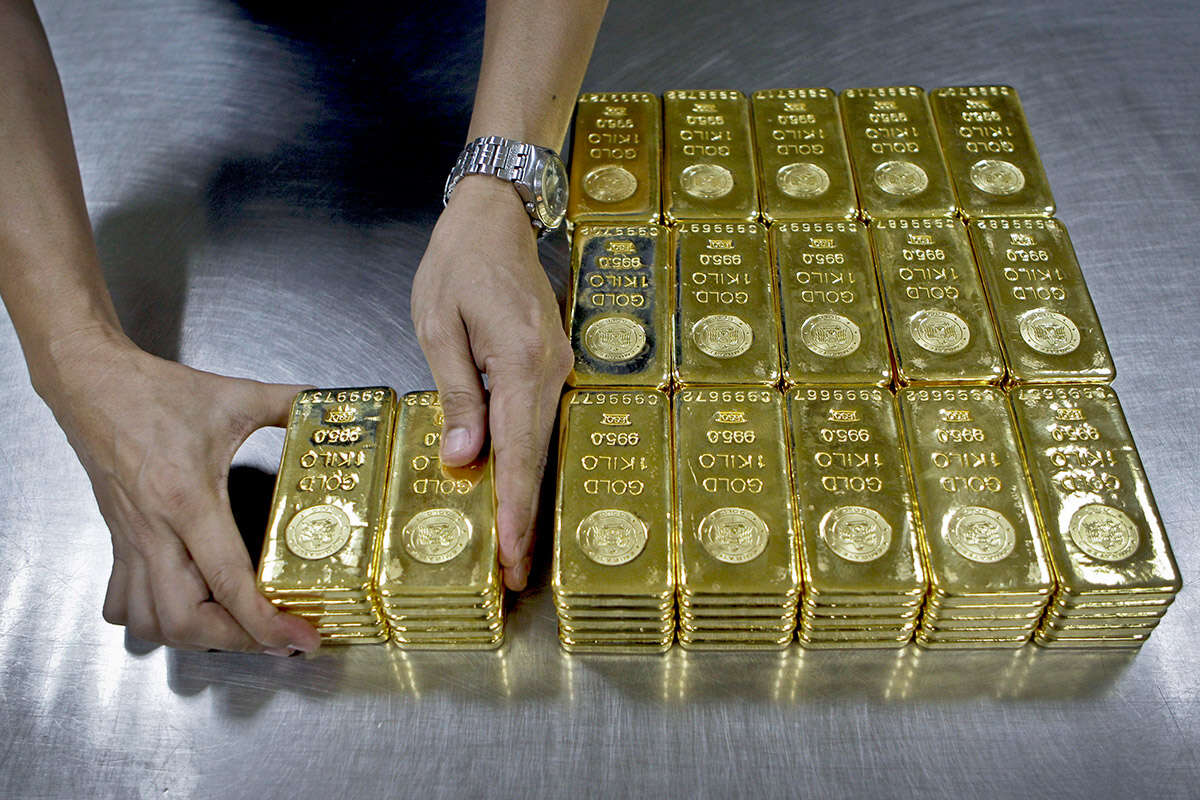
The world learned that dollar reserves can be frozen. Gold cannot. The rush into gold is a thermometer for the world's hunger for trust. The organizing principle of the global economy has changed: from producing goods wherever it is cheapest to producing them wherever it is safest, even at a premium.
In such a world, the scarcest resource is not cheap labor or capital. The scarcest resource is trust. And therein lies Israel's opportunity: to become West Asia's hub of trust.
Semiconductors and critical components manufactured in a Western democracy at the heart of the region. Desert agriculture and water and food technologies for a world rediscovering the fragility of food supply chains. Undersea cables and overland data routes that bypass chokepoints. An overland corridor from the Gulf to Haifa that turns Israel into a transit platform. All require one thing the private market cannot produce on its own: government decisions, infrastructure and regulation.
There is also a profound security dimension. A supply chain is a weapon. That is one of the lessons the world has learned in recent years, from semiconductor production in Taiwan to the pagers in Lebanon. A country positioned at the crossroads of flows of goods, energy and information does not merely collect transit fees. It acquires resilience and deterrent power. If our neighbors depend on infrastructure running through Israel, that dependence becomes a form of insurance no missile system can provide.
A year of audacity
At Rosh Hashanah, Jewish tradition includes the wish: "May the year and its curses end; may the year and its blessings begin." But in the history of nations, blessings are not simply received, they are realized.
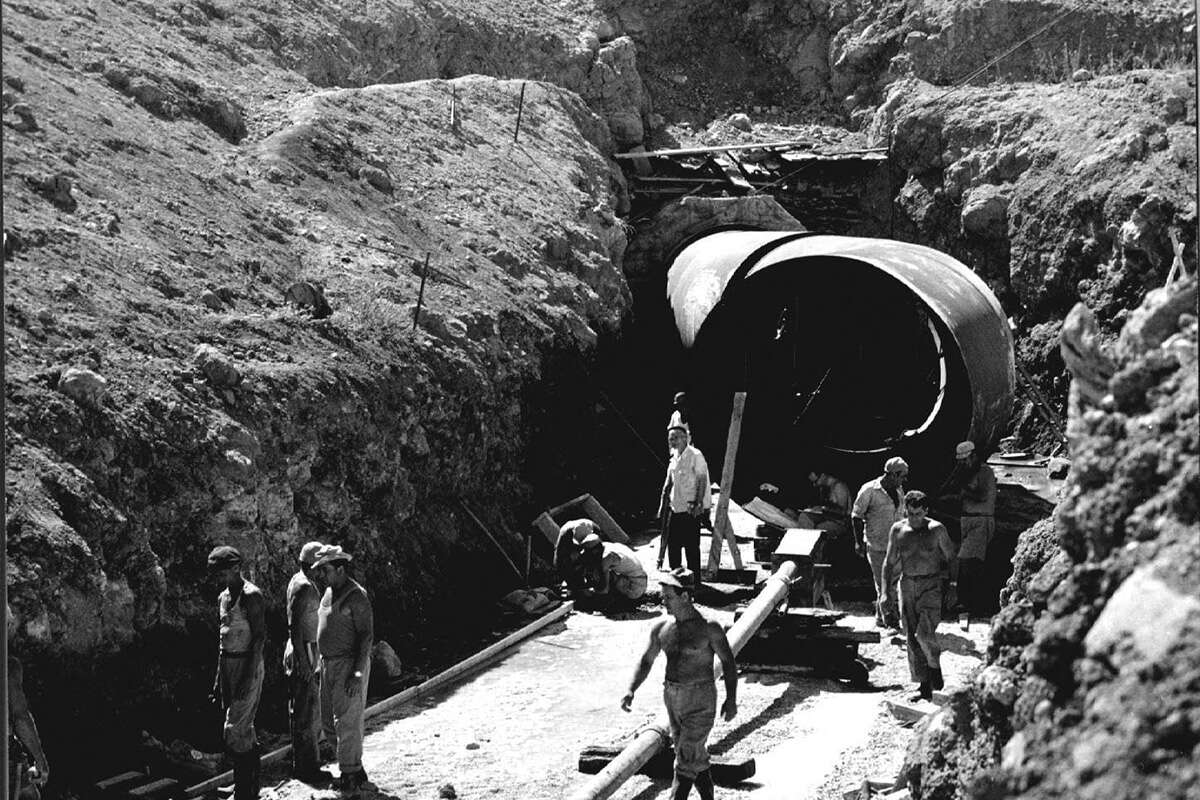
Israel's founding generation understood that. David Ben-Gurion, after roughly 1% of the Jewish population of Mandatory Palestine and the newborn state was killed in the 1948 War of Independence, the equivalent of about 100,000 Israelis today, did not lean back, did not search for a "healing government" and did not wait for circumstances to ripen. He forced decisions upon those circumstances: a port, the National Water Carrier, a nuclear reactor.
The circumstances of 5787 are riper than ever. The only question is whether Israel can summon the same audacity. Realizing the opportunity created by these 1,000 days means making concrete decisions over the coming year.
First and foremost, it means curing the systemic decay in the public sector, with a willingness to pay costs today for genuine root-canal treatment and to prepare in advance for foreseeable scenarios, including another strike in the education system.
And yes, all of this is written in the knowledge that the war has not truly ended. Reservists are still being torn away from their homes, and our internal divisions remain deep. But that is precisely the point.
A nation capable of mobilizing itself for an unprecedented military effort must prove that it can mobilize itself for a constructive national effort on the same scale. That can also provide the internal glue we need: a national purpose built not merely around survival, but around construction.
5787 will not be judged by what we destroyed. It will be judged by what we build. May it be a year of realization.
The author is a geopolitical expert, co-founder of "Aleinu – The Founders' Grandchildren Generation," and author of the bestselling book "The Event Is Over: How History Punishes Those Who Stay on the Path."