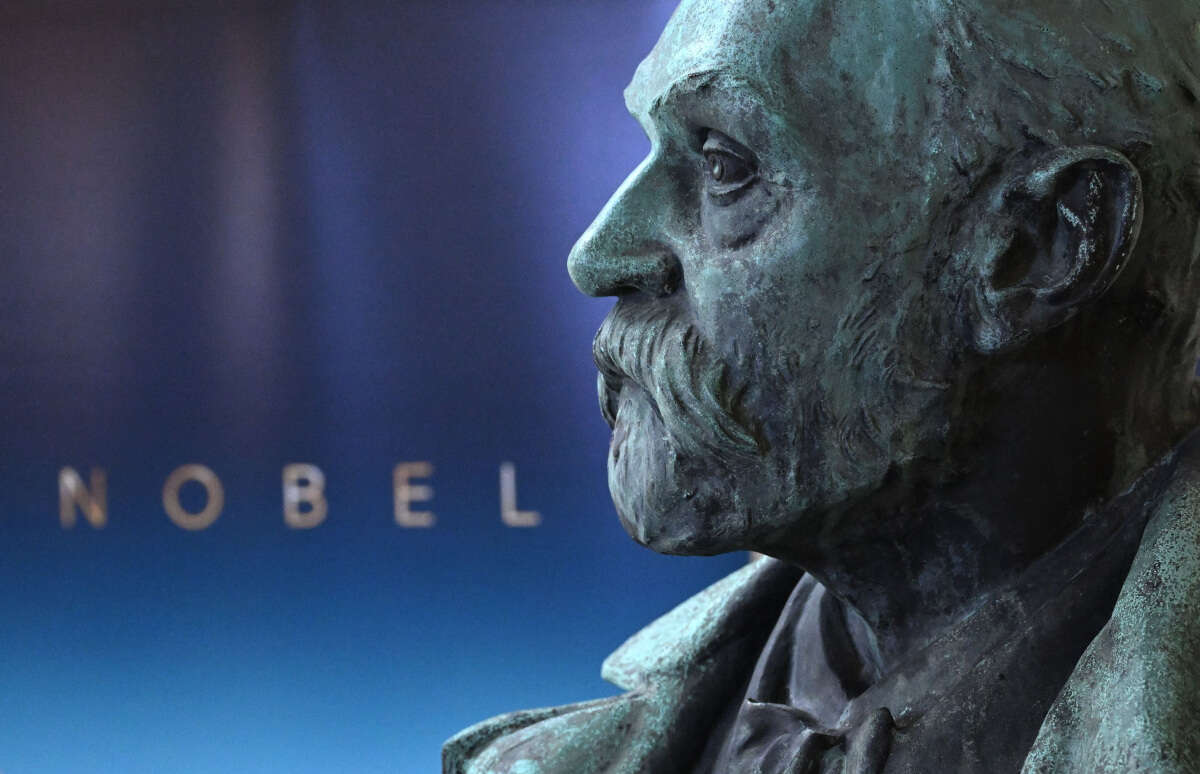
Henri Kagan alongside Kenso Soai secured the latest chemistry Nobel. Their achievement celebrated their research that helped determine how molecules "choose" its receptors in the human body, which is particularly applicable when trying to find out models before drugs are introduced on the market. "Their groundbreaking discoveries reshaped our understanding molecular chirality, how it is created, amplified, and transmitted." Chirality refers to the ability of molecules to be identical to its mirror image.
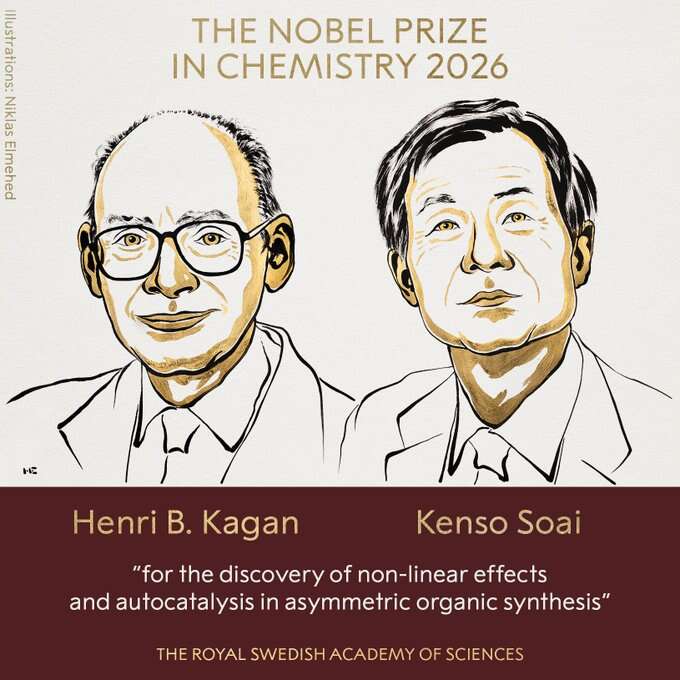
Administered via the Royal Swedish Academy of Sciences, the legendary honor includes a shared 12 million Swedish crowns ($1.2 million) payout. Revealing the decision online, the academy's official X account stated the researchers were selected "for the discovery of non-linear effects and autocatalysis in asymmetric organic synthesis."
Relying on Louis Pasteur's foundational discoveries, the 95-year-old French national and 76-year-old Japanese researcher transformed molecular engineering. Their methodology critically advanced safe drug manufacturing. Learning of his victory while shopping, Soai remarked, "This is the most exciting day in my life, I am very glad to share this prize with professor Henri Kagan," as organizers still sought to notify the French chemist.
Biological structures often mimic so-called right- and left-handed pairings, preferring one variant in a mystery called "homochirality". To prevent tragedies like the thalidomide birth defects – caused by a medication's harmful reversed twin – the laureates engineered reactions favoring a single orientation.
"The left-handed version of the drug can have one effect, and the right-handed version can have another effect, and then we need methods for selectively preparing them," Nobel committee representative Peter Somfai said. "In developing such methods the findings of this year's laureates are important. They provided powerful tools for that," he stated.
Pasteur initially recognized this phenomenon by observing microbes selectively fermenting specific tartaric acid variants in wine. However, manufacturing a desired chiral dominance remained impossible until Soai and Kagan engineered asymmetric synthesis techniques.