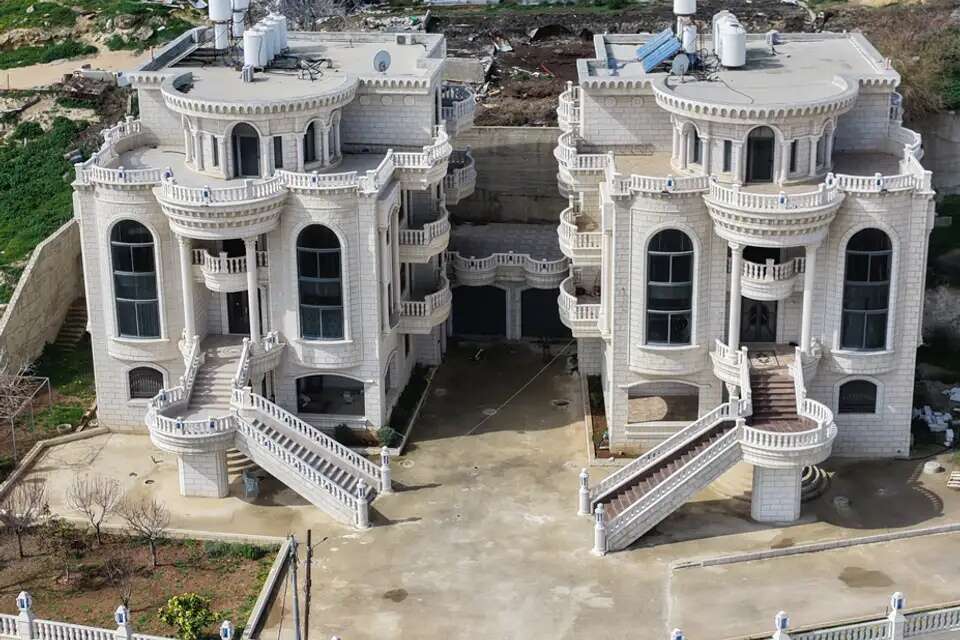
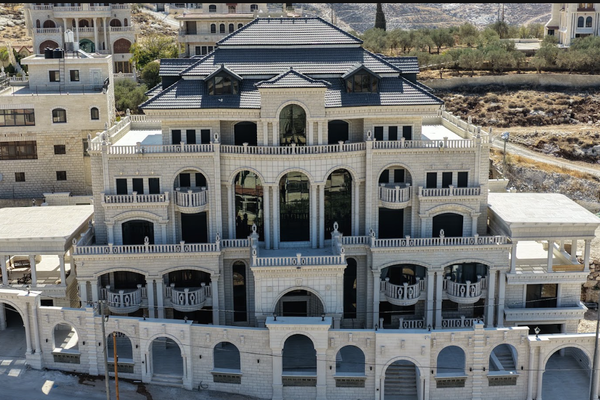
While international headlines frequently portray Palestinians in Judea and Samaria as living under conditions of poverty, hardship and humanitarian crisis, a new photography book from the Regavim Movement offers a strikingly different perspective. Titled Real Estate Under Occupation, the provocatively named architectural photo book showcases 100 luxury Palestinian villas and private estates across the West Bank, from sprawling mansions and swimming pools to landscaped gardens, decorative fountains and elaborate stone facades.
According to Regavim, every property featured in the book was documented during a single day of filming. "While the world is primarily exposed to reports of hardship and humanitarian crisis, we spent one day photographing what Europe chooses not to see," the organization said.
The project seeks to challenge what Regavim describes as a selective international narrative that overlooks the considerable private wealth found in some Palestinian communities, including areas routinely portrayed as symbols of poverty and oppression.
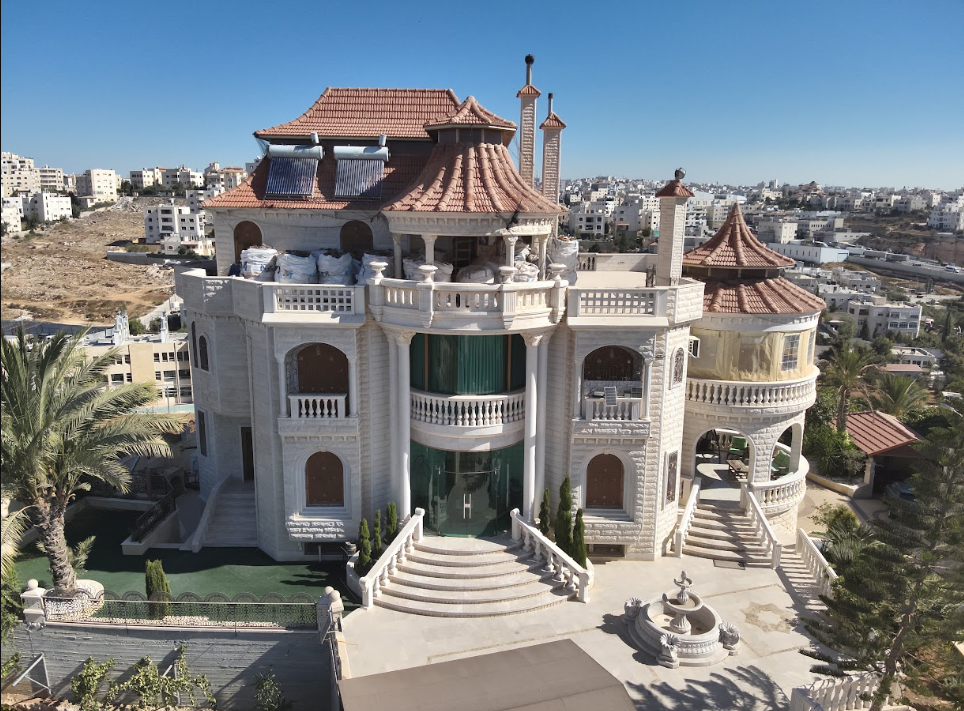
One day, 100 luxury properties
Regavim says its field researchers needed just one day and two drones to document the 100 properties, suggesting that the homes featured represent only a fraction of the luxury real estate found throughout the region. Among the properties photographed is an expansive 4,800-square-meter private estate in the Palestinian village of Shuqba, complete with a swimming pool, landscaped lawns, shaded entertainment areas and a vast private courtyard. In Nahalin, researchers documented a 1,120-square-meter neoclassical villa featuring seven balconies, a turret, an ornamental fountain and a decorative pool. In Khirbet Zif, the team photographed gated luxury compounds boasting swimming pools, meticulously maintained gardens, guest accommodations, saunas, advanced security systems and private access roads.
Elsewhere, the book features multistory villas with classical stone columns, electric gates, orchards and private parking facilities, offering a glimpse into a standard of living that many Israelis could only dream of affording.
The book's title, Real Estate Under Occupation, is deliberately sarcastic. Throughout its pages, Regavim juxtaposes photographs of luxury estates with terminology commonly found in international reports on Palestinian living conditions, including "oppression," "severe deprivation" and "daily hardship."
The organization emphasizes that it does not dispute the existence of poverty in Palestinian society. Rather, it argues that the international focus on deprivation offers an incomplete picture, one that influences public opinion and foreign policy while overlooking contrasting realities on the ground.
'The international media has two choices'
"The lives of Arabs in Judea and Samaria are far better than most people imagine," said Roey Druker, Regavim's Judea and Samaria regional director. "During my years working in the field, I've seen a reality completely different from the abject poverty described by international media: magnificent homes, incredible cars, sprawling estates and people living very well. Of course poverty exists, but it is far from the whole picture, and it certainly cannot all be blamed on Israeli control of the territory."
Druker said the project's scale was intended to demonstrate just how readily such properties could be found. "We went out for a single day of filming with two drones in different parts of Judea and Samaria to document 100 examples. But I want to emphasize that these are not isolated cases. We could photograph another 100 estates every additional day."
He added: "The international media has two choices: continue believing the narrative and closing its eyes to reality, or come into the field and see for itself what is really happening."
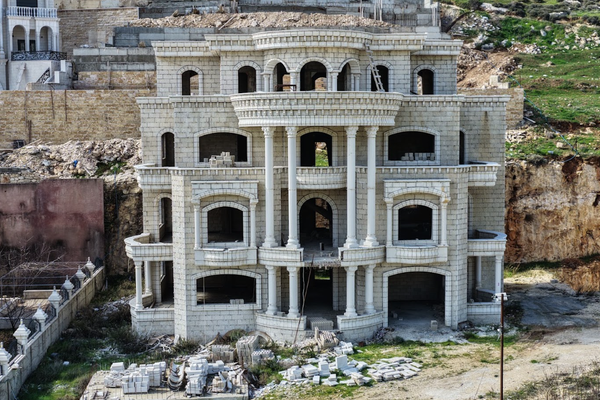
Naomi Kahn, director of Regavim's International Division, said the book was intended to challenge the assumptions underlying international policy toward the region. "For years, the international community has been fed a carefully orchestrated picture portraying Palestinian life in Judea and Samaria exclusively through the lens of poverty and oppression," Kahn said. "We decided to turn the camera toward the reality on the ground. In just one day of filming, we documented enormous villas, swimming pools and extraordinary private wealth, elements systematically erased from the prevailing narrative."
"International policy must be based on facts, not manipulation," she added. "Real Estate Under Occupation invites decision-makers and the public to see the full picture with their own eyes."