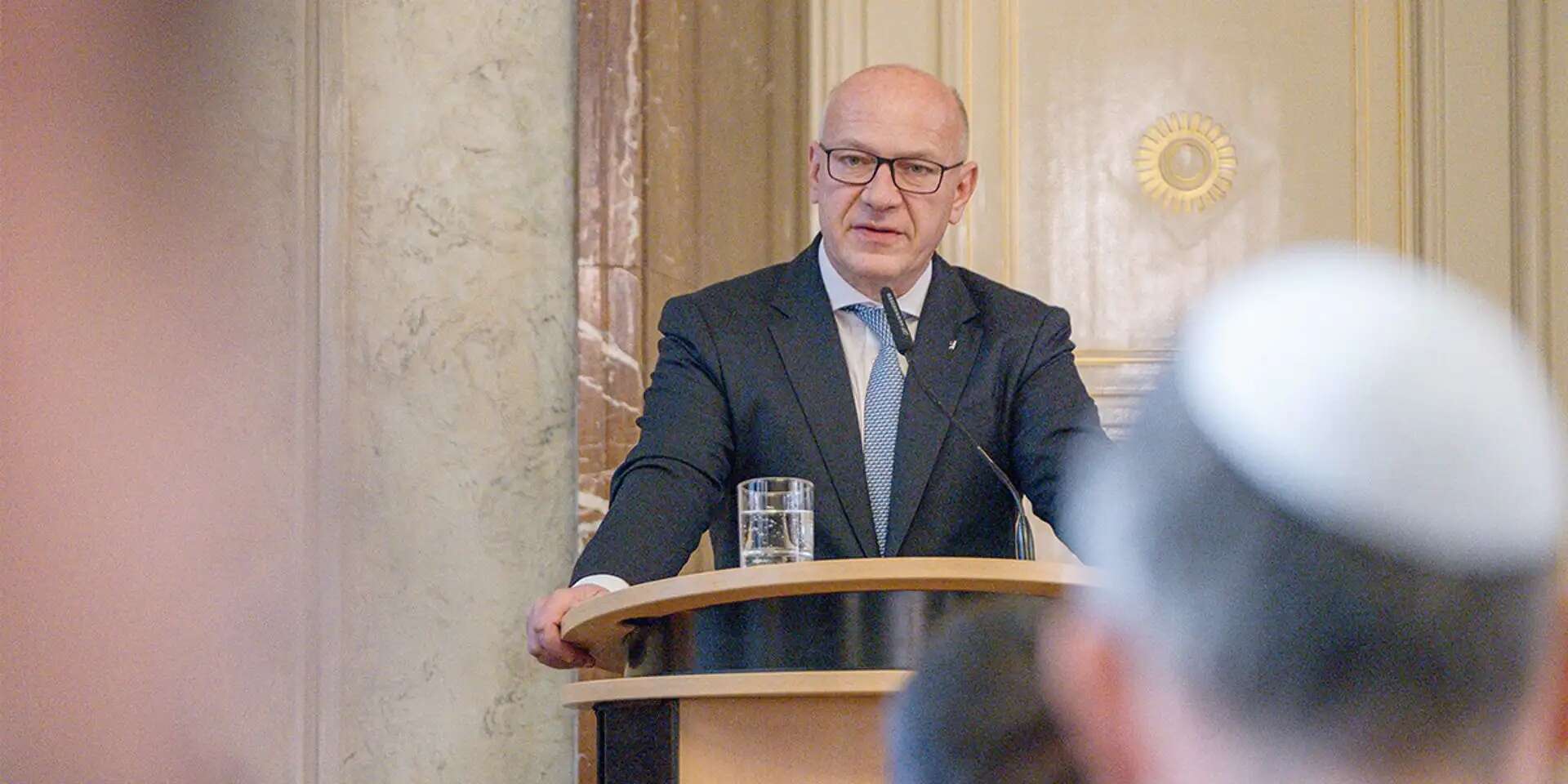
Berlin Mayor Kai Wegner stood before Shir Hermesh, listening to her story. Hermesh, whose brother Omer was murdered at Kibbutz Kfar Aza on the morning of October 7, described how she, her husband and their two young children, the younger of them just five days old, managed to survive the massacre. A wardrobe concealing the entrance to their home's safe room prevented the terrorists from finding them. Her brother Omer, a devoted Hapoel Tel Aviv soccer fan, did not survive.
Wegner wiped a tear from his eye. After the ceremony, he approached Hermesh, spoke with her at length and held her hands.
The encounter took place last week at Berlin's Red City Hall during the opening of Unbroken, an exhibition exploring Jewish and Israeli sports in the aftermath of the Hamas attack. Organized by the World Jewish Congress and Maccabi World Union, the exhibition commemorates, among others, amateur athletes, fans and sports figures murdered on October 7.
Three years earlier, in the days following Hamas' massacre in southern Israeli communities, as the world struggled to comprehend the atrocities, Wegner ordered the Israeli flag raised above City Hall. Since then, he has emerged as one of Germany's most prominent voices in support of Israel and the fight against antisemitism.
Now, however, after three and a half years in office, he is preparing to step down. His successor could be Elif Eralp of the radical left-wing Die Linke party.
In an exclusive interview with Israel Hayom in Berlin, conducted to mark the exhibition's opening, Wegner makes no attempt to conceal his concerns about the political upheaval taking shape. He warns that Die Linke's first-place finish in the city's recent elections could undermine the security of Jews and Israelis in Berlin and embolden antisemitic groups to intensify their activities.
'They no longer feel safe'
In the September 20 election to Berlin's House of Representatives, the city's state parliament, Die Linke won 25.7% of the vote, becoming the capital's largest party. Wegner's Christian Democratic Union (CDU) fell to 18.8%. The far-right Alternative for Germany (AfD) received 16.3%, the Greens 14.3% and the Social Democratic Party (SPD) 12.1%.
Together, Die Linke, the Greens and the Social Democrats hold 91 of the parliament's 153 seats. In early October, the three parties began exploratory talks on forming a governing coalition. An alternative coalition involving the CDU, Greens and Social Democrats remains possible, however.
One of the issues complicating the negotiations is the parties' positions on antisemitism and Israel. On October 8, the three left-wing parties reached understandings on the issue, including recognition of Israel's right to exist, clearing the way for talks to continue.
According to the Greens and Social Democrats, the agreement also stipulated that Die Linke would not admit the party's representative from the Neukölln district into its parliamentary group. Neukölln has a large population of Arab and Turkish descent, and the local Die Linke branch, whose activists' statements about Israel have sparked bitter controversy, is regarded as the party's most strongly anti-Israel faction.
Pressure intensified on October 12 when German Chancellor Friedrich Merz described Die Linke in Berlin as "particularly extreme and radical left-wing," called on the Greens and Social Democrats to end their talks with the party immediately, and warned that cooperation with it in Berlin could also strain the federal coalition he leads.
Nevertheless, the following day, Die Linke admitted the Neukölln representative into its parliamentary group. The Greens and Social Democrats suspended negotiations that evening.
Die Linke maintains that it did not violate the understandings, but the prospects for an Eralp-led coalition are now uncertain.
Three years after October 7, do you believe raising the Israeli flag and making those public statements left a lasting impact? Would you have acted the same way despite the political opposition that followed?
"I would take exactly the same steps again. For me, these were not symbolic gestures but an expression of where we stand. After the October 7 terrorist attack, a clear and unequivocal statement was needed: Berlin stands with Israel and with the Jewish people in our city. Difficult times reveal the depth of our convictions and values. I believe Germany, and Berlin in particular, has a responsibility to stand in solidarity with Israel and protect Jewish life. None of that has changed."
Antisemitism figures in the German capital are a showcase of this challenge. The Research and Information Center on Antisemitism (RIAS), which documents antisemitic incidents, recorded 2,197 incidents in Berlin in 2025, an average of six per day. Although that represented a decline from the 2,521 incidents documented in 2024, the figures remained substantially higher than before the Hamas attack. Berlin police recorded 2,268 antisemitic offenses in 2025, an increase of 24.3% over the previous year. The two organizations use different reporting and measurement methods.
I ask Wegner whether the growing strength of AfD on the Right and Die Linke on the Left, to the point where they are competing for political power, threatens Jewish life in Berlin.
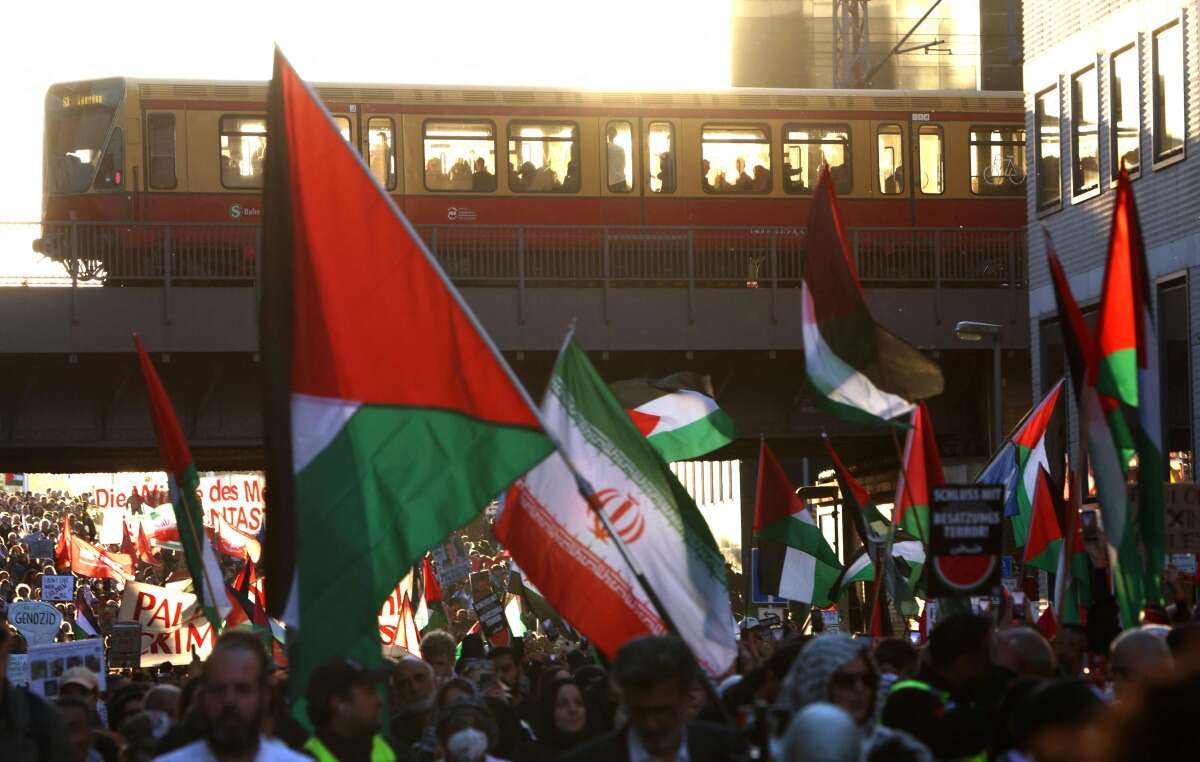
"Yes," he answers without hesitation. "I am very concerned about this development. Antisemitism comes from the Right and from Islamist circles, but there is also an aggressive form of Israel-related antisemitism coming from parts of the Left. I see a very serious problem of this kind within Die Linke in Berlin. It begins with denying Israel's right to exist and continues with tolerating antisemitic rhetoric or downplaying hatred of Israel among the party's own members. In this way, Die Linke contributes to creating an atmosphere in our city in which Jews no longer feel safe."
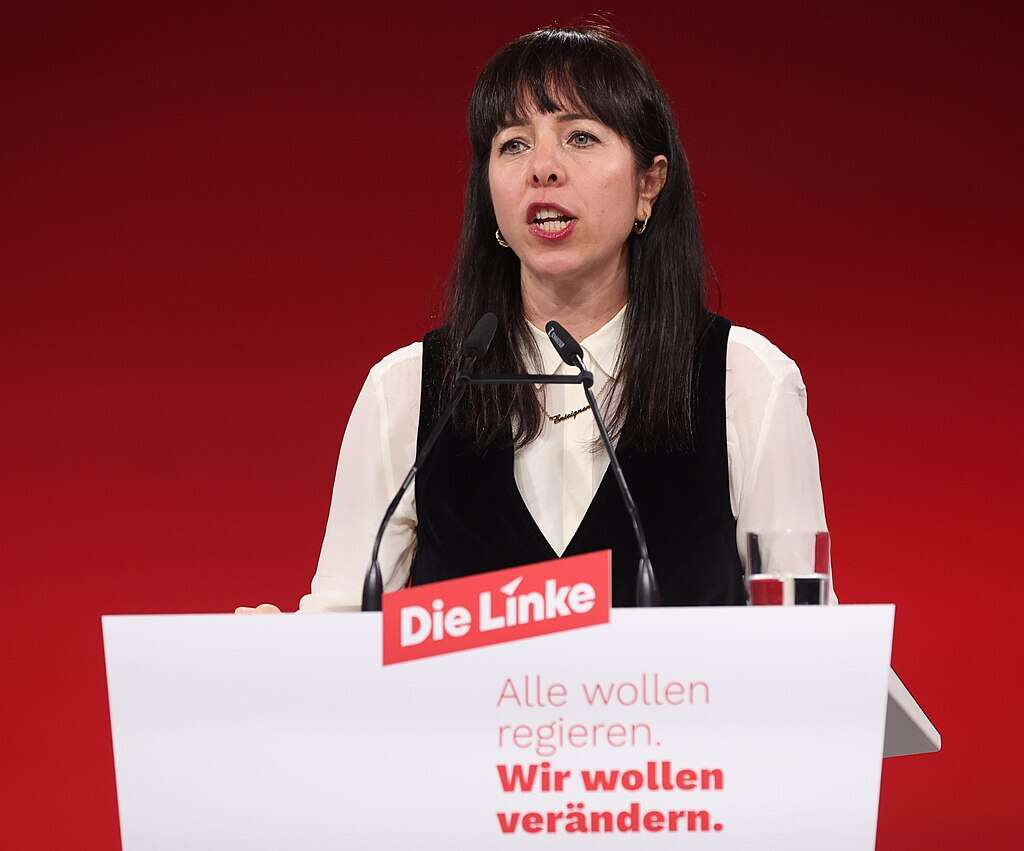
Eralp, Die Linke's candidate for mayor, has pledged to protect the Jewish community and has even presented a five-point plan on the issue. Yet significant differences remain within the party over Israel, particularly between its leadership and activists in certain local branches.
Eralp says she wants to promote Jewish life in the city, but very different messages are coming from the party's Neukölln branch. Which of those two voices can be trusted?
"You cannot separate Elif Eralp from the party branch in Neukölln. They are two sides of the same coin," Wegner says. "Factions within Die Linke in Berlin were elected not despite their positions on Israel and the antisemitism in their ranks, but because of them. If Die Linke demonstrated convincing and consistent support for Jewish life, it could lose precisely those voters."
And what about Eralp herself?
"I am not aware of a single serious action she has taken to date to combat antisemitism within her party. That includes her five-point plan to protect Jewish life, which is not worth the paper it is written on. I very much hope that, despite everything, this party never comes to power in Berlin. It is now up to the Greens and the SPD."
Wegner attributes some of Die Linke's electoral support to anti-Israel positions, but the rival party rejects the allegation that it tolerates antisemitism within its ranks. The Central Council of Jews in Germany has also expressed concern over statements by Die Linke members and called on the party to take action against them.
Would a left-wing coalition led by Die Linke endanger Jewish and Israeli life in Berlin?
"Yes, I see it as a threat. Not only because of the problematic positions within the party itself, but also because of the message a Die Linke-led government would send. I fear that antisemitic and anti-Israel forces in Berlin would feel emboldened, push the boundaries even further and adopt a more aggressive stance. But a city like Berlin needs precisely the opposite. We must protect Jewish and Israeli life and fight antisemitism, regardless of which political or social group is responsible for it."
From Berlin to Germany as a whole
Die Linke's gains in Berlin come as AfD is also gaining ground elsewhere in Germany, particularly in the country's east. In Saxony-Anhalt, the far-right party won nearly 44% of the vote in September's state election. Both developments have confronted Germany's centrist parties with an increasingly complicated political landscape.
For years, Germany has debated the political Brandmauer, or "firewall," intended to prevent cooperation with AfD. The approach to Die Linke has been different, partly because the party has already participated in governing coalitions at the local and state levels.
For Wegner, however, the positions held by elements within Die Linke on Israel mean that the Greens and Social Democrats must also draw clear boundaries.
How can Germany break free of the pressure exerted by the far Right and far Left? Is the political firewall about to collapse?
"I believe what is happening in Berlin now will have consequences for Germany as a whole. If the Greens and SPD pave the way for Die Linke, which has become increasingly radical, to enter the Red City Hall, it will turn the entire political landscape upside down. The very fact that the current discussions are raising the question of how much antisemitism can be tolerated illustrates the seriousness of the problem. I am absolutely convinced that the parties of the democratic center cannot afford to abandon their principles under pressure from either the Left or the Right. Their task is to regain public trust, identify problems openly, make decisions and ensure that government institutions function effectively."
Some argue that Angela Merkel's policies, pursued together with the Social Democrats, contributed to the current political climate. Were mistakes made that allowed Die Linke to rise?
"I think it would be too easy to claim that the current political situation is the result of Angela Merkel or any particular German government. We have been living with extreme uncertainty for years: war in Europe, economic concerns, migration and social conflicts. The question is whether government institutions are still capable of performing their duties reliably.
"In times like these, populists and political extremists find it easier to succeed. We can see that clearly. In Saxony-Anhalt, AfD won almost 44% of the vote in the state parliamentary election. And in Berlin, Die Linke, AfD and the BSW party together received well over 40% of the second votes, which determine proportional representation in parliament. Anyone in a leadership position must ask themselves what they could have done better. But the solution is not to chase the simplistic answers offered by populists. The answer lies in functioning government institutions that clearly identify problems and genuinely solve them."
Tennis during a power outage
The CDU's defeat in Berlin cannot be attributed solely to Die Linke's rise. In January, Wegner became embroiled in a scandal that severely damaged his public credibility. An arson attack on electricity infrastructure in southwestern Berlin left some 45,000 households and thousands of businesses without power in the middle of winter.
While authorities were dealing with the emergency, Wegner went to play tennis for about an hour. Initially, his account of his activities that day gave the impression that he had been continuously managing the crisis. He later acknowledged having played tennis. The affair triggered widespread public criticism. In July, Wegner announced that he would not seek another term. He remains in office until the next government is formed, but the decision effectively marked the end of his tenure as mayor.
You decided not to run again following the power outage crisis. Looking back, was that the right decision? And what are you most concerned might not survive a change of government, if one takes place?
"For me, politics means taking responsibility. That also includes deciding when the time has come for something new. I am less concerned about my personal legacy than about whether certain principles will endure: clear opposition to antisemitism, solidarity with Israel, strong and effective institutions, and the ambition not merely to describe problems but to solve them. I very much hope Berlin does not lose ground in these areas. Many of the changes we have introduced over the past three and a half years were essential for this city."
During my visit to Berlin, a senior German official offered a broader explanation for the difficulties facing the city's political leadership.
According to the official, Wegner represents, to some extent, the type of politician who has led Berlin over the past two decades: leaders who rose through municipal politics, some of them native Berliners, who know every corner and alleyway of the city but have not always managed to translate that familiarity into political strength.
The official argued that Berlin's recent mayors have not always possessed the political power and sophistication necessary to survive crises and lead significant change. In the past, he recalled, leading Berlin also served as a springboard for politicians seeking the highest positions in Germany's federal government. Willy Brandt, who served as mayor of West Berlin before becoming German chancellor, is the clearest example. Richard von Weizsäcker also moved from the mayor's office to become president of Germany.
The picture becomes more complicated when examining Berlin's more recent mayors. Klaus Wowereit held office for more than 13 years, while Franziska Giffey arrived at City Hall after already serving as a minister in the federal government. Nevertheless, the official's assessment sheds light on Wegner's political story. Born in West Berlin, he rose through local politics and knows the city intimately, yet he is struggling to conclude his term under the circumstances he had hoped for.
During your tenure, you took a firm stance against antisemitism and anti-Israel protests. Did you pay a political price for that?
"I don't think you can generalize to that extent, but it is clear that our determined opposition to antisemitism certainly mobilized some Die Linke voters."
Wegner is careful not to suggest that his fight against antisemitism was responsible for his defeat. He acknowledges that his positions provoked opposition among some left-wing voters, but does not attempt to portray himself as a politician who lost power solely because of his support for Israel.
'Berlin needs Jewish life'
You are finishing three and a half years at the Red City Hall. What comes next for you? Will the fight against antisemitism remain part of your work after you leave office?
"We will see what happens next. Every ending is a new beginning. But one thing is very clear to me: The fight against antisemitism is not limited to a term in office. I will continue to stand against antisemitism wherever it occurs."
The day after the exhibition opened, Wegner traveled to Israel for a brief visit marking the third anniversary of the massacre. During the trip, he met with Tel Aviv Mayor Ron Huldai and Jerusalem Mayor Moshe Lion, and also visited Kibbutz Re'im.
In our interview, conducted on the eve of his departure, I asked what he would say to Israelis who are afraid to visit Berlin or continue living there. For Israelis who have made the city their home, the identity of its next mayor is also a question of how safe they feel on the streets, whether they can speak Hebrew in public and whether they are free to express their identity.
"I want to tell them this: Berlin needs Jewish and Israeli life, and Berlin wants it. I know that today many Israelis and Jews are asking themselves whether Berlin is still the right place for them. But I am convinced that the progress we have made in recent years will endure, because Jewish life is an essential part of Berlin. The ties between our city and Israel are close, dynamic and strong. We can, and we must, continue building on those foundations."
Wegner's encounter with Shir Hermesh at the Red City Hall gave those words a deeply personal meaning.
Three years after ordering the Israeli flag raised above the same building, he found himself listening to a survivor recount the massacre at Kfar Aza, struggling to hold back his tears.
Now, as his tenure draws to a close, it remains unclear how much of the policy he pursued toward Israel and Berlin's Jewish community will survive a change of government.
The decision rests with the parties negotiating the next coalition, and its consequences will be felt by the thousands of Israelis who have chosen to make Berlin their home.