Prime Minister Benjamin Netanyahu declared Sunday that Israel was prepared to launch a preemptive strike against Iran even without US assistance. Presenting his updated national security doctrine for 2026, the first such presentation in a decade, Netanyahu identified a nuclear-armed Iran as Israel's greatest threat. "We are prepared to take the initiative," he said. "We must prevent the enemy from delivering the first blow." Against the backdrop of warnings of a possible Iranian attack, Netanyahu made clear that his objective was to topple the regime in Tehran, potentially even before Israel's upcoming elections on Oct. 27.
"The objectives I set do not depend on American approval. I always seek it, and we have also reached extraordinary understandings that people never believed were possible. But it has never been a precondition," Netanyahu said. "Our need to eliminate the nuclear threat and the broader threat posed by Iran, by the ayatollahs' regime, stands on its own. To the extent necessary, we will also act independently. We have done so before, and if necessary, we will do so again."
Netanyahu described confronting Iran as his "life's mission," warning that a single nuclear bomb could kill hundreds of thousands of people. He also noted that Iran was developing intercontinental ballistic missiles. According to Netanyahu, the regime could rebuild its nuclear and unconventional weapons programs, as well as its network of regional proxies.
"90% of the job is done," Netanyahu claimed, adding that the Iranian regime was killing and injuring tens of thousands of its own citizens to suppress protests. He said the economic crisis and the emergence of protests in the months following Operation Rising Lion, Israel's June 2025 military offensive against Iran, were signs of the regime's weakness.
"We must bring this regime down once and for all," he declared. "That is the directive I have given to all the security agencies."
"This is a country that has an army"
In outlining his security doctrine, Netanyahu emphasized a shift away from containment and defensive measures toward offensive operations and preemptive strikes. He also stressed the need for Israel to develop independent weapons production capabilities and reduce its dependence on American arms exports and funding, citing lessons learned, in part, from the Biden administration's policies.
Netanyahu also set a goal of turning Israel into a major power capable of leading new alliances both in the region and around the world.
Addressing the changes since the Hamas-led Oct. 7, 2023, attack, Netanyahu said, "Israel has pushed back the danger of imminent annihilation, and at the same time, we have removed the Iranian stranglehold."
"We changed the Middle East because we changed ourselves," he said.
Asked by Israel Hayom whether his attitude toward the security establishment had changed, Netanyahu replied that rather than relying on it, he challenged it. "Previously, it was more or less accepted by every Israeli government, and certainly by the IDF, that the military's word was ultimately decisive. Especially when all the security organizations were in agreement, it was very difficult for the prime minister to go against them all. We changed that. Today, it is not an army that has a country; it is a country that has an army. And the elected political leadership decides on the main strategic directions."
Netanyahu claimed that he had made the key decisions during the war, often against the recommendations of two of Israel's three principal security agencies. "Usually, the Mossad was on my side, but not always. That happened too," he said.
He stressed that Israel must maintain military superiority, stop tolerating the buildup of enemy capabilities and prepare for war without relying on assessments of the enemy's intentions. "I changed that three years ago," he added.
Drones, missiles and converging axes
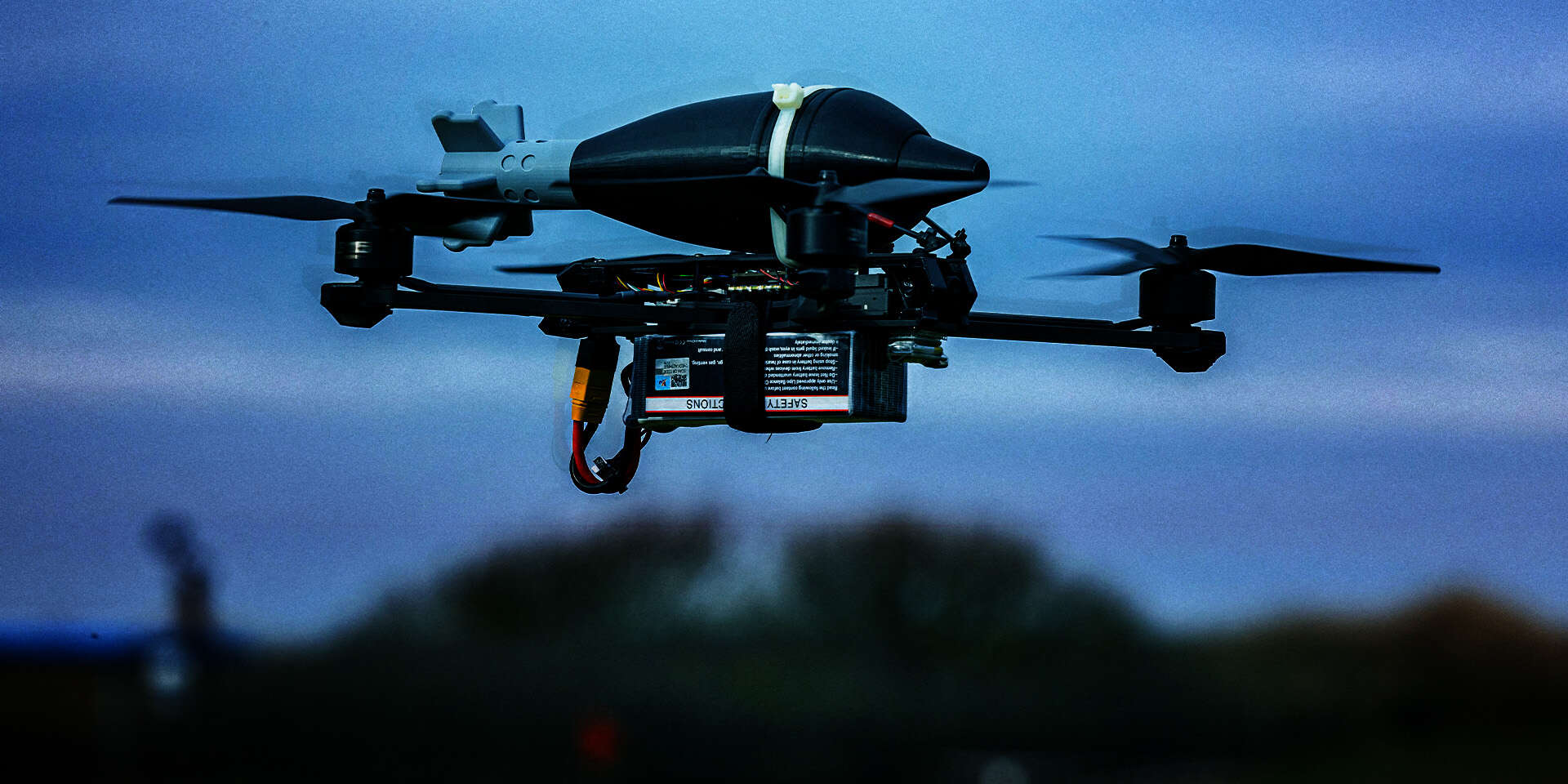
Netanyahu ranked drones as Israel's second-greatest security threat, warning that coordinated swarms could strike infrastructure, radar installations, political and military leaders, and command-and-control systems.
He said defensive lines had been deployed against fiber-optic-controlled drones, technological solutions were available to counter drones operated through cellular SIM cards, and a special team had been established to address the threat inside Israel.
Precision-guided missiles ranked third on his list, followed by cyber threats, artificial intelligence and quantum computing, technologies he warned could enable an adversary to take control of a country and paralyze it.
Netanyahu also set a goal of making Israel one of the world's three leading AI powers, behind only the US and China.
He placed illegal weapons inside Israel fifth on his list of threats, revealing that three weeks earlier he had requested a plan he called "turning the barrels around," intended, in his words, to "capture and destroy all centers of threat."
According to Netanyahu, a similar plan was being advanced within Israel to confront terrorist organizations and holders of illegal weapons in the Arab community. Netanyahu warned that the Iranian axis could converge with a Muslim Brotherhood-aligned axis led by Turkey. At the same time, he argued that the shared threat was encouraging new alliances with countries across the region.
Addressing the threat of international delegitimization and isolation, Netanyahu attributed the phenomenon to an alliance between the far Right, the Left and Islamist movements in Western countries.
On Gaza, Netanyahu made clear that reconstruction would not be permitted until the strip had been demilitarized. "We will not allow reconstruction in any part of Gaza before Gaza is disarmed. We agreed to an Emirati enclave adjacent to our security zone. The mission of eliminating Hamas will fall to us. If Iran collapses, they will fall on their own," he said.
Addressing his promise of "total victory," Netanyahu argued, "Only another 10% remains before victory. Who is going to finish the job?"
Netanyahu also addressed violence by Jews against Palestinians in Judea and Samaria, also known as the West Bank. He claimed that the scale of the incidents had been exaggerated and that they were the subject of a propaganda campaign, but nevertheless condemned the acts. "This is not taking the law into your own hands. It is tearing the law apart with your own hands. We are a country governed by the rule of law. All these acts of violence are serious in their own right, and they also cause damage to the country," he said.
Netanyahu said he had involved the Shin Bet security agency and pledged additional measures to eradicate the phenomenon.