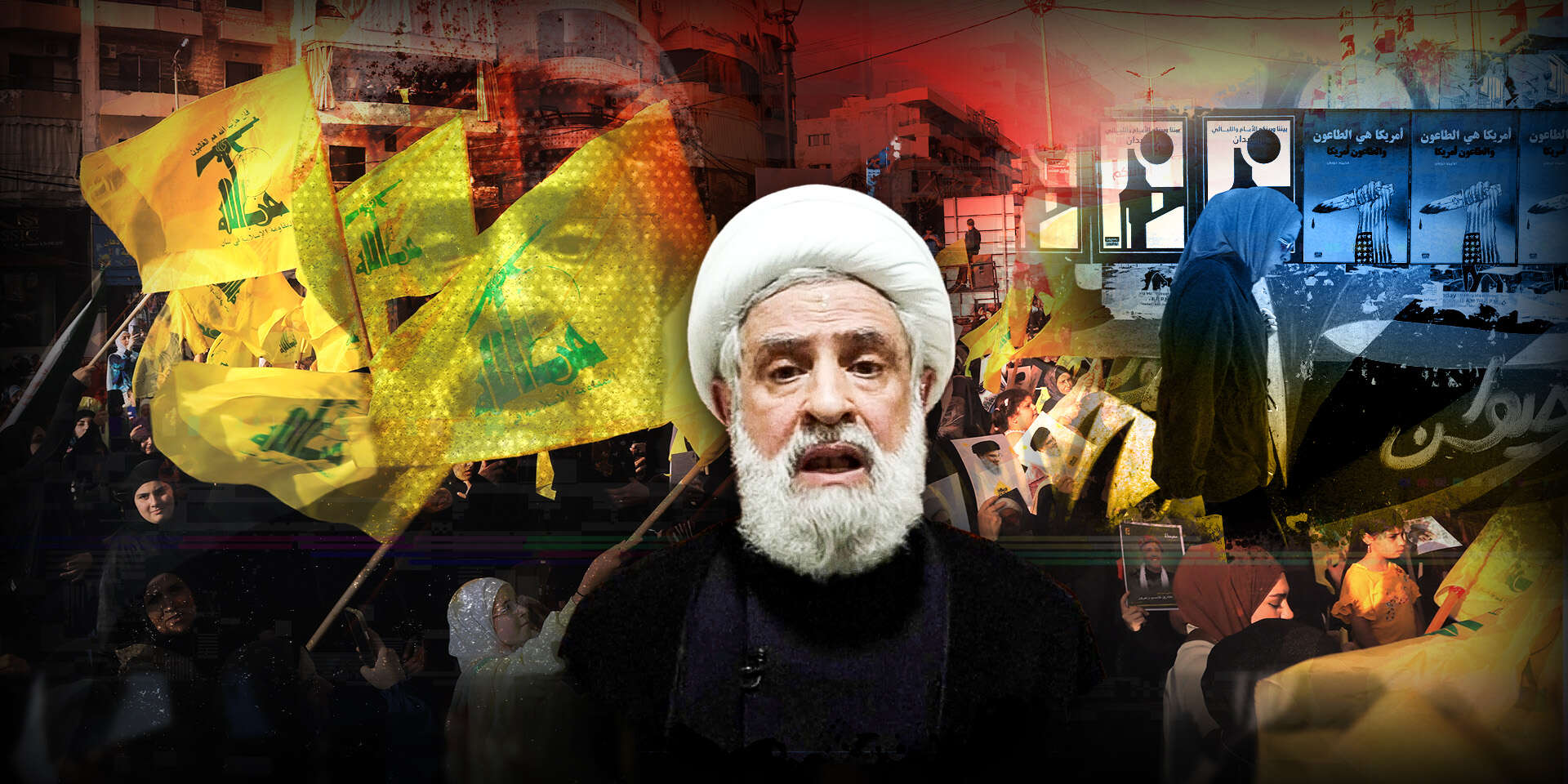
The struggle over Lebanon's future is being fought not only on the battlefield and in the corridors of power in Beirut, but also, and perhaps above all, in the media. In recent years, news outlets have become another battleground between supporters and opponents of Hezbollah, with each side seeking to portray events in a way that advances its political agenda.
While the media battle once centered on Hezbollah's military achievements, it has now shifted to a far more sensitive question: Does the Iranian-backed terrorist organization still enjoy the support of Lebanon's Shiite community, its principal power base?
The latest round in this media confrontation followed the release of a poll conducted by Statistics Lebanon among 800 Lebanese Shiites in September 2026. The results, published on Oct. 9, pointed to a possible shift in attitudes within the Shiite community. According to the survey, 66.4% of respondents supported transferring Hezbollah's weapons to the Lebanese state, while 29.6% favored maintaining the status quo. Moreover, 71.1% believed that decisions on war and peace should rest exclusively with the state.
The findings received prominent coverage in media outlets opposed to Hezbollah, including the Al Arabiya and Al Hadath television networks. They presented the figures as evidence of a significant change taking place within the Shiite community.
The message was clear: Even among the population traditionally regarded as Hezbollah's strongest bastion of support, the legitimacy of its continued independent military operations is increasingly being called into question.

Misleading figures?
A starkly different picture emerged in Al-Akhbar, a Lebanese newspaper widely regarded as a mouthpiece for Hezbollah. An article published on Oct. 21 raised questions about methodological flaws in the poll, a lack of transparency surrounding its funding and significant discrepancies between its findings and those of previous surveys.
For example, another poll conducted roughly five months earlier found that 87.5% of Shiites opposed disarming Hezbollah. Al-Akhbar cited the discrepancy to challenge the conclusion that the Shiite community was turning its back on the organization.
Yet the latest survey itself paints a more complex picture than either camp has presented. Despite broad support for transferring Hezbollah's weapons to the state, 59.5% of respondents still expressed confidence in the organization. In other words, criticism of Hezbollah's military policies does not necessarily translate into opposition to its continued existence as a political force.
Indeed, the battle for public opinion unfolding in Lebanon exposes one of the most consequential questions facing the country today. The issue is not merely whether Hezbollah will be disarmed, but whether the Shiite community is prepared to distinguish between its loyalty to the organization and its support for the continuation of Hezbollah's armed struggle.
The answer could shape Lebanon's future just as profoundly as the outcome of any military confrontation.
The author is a researcher specializing in Lebanon, Hezbollah and Shiite theology, a lecturer in the Department of Middle Eastern Studies and Political Science at Ariel University, and a research fellow at the Middle East Central Asia Research Center (MECARC).