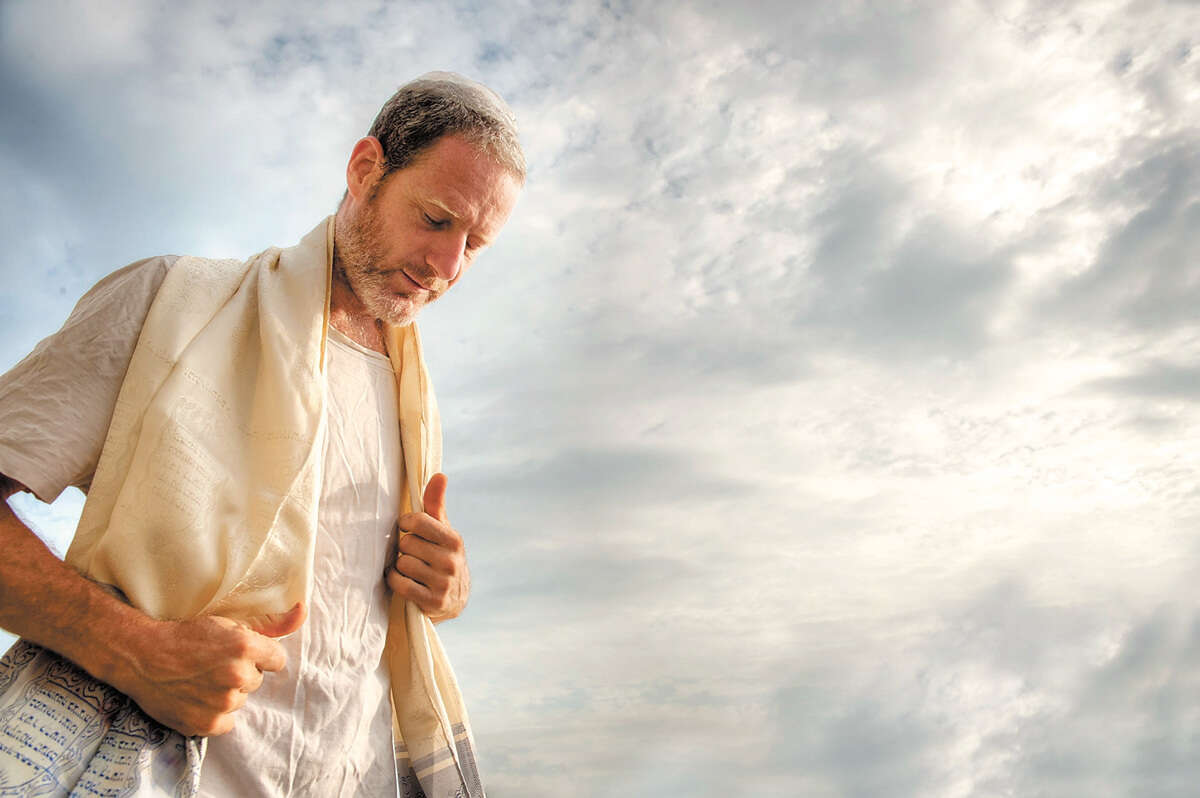
For many people who convert to Judaism, reaching the moment of conversion is the culmination of years of soul-searching, studying and making difficult choices and sacrifices. It can be extremely rewarding and self-actualizing.
But as many discover, becoming Jewish is not the end of the journey. In many ways, it is only the beginning.
That was the recurring theme at "Under Your Wings: Honoring Journeys, Celebrating Blessings," a gathering held at the Nefesh B'Nefesh Conference Hall in Jerusalem on Monday night, organized by Ohev Ger.
Founded in 2021, Ohev Ger helps Jewish converts navigate life after conversion, offering support as they find work, build relationships and establish their place within the Jewish community and Israeli society.
"Bringing everyone together in genuine warmth and respect, our 'Under Your Wings' event celebrates the courageous journeys and precious blessings of converts joining our community, a powerful gathering where gerim are truly seen, recognized, and embraced, supporters are inspired, and every heart is enriched," said its founders, speaking with Israel Hayom.
The event brought together more than 100 participants from over 20 countries, including converts whose paths to Judaism took them from Mexico to Israel, from African villages to Jerusalem yeshivas, and from musical careers to lives shaped by Torah.
I met converts from China, Romania, Germany, the United States and elsewhere. Their stories differed, but many shared a common challenge: figuring out what comes next.
The evening opened with welcome remarks by Rabbi Menachem Weinberg, founder and executive director of Ohev Ger, who also moderated the featured panel, "Loving the Ger: Personal Experiences."
Discussion circles
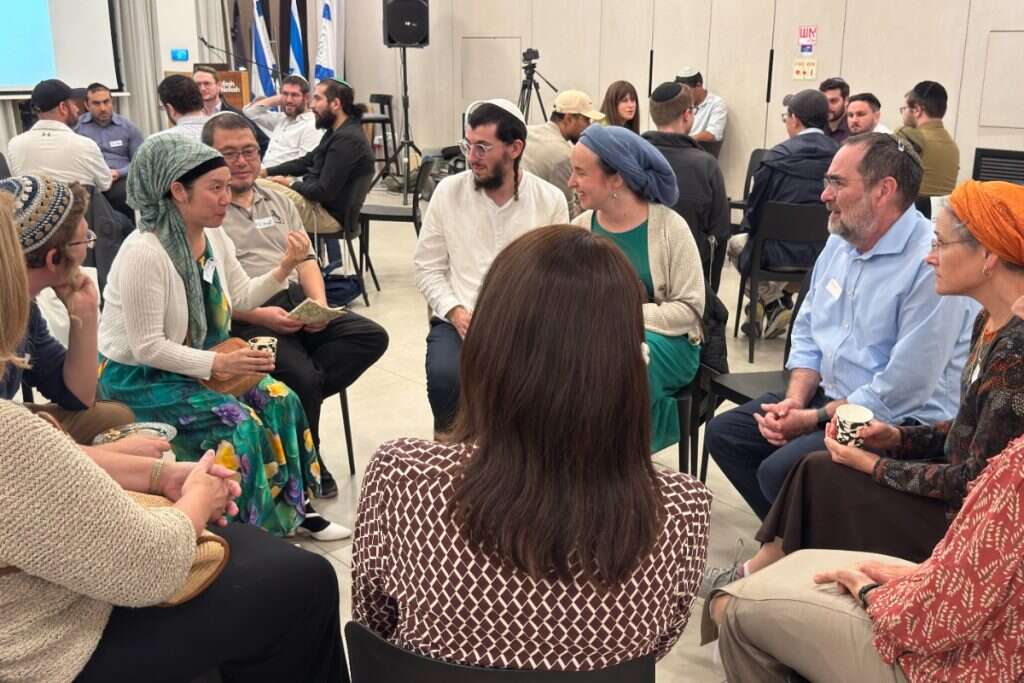
Peer-led discussion circles gave participants an opportunity to share their experiences and discuss life after conversion, including community integration, personal Jewish identity and family dynamics.
I joined a circle titled "Navigating Israeli Culture," led by Rabbi Dov Kaplan, an educator, author, and speaker, originally from Chicago, who has lived in Israel for many years. My group included participants from Germany, the Netherlands, China and Panama. We began by introducing ourselves and then discussed the perks and challenges of Israeli culture.
Common challenges that were raised included learning Hebrew, finding work and adjusting to Israelis' direct communication style. Despite these difficulties, everyone said they were happy living in Israel and glad they had made aliyah.
The participant from China shared that openly displaying religion is forbidden there. In Israel, he proudly wears a lion pin symbolizing the Lion of Judah, a longstanding emblem of Jewish heritage, strength and identity.
The German woman and Dutch man shared that they initially struggled to adjust to Israel's noise and lively atmosphere, having been accustomed to quieter, more structured environments in their home countries.
The man from Panama made aliyah with his wife and three children about 15 years ago. A former accountant, he currently works in security while waiting for his paperwork to be approved so that he can work in his profession in Israel.
The conversations highlighted that conversion is only the beginning of a journey that may involve leaving familiar surroundings, changing careers and rebuilding relationships. Belonging means feeling welcomed and building a life that reflects one's Jewish identity without leaving the past behind.
Finding a home in Israel
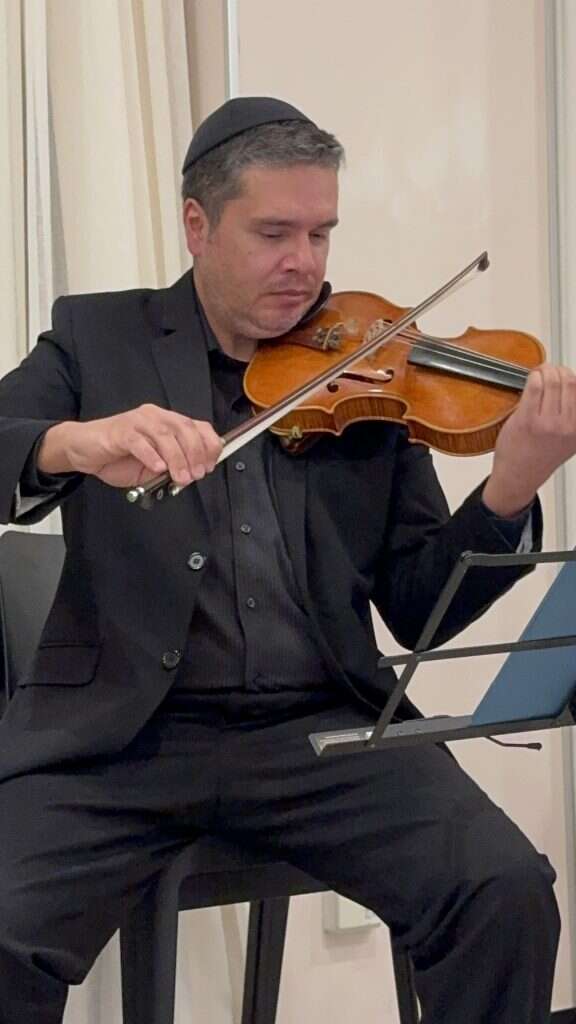
Renowned Brazilian-Israeli violinist Ricardo Israel Meir Ferreira, who completed his conversion to Judaism in 2018 and made aliyah in 2020, performed during the opening reception.
For Ferreira, making aliyah felt like a natural next step. "I came to Israel to study in Yeshiva. And after a while I decided to make Aliyah," he said.
He described his connection to Israel as something he had carried since childhood.
"It's something that I wanted since I was a little kid," he said. "To live in Israel is a real gift. It's very special."
Ferreira met Rabbi Weinberg while preparing to move to Israel and said Ohev Ger helped facilitate parts of the process. He began playing the violin at four years old in Brazil and later spent about four years as a member of the Israel Symphony Orchestra. Today, he teaches, freelances and performs throughout Israel.
Learning to build a new life
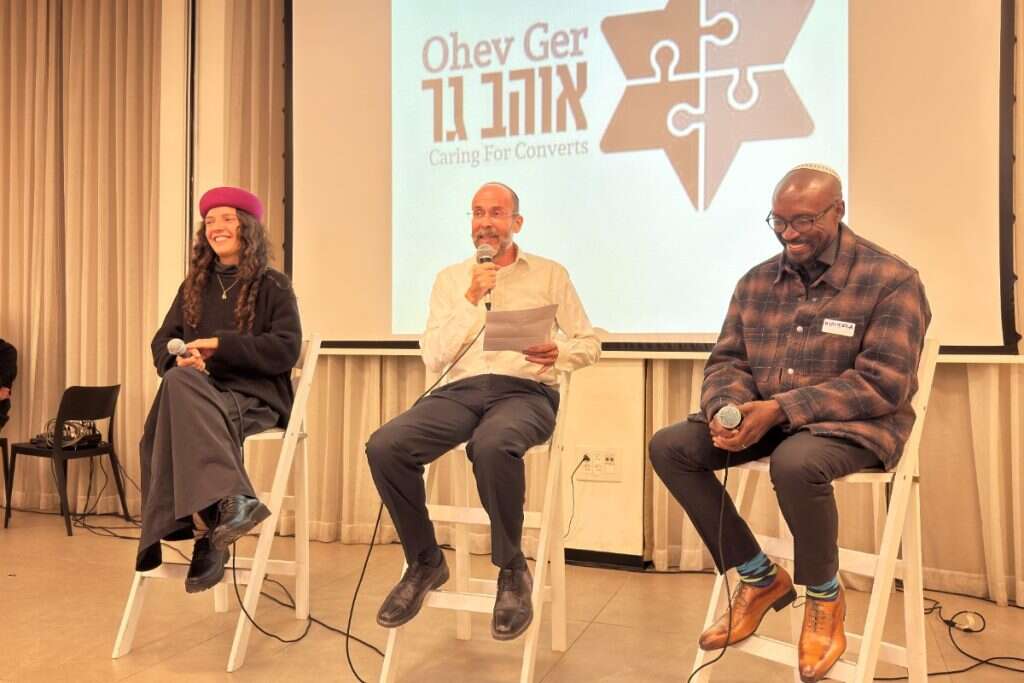
The featured panel highlighted Nesiah Chunkara's journey from performance art in Mexico to Judaism and aliyah, and Bentzion Mandela's path from a remote African village, martial arts and professional security to a Jerusalem yeshiva and life in the hills of Hebron.
For Chunkara, a performance artist who grew up in Mexico, one of the biggest challenges came after conversion and aliyah.
"I grew up in a society where it was better to be alone," she said. As an artist, she had dreamed of touring the world and had never imagined settling down or building a family.
But Jewish life presented different expectations, prompting her to reconsider her future.
"When you're converting, I'm focused on converting, and that's my goal. But after that, you don't know what's going to be" she said.
She realized that the skills and perspectives that had served her in one chapter of life would not necessarily carry her through the next.
"I feel that now my journey is about learning how to build," she said.
For Chunkara, that meant considering marriage, something she had not previously envisioned. With patience, effort and support from Ohev Ger, she took that step and was fortunate to meet her husband.
Her story illustrated how finding a community, navigating relationships and imagining a different future can take just as much work as conversion itself.
From a village in Kenya to life in Israel
Bentzion Mandela's path to Judaism was also unexpected. He first came to Israel after being invited to learn krav maga. His friendships and encounters with Jews there gradually drew him closer to the religion.
"I wasn't born Jewish, but I converted, and fell in love with Judaism," he said.
After earning a master's degree in Kenya, Mandela found himself studying in a Jerusalem yeshiva, reconsidering the future he had planned.
"I had different goals," he explained. "Probably a degree, a master's, you know, proper career and everything. But, yeah, here I was, in my early 30s. I'm in a yeshiva."
Practical questions soon followed. How would he support himself and a family in a country where he lacked established relationships and professional networks?
"At the start it wasn't easy, it was extremely difficult," he said.
Over time, new connections opened doors in Israel's security sector, allowing him to build a career and make a living.
Mandela emphasized the importance of seeing converts as individuals with their own stories, histories and ambitions, not simply as people who need assistance.
His advice to those meeting converts was straightforward: "Just look at the world from that other person's eyes. It goes a long way, because you never know what they went through to get to this point in time."
Both Mandela and Chunkara emphasized that small gestures can make a significant difference in helping converts feel welcomed and comfortable. Sometimes, the most meaningful welcome begins with a simple act of kindness.