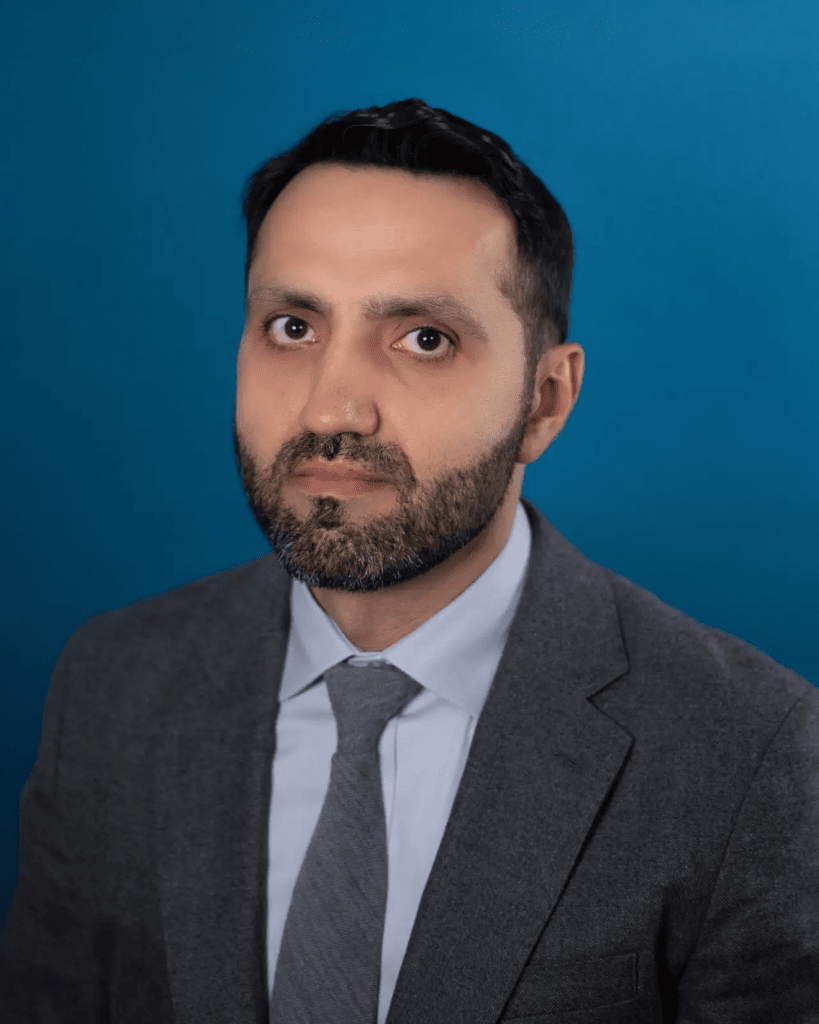
For years, Miad Maleki led the US Treasury Department's sanctions campaigns against Iran and its proxies, Hezbollah, Hamas, Shiite militias in Iraq, and the Houthis. Maleki, a former senior official at OFAC (the US Treasury's sanctions enforcement arm), now a senior fellow at the Foundation for Defense of Democracies (FDD, a Washington think tank), knows the methods the "axis of evil" uses to dodge the economic isolation imposed on it. Or, in Prime Minister Benjamin Netanyahu's words, a "bypass economy."
Israel has already experienced economic isolation campaigns, from the Arab boycott to the arms embargo French President Charles de Gaulle imposed in 1967, though the most significant ones came during the Cold War. In recent years, under Netanyahu's government and even more so during the war, measures against Israel have begun landing one after another again. According to a database kept by the Jewish People Policy Institute, the vast majority of the 139 measures documented against Israel began after 2023.
A smaller, poorer, more corrupt economy
Iran, by contrast, has lived under sanctions for almost the entire period since its 1979 revolution. In 2018, President Donald Trump launched the "maximum pressure" campaign, which Maleki helped design, aiming to zero out Iran's oil exports and disrupt the regime's financial capacity. The main tool was secondary sanctions, which don't hit Iran directly but target anyone who does business with it. A foreign bank that processes a transaction with a sanctioned Iranian entity risks losing its accounts at US banks, and without those accounts, it can't carry out dollar transfers. Once flagged, other banks pull away from it too, and the sanction spreads like a viral infection.
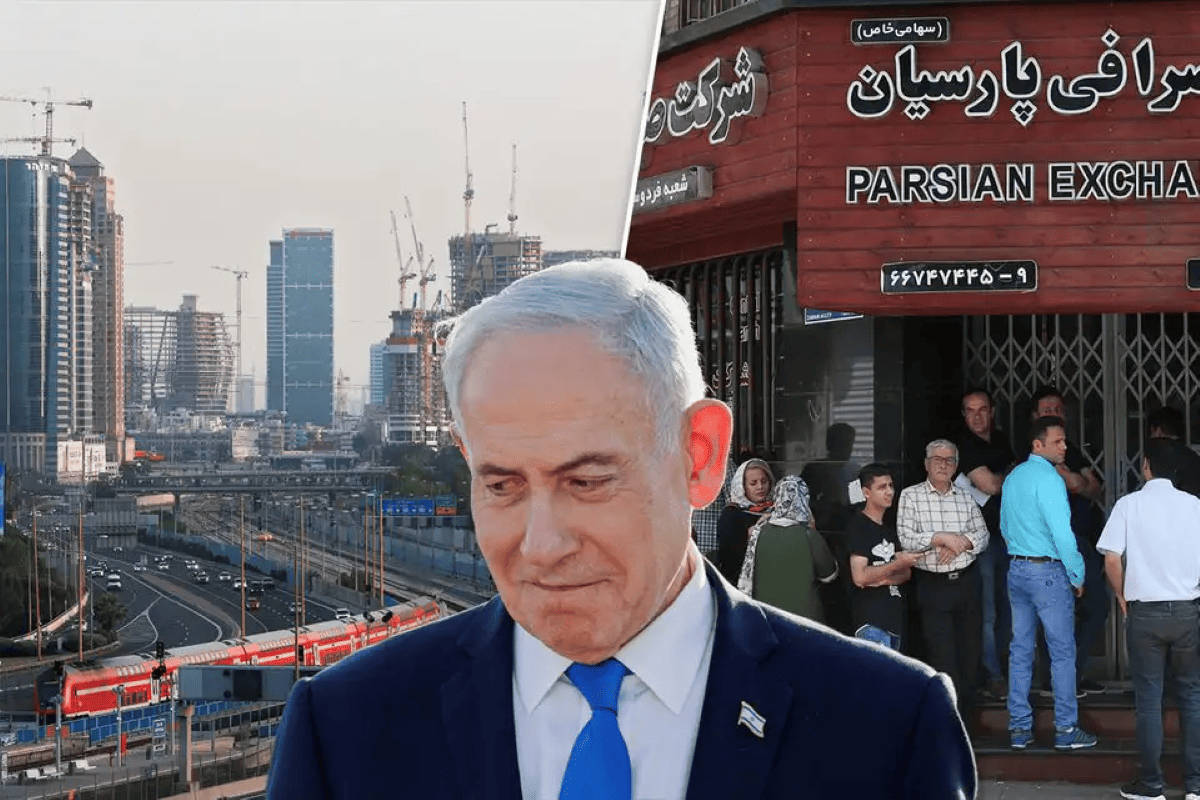
To survive, Iran built itself an alternative system. "A sanctioned country builds a shadow copy of the formal system that it can't use, run by middlemen," Maleki said. In Iran's case, that means exchange houses and front companies in Dubai, Istanbul and Hong Kong that hold the bank accounts Iranian firms can't.
Iran also has something Israel doesn't: vast natural resources and one large buyer willing to work with it despite the sanctions. China buys Iranian oil at a steep discount and pays in yuan or in goods. That, too, is far from a solution, according to Maleki. "Iran's workaround works, badly, for a commodity exporter willing to sell one product to one buyer at a discount and accept a smaller, poorer, more corrupt economy as the price," he said.
On paper, blockchain looks like the perfect solution. The money doesn't sit in a bank account but in a digital wallet, identified by an address, a string of letters and numbers, with no owner's name attached. Every transfer between wallets is recorded on computers around the world and locked in with encryption, so no central authority controls it, and no bank needs to approve it. Security, privacy and total independence from the banking system, at least in theory.
"In practice, the role crypto plays for the regime in Tehran is smaller than the headlines suggest," Maleki said. Even by the most generous estimate, he said, it carries about 5% of the money crossing Iran's borders, and it "breaks down at exactly the points a sanctions officer would expect." The moment digital currency needs to be converted into money that can actually be traded globally, it becomes a vulnerability.
"The regime talks about crypto as a weapon against sanctions"
"The exchanges where rials are converted into crypto and back are companies with owners and bank accounts, so they can be sanctioned," he said, and that's what happened to Nobitex, Iran's largest exchange. Because every blockchain transfer is visible to everyone and stored forever, Iran's workaround only functions thanks to the front companies and trustees standing behind the wallets. "Take those away, and the blockchain is just a very good evidence trail."
"For a regular person in Tehran, crypto is not a payment method; it's a savings account protected from the collapse of the rial," Maleki explained, "the way their parents held dollars or gold under the mattress."
The rial is now trading on the free market at more than 2.5 million to the dollar, with prices surging nearly 90% over the past year. Iranians also use crypto to get paid for work abroad and to pay for online services, including VPNs (essential for bypassing Iran's internet censorship), a staple in Iran. But importing medicine or paying tuition abroad still requires expensive exchange-house services and brokerage fees. "There are two exchange rates, the official rate and the free-market rate, and a market in the gap between them," Maleki said, "and the people who live in that gap are the regime's friends."
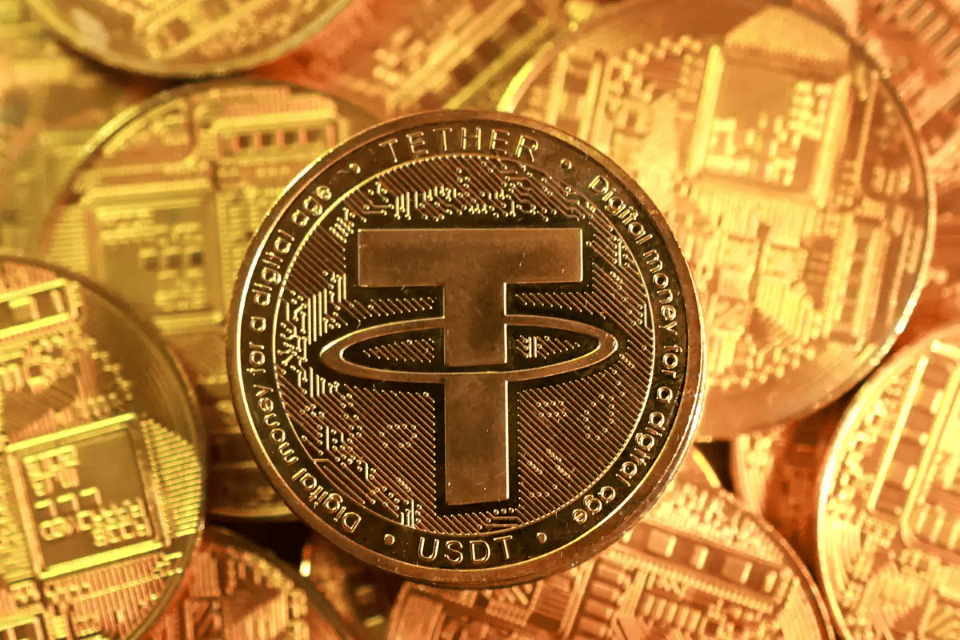
The regime itself treats crypto differently. "The regime talks about crypto as a weapon against sanctions, but at home it treats it as a leak," Maleki said. "Crypto for the state, capital controls for the citizen." The result, he said, is that from the inside, a sanctioned economy "doesn't look like a crypto utopia. It looks like cash, middlemen, and a steep tax on everything that crosses the border, paid by the people with the least political protection."
Israel is not Iran. "The Iranian model is a model of isolation, and in my view, Israel's economy is a model of integration," Maleki said. "Iran's entire crypto flow is roughly three weeks of Israeli exports." Above all stands the dollar. Israel's trade with the world is priced mostly in dollars, and because of that, he said, sanctions "would hit the core of its banking and trade, not a side channel."
Services exports, more than half of Israel's total exports and led by high-tech, depend entirely on access to the American system. "Israeli tech is valuable because it sits inside the US ecosystem," Maleki explained, "Nasdaq listings, US venture capital, multinational R&D centers paying salaries in Israel. You cannot move that onto a chain." And giants like Nvidia, Intel, Microsoft and Google, he added, "will not pay an Israeli vendor through a Dubai exchange house or a wallet."
"Overcompliance"
Q: Has an economy as integrated with the United States as Israel's ever been disconnected from the financial system?
"No," Maleki answered. "The only disconnections have been Iran and Russia, and neither had anything like Israel's exposure." But precisely because of that, he said, Israel is vulnerable. "Israel is so integrated that it doesn't need to be disconnected for the system to react."
In 2024, when the Biden administration sanctioned a handful of violent settlers, Israeli banks froze their accounts within a day. "Not because Israeli law required it, but because their US access did," Maleki explained. That is the power of secondary sanctions: they push Israeli banks to act to protect themselves, even when Israeli law doesn't require it.
That brings us to a phenomenon known as "overcompliance," banks that steer clear of any risk of running afoul of sanctions enforcement, even when the law would let them maintain certain ties. In circles dealing with the issue in Israel, the term has become shorthand for one of the dangers now threatening the country.
Such a plan isn't realistic on practical grounds either. "Blockchain can only serve evasion if networks of front companies and trustees stand behind the wallets," Maleki said. "It took Iran more than a decade to build those, and along the way they criminalized a chunk of its economy. An OECD economy cannot and should not build that." According to him, Netanyahu's statement itself is already damaging. "Compliance officers at banks read statements like that," he said. "A government announcing a plan to route around sanctions invites the very de-risking it fears."
Maleki distinguishes between three types of sanctions. There are sanctions on individuals and organizations, already imposed on groups operating in Judea and Samaria, on Israelis involved in Jewish terrorism and on those who support them. There are trade sanctions, like the European Commission's proposal to suspend Israel's trade benefits, which are "on the table, but blocked" for now, thanks to countries like Germany and Italy. And there are sanctions on banks, which, he said, "are the ones that really matter."
"If sanctions reach the banking sector, the blow will be felt very fast"
The foundation that could serve what more and more people are describing as an "economic war" against Israel was laid by the Biden administration, the first US administration to sanction settlers involved in violence. Trump revoked the order on his first day in office, but elsewhere in the world, the process only gained momentum. In Britain, regulations have already taken effect that allow sanctions on banks that finance settlement expansion, though no sanctions have been imposed under them yet.
Israel's major banks finance construction in Judea and Samaria and give mortgages to buyers of apartments there, and officials in Jerusalem fear foreign financial institutions will struggle to distinguish them from the rest of Israel's business sector – and will sever ties even earlier, simply unwilling to take on the risk.
In Washington, the deterioration could begin as early as the midterm elections on November 3, if Democrats win Congress and advance bills that would codify sanctions against settlers. A Democratic president in 2028 is expected to reinstate Biden's order and expand it, and "that can happen fast," according to Maleki. "2024 showed that an executive order takes a signature, and that banks react within a day." Rahm Emanuel, Obama's former chief of staff, who is seen as a supporter of Israel and a self-styled presidential contender, has already raised the bar, calling for sanctions on "any construction company or bank that builds or finances illegal settlements."
What does this mean for the average Israeli? According to Maleki, under the sanctions imposed on Israel today – almost nothing. But if sanctions reach the banking sector, the blow will be felt very fast. In the extreme scenario, sanctions on the entire country, access to everything that crosses the border would disappear: a salary from an American company, investments abroad, a payment with an Israeli credit card in New York.
"Broad sanctions on Israel remain a remote scenario, and it's worth saying so," Maleki stressed. But if the question is whether a small, open economy that depends on selling services to Western companies can maintain a Western standard of living while cut off from the global financial system, "the answer is no, and there is no historical case suggesting otherwise."
Israel, he said, "would not become Iran, but it could not stay Israel either. An economy that earns $165 billion a year in exports, 56% of them services sold to Western companies, and keeps 42% of its pension savings abroad does not have a 'bypass' option, only a poorer option." And the distance from that scenario, he added, "is set by Israeli conduct in the West Bank and by whether support in Washington stays bipartisan."
The preparations he proposes are mainly meant to keep the domestic economy at a minimal level of functioning, domestic credit cards, pre-arranged dollar liquidity and a backup for the international SWIFT system. Blockchain, he said, "is the one item on the list that doesn't help." But first and foremost, Israel needs to avoid becoming a target. "Visible enforcement against the conduct that leads to sanctions is the cheapest insurance there is," Maleki said, "and so is anchoring the relationship with the US in Congress, rather than depending on just one administration."