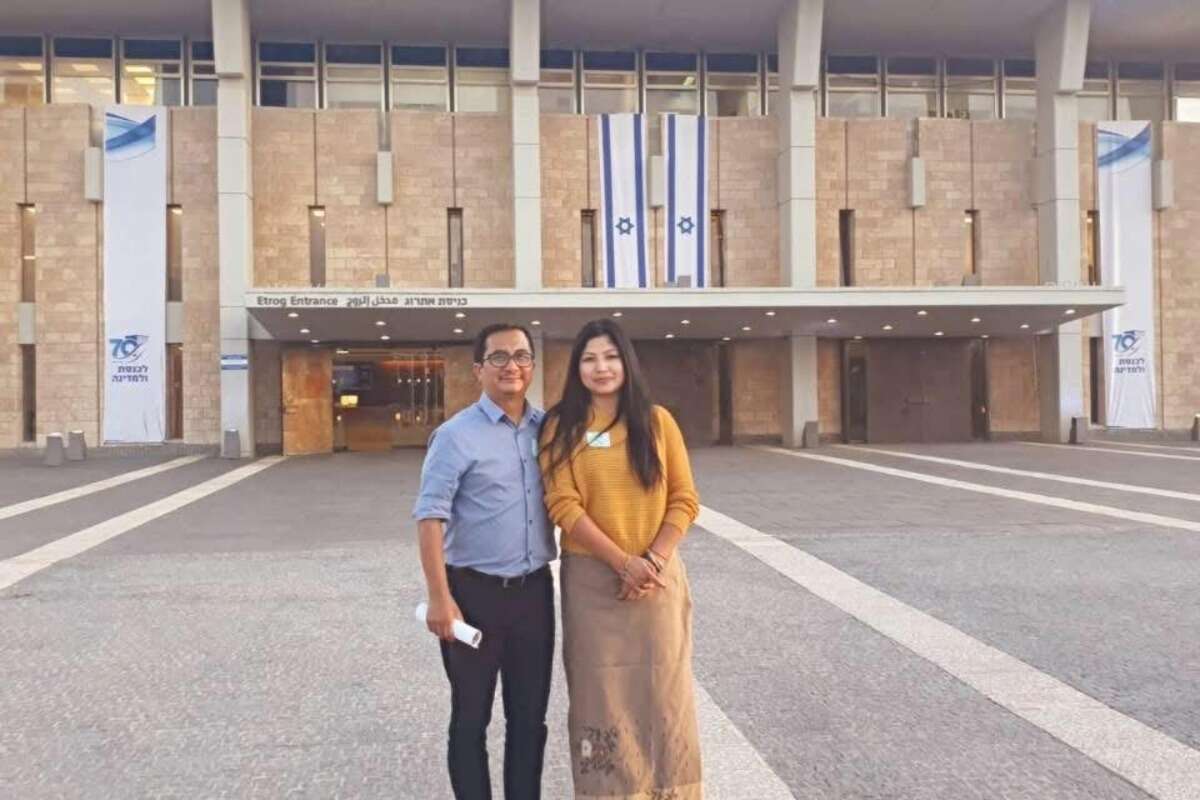
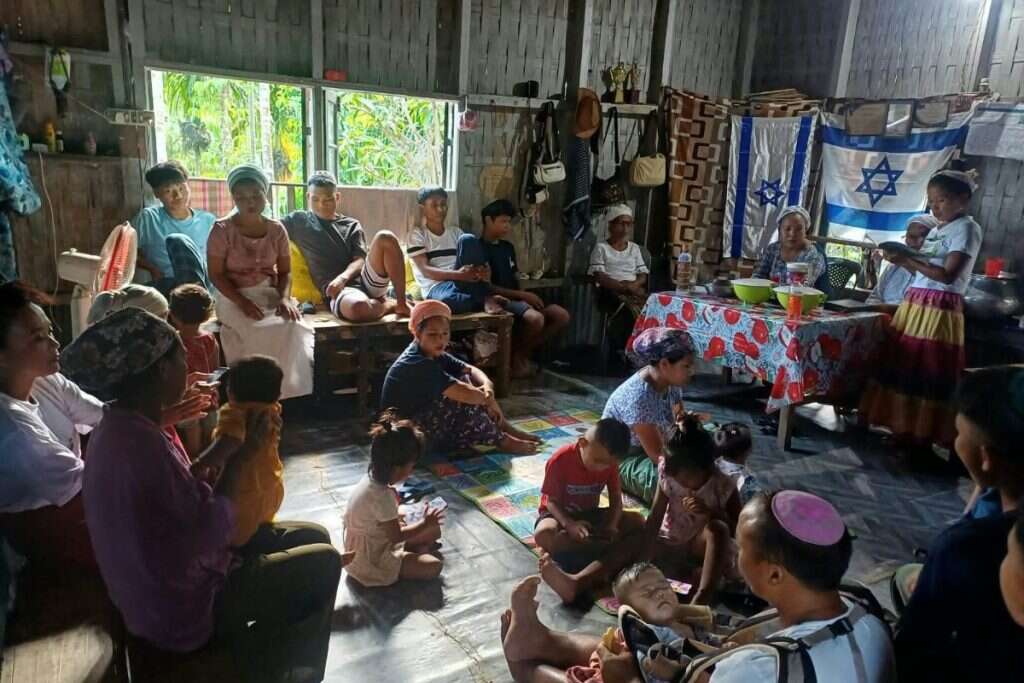
For Isaac Thangjom, the dream of living in Israel began at the family Shabbat table in Manipur, a state in northeastern India. His father, a committed Zionist, made sure his children understood that their future lay in Israel.
"My father was a big Zionist," Isaac recalls. "He'd tell us 'one day we're all going to Israel.'"
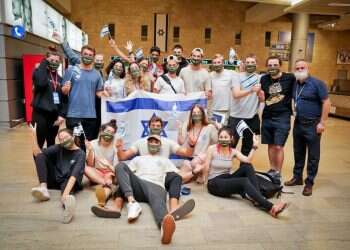
The B'nei Menashe are a Jewish community from the northeastern Indian states of Manipur and Mizoram who trace their ancestry to the biblical Tribe of Manasseh. Through Operation Wings of Dawn, the Ministry of Aliyah and Integration and the Jewish Agency are bringing remaining community members to Israel in stages, aiming to reunite families and complete their aliyah by 2030.
Born in 1968 in Imphal, Isaac first arrived in Israel in 1997, then returned to India to work with researcher and author Hillel Halkin on writing Across the Sabbath River, a book about the B'nei Menashe's ancestry. During that extended stay, he met his wife Jessica. They married and made aliyah together in 2008 with their three-year-old daughter.
Their first years in Israel were difficult. Jessica arrived with a master's degree in sociology and experience working with international organizations, including Doctors Without Borders and World Vision, but struggled to find suitable work.
"We lived in Kiryat Arba for the first six months after coming to Israel, but couldn't find jobs to fit our qualifications, and ended up cleaning houses to survive," Isaac recalled in a 2022 interview.
The couple later moved to Afula, where Isaac found a minimum-wage job in a plastic and paper factory. Jessica, meanwhile, remained active in volunteering and community service.
"Although I did not have a regular job during that time, I kept myself actively engaged by volunteering to assist elderly members of the B'nei Menashe community, particularly pensioners living in Givat HaMoreh and Afula Illit."
"My responsibilities included accompanying them to medical appointments, helping them pay municipal (Arnona) and electricity bills, assisting them with applications for Amidar public housing, and accompanying them to bank appointments. I was able to provide practical support to elderly community members who needed assistance navigating everyday administrative tasks."
The experience helped Jessica support her community while gaining practical knowledge of Israel's public services and administrative systems. It also strengthened her interpersonal and organizational skills.
After another move, to the Tel Aviv area, the couple were able to find jobs in their respective fields. Today, they live in Rehovot, where Jessica works in customer-interface at a high-tech company and Isaac heads a human resources division at a construction company.
"We are very happy here," they both told Israel Hayom.
During the 12-day war with Iran in 2025, missiles struck near their home, with one landing roughly half a kilometer away. Isaac shared that the experience was frightening but that he trusts Israel's defensive systems, while Jessica found the sirens unsettling.
"It's not nice when you hear the siren," she says. "So it's a very uncomfortable sound for me."
From personal experience to a community mission
Alongside their careers, Jessica and Isaac have remained committed to community service. Jessica volunteers with organizations including KeepOlim, which supports new olim, and the Jewish Indian Heritage Centre.
In 2017, Isaac began an oral history project documenting older members of the B'nei Menashe community, with support from American Jewish friends Sabra Minkus and Sam Pfeffer. The interviews captured how the community's lives had changed over decades, from rural villages in India to modern Israel.
"I ended up interviewing about 200 individuals over a period of two years, 2017 to early 2019," said Isaac.
The project also revealed challenges facing younger community members arriving in Israel. Some wanted to pursue higher education but lacked financial support; others needed help navigating Israeli society, including education, employment and language barriers.

"I just thought that, you know, we're living in an ivory tower. I mean, we're fine. But there are a lot of people who are not fine at all," noted Isaac.
Jessica saw how language barriers and cultural differences could make it difficult for new olim to ask for help or integrate into their new home.
"Our community, where we come from, we are very, shy, you know," she explained. "So to open up like the Israelis, it's not that easy."
For Jessica, education is essential to helping B'nei Menashe immigrants establish themselves in Israel.
"When it comes to the main integration part, education is the most important tool," she said. "When people are educated, they have more confidence."
Turning experience into action
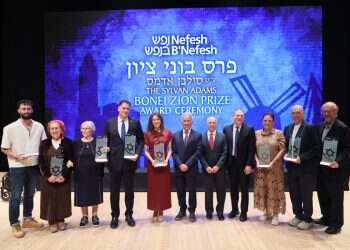
These discoveries inspired the couple to found Degel Menashe in November 2019, along with co-founders Hillel Halkin and Sabra Minkus, with the goal of supporting the B'nei Menashe communities in Israel and India.
"Our organization came into being in November 2019. You could count the number of graduates on one hand," said Isaac.
During COVID-19, the organization distributed approximately 70 tons of food over two years. Its education work continued, with more than 100 scholarships awarded to over 60 individuals. According to Isaac, 33 recipients have graduated, including three with master's degrees.
The couple also provides career guidance, helps students choose colleges and arranges translation assistance for community members receiving hospital treatment.
"We try to be useful," said Isaac. "We're kind of like a jack of all trades."
Isaac's oral history project also led to Lives of the Children of Manasseh, a published collection preserving the community's stories for future generations.
Bringing families closer
Thousands of B'nei Menashe remain in India, many separated from relatives who have already immigrated to Israel. Jessica and Isaac have lobbied politicians and officials to advance aliyah and promote a fairer, more transparent process.
They have witnessed the toll of prolonged family separation.
"People are separated from their families for 10 years, 20 years, 30 years," said Isaac. "In fact, there's one person who's finally coming. He was separated from his family for almost 50 years."

Operation Wings of Dawn offers renewed hope to those still waiting to come to Israel. Although the couple does not officially manage immigration, they continue to advocate for their community and support new olim.
For the Thangjoms, the dream that began at a Shabbat table in Manipur has become a shared mission: helping B'nei Menashe olim build a future in Israel while preserving their community's history, traditions and family ties.