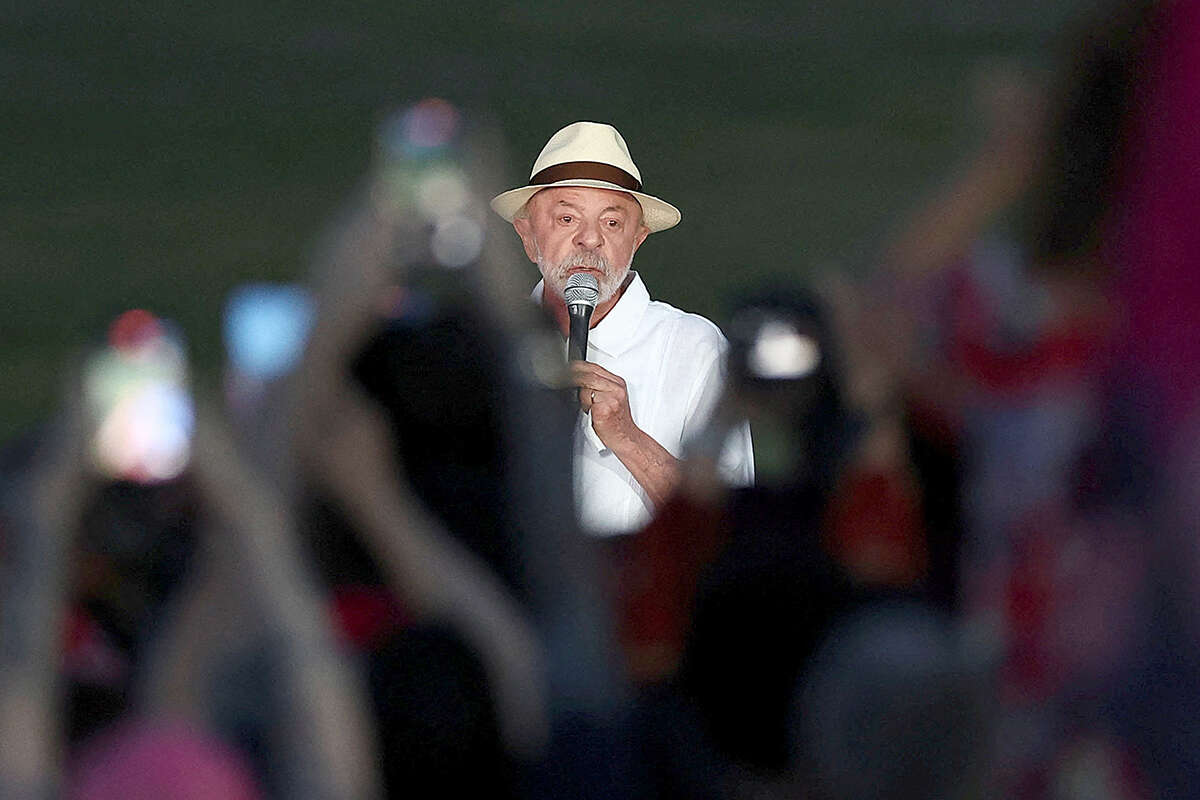
Anyone who saw Hamas' reaction to the news that Brazilian President Luiz Inácio Lula da Silva, widely known as Lula, would remain in office for another four years witnessed an extraordinary display of jubilation. Hamas wasted no time in congratulating its comrade Lula, known for his left-wing views and hostility toward Israel, with a warmth and enthusiasm that left no room for doubt. As the saying goes, tell me who your friends are, and I'll tell you who you are.
Four days after the results of Brazil's presidential election were announced, it seems that only Lula's most ardent supporters, both inside and outside Brazil, believe the incumbent president genuinely won at the ballot box. Everyone else is stunned by how easily an election can allegedly be stolen in a country regarded as a South American powerhouse and a leader of the Global South.
US President Donald Trump and Secretary of State Marco Rubio openly voiced the suspicions surrounding Brazil's election, suggesting that the results could only be explained by fraud. In the first round, right-wing candidate Flávio Bolsonaro defeated Lula by more than 2.2 million votes. Ahead of the runoff, all the major Brazilian polls, including those conducted by pollsters sympathetic to Lula, showed Bolsonaro in the lead. Nevertheless, Lula won with 51.79% of the vote, a margin of more than 4.4 million votes. Since Brazil restored direct presidential elections in 1989, this was the first time a candidate who finished second in the first round had gone on to win the runoff.
"As someone who knows Brazilian society well and closely follows political developments in the country, I fully understand the frustration and distrust felt by millions of Brazilians," says Rafael Rosenshein, a Brazil expert who until recently served as the Israel Defense Forces' Portuguese-language spokesman. "There are several unusual figures here that demand serious scrutiny, and the most puzzling concern the vote totals. In the first round, Bolsonaro received approximately 56.1 million votes, compared with about 53.9 million for Lula. In the second round, Lula received more than 64.2 million votes. In other words, in just three weeks, he gained approximately 10.4 million additional votes, while Bolsonaro gained only about 3.7 million.
"Where did Lula's more than 10 million additional votes come from? In the first round, approximately 9.3 million people voted for other candidates who failed to advance to the runoff. Nearly 3 million additional voters participated in the second round who had not voted in the first, while the number of invalid ballots fell by approximately 1.8 million. Altogether, that added approximately 14.1 million valid votes to the combined totals of the two candidates, of which 10.4 million went to Lula. That's nearly 74% of the total increase.
"Yet most of the major candidates eliminated in the first round endorsed Flávio Bolsonaro, not Lula. Augusto Cury, Ronaldo Caiado and Romeu Zema announced their support for Bolsonaro, while Renan Santos, who finished fourth, declined to endorse either candidate. It's difficult to explain such a large disparity in the additional votes Lula received, when the public endorsements of the leading eliminated candidates favored Bolsonaro."
As if the numbers were not troubling enough, there was also the highly unusual decision by Supreme Federal Court Justice Cristiano Zanin to extend voting hours on election day. The decision came after the scheduled closing time for polling stations, following complaints about public transportation problems. It was subsequently clarified that the extension applied only to polling stations that had not yet closed, but who knows whether that restriction was actually observed? Zanin, incidentally, previously served as Lula's personal attorney and was appointed to the Supreme Court by Lula himself.
Rosenshein stresses that he cannot conclude with certainty that the election was stolen without solid evidence. Nevertheless, he believes Brazilian authorities must release the relevant data and allow an independent examination of any irregularities that may have occurred. Will that actually happen? Past experience suggests otherwise.
Similar allegations of voting irregularities made four years earlier by Jair Bolsonaro, then Brazil's president, formed part of the background to his conviction for attempting a coup to remain in power by force. The elder Bolsonaro was sentenced to 27 years and three months in prison, and his appeals were rejected.
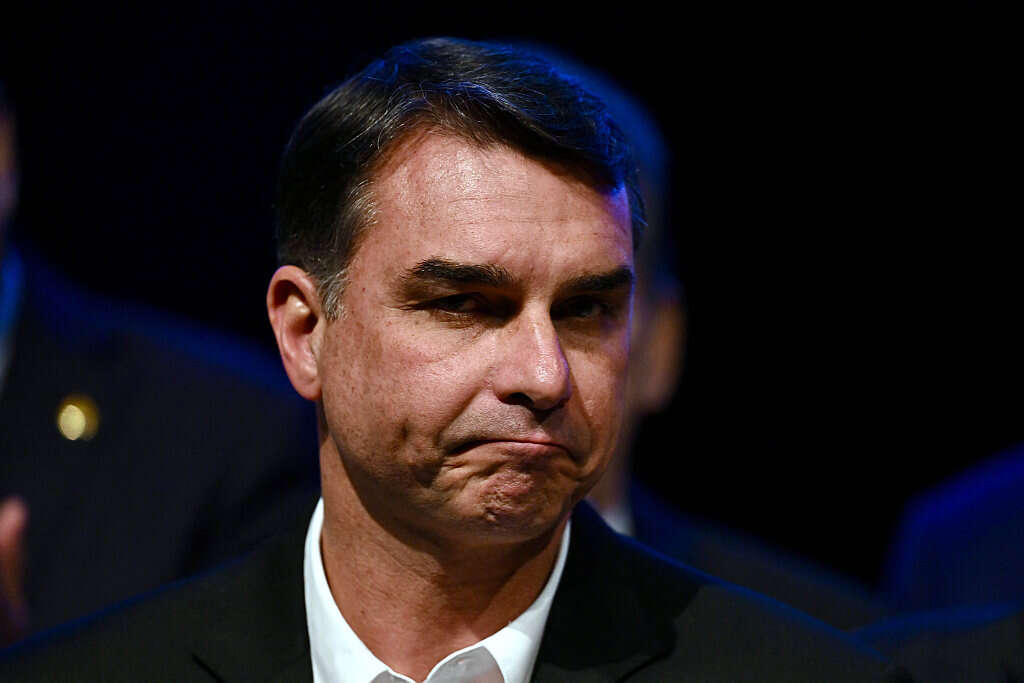
Now his son Flávio is also facing legal trouble. After a court barred him from leaving Brazil as part of an investigation, he fled the country and landed in the US. The man who aspired to lead Brazil's right and the country itself now faces a legal threat far from his homeland, living as a fugitive.
Beyond Lula's wall
The issues at the heart of Brazil's election, in a country of more than 200 million people and a major economic and political power, extended far beyond the personal rivalry between Bolsonaro and Lula.
"This election reflected a contest between two different visions of economic policy, public security, values and Brazil's place in the world," Rosenshein explains. "On one side, President Lula presented an approach emphasizing social welfare policies, closer ties with countries such as China, Russia and India, as well as developing nations in Africa and Latin America, and the strengthening of international frameworks such as BRICS. On the other, Flávio Bolsonaro proposed a more conservative agenda, emphasizing domestic security and closer relations with the US and its allies."
What about attitudes toward Israel? How significant an issue was that for voters?
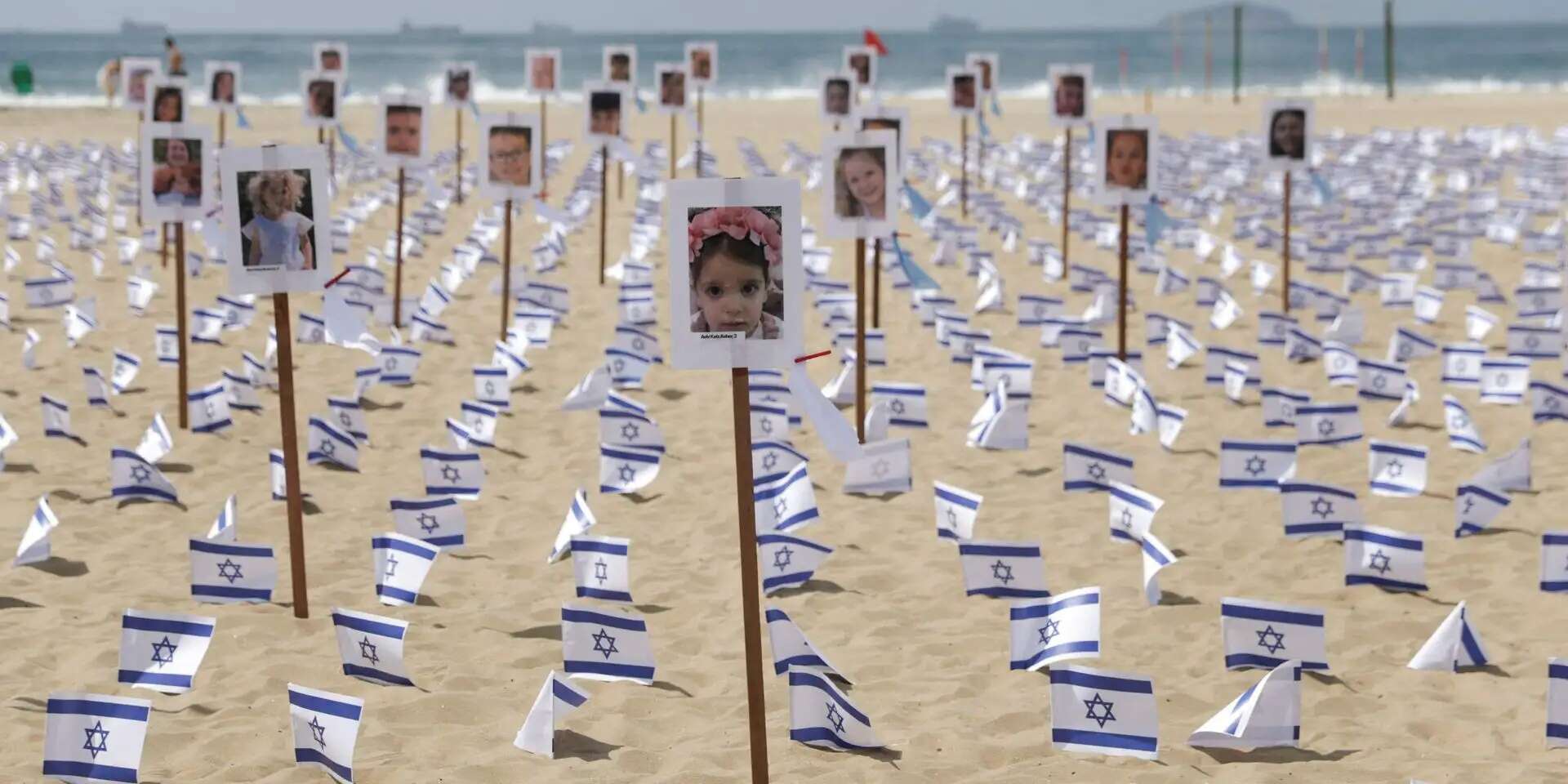
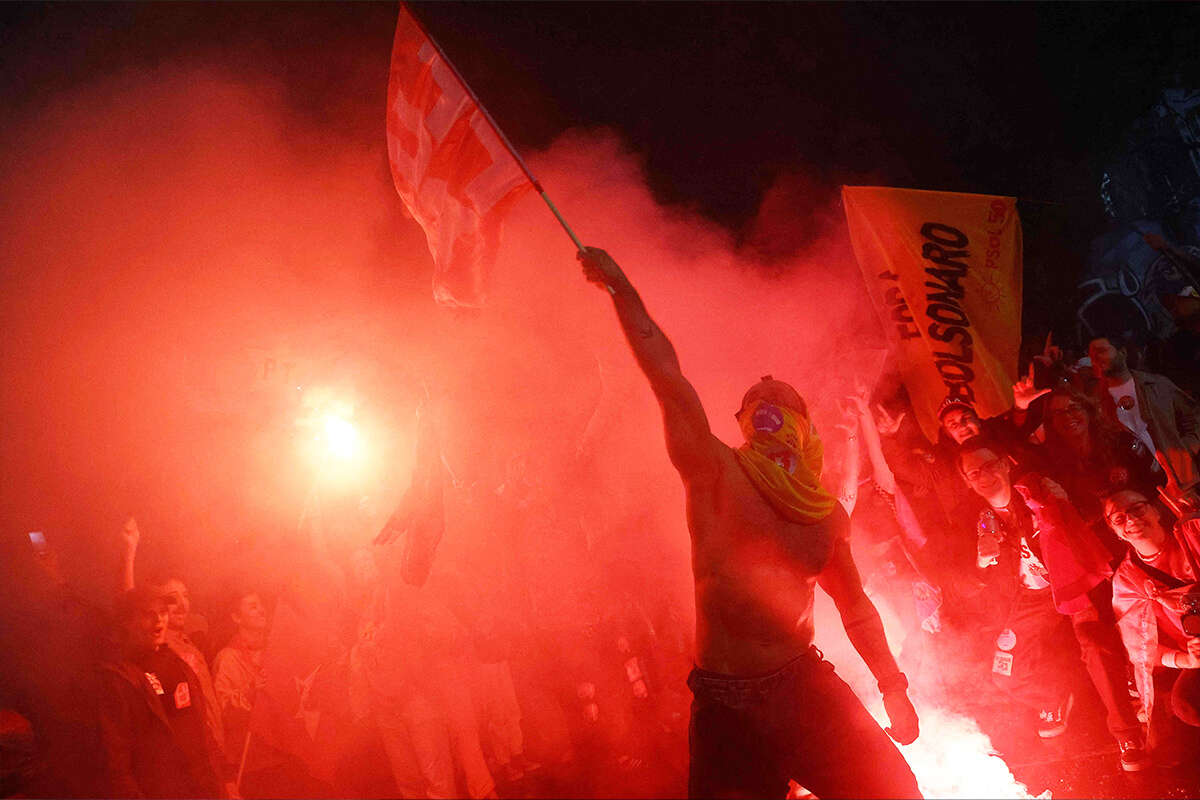
"For most Brazilians, the cost of living, personal safety, the economy and health care matter more when they vote than foreign policy toward Israel. But Israel has become an important symbol in Brazil's internal ideological debate. You can see it clearly at political demonstrations. At rallies held by Bolsonaro supporters, Brazilian flags fly alongside Israeli flags, while at demonstrations by Lula supporters and left-wing organizations, Palestinian flags are prominent. There have even been instances of chants expressing support for Hamas. This illustrates how deeply Israel and the Middle East conflict have become embedded in Brazil's domestic political and ideological struggle.
"There is also a religious and cultural dimension. Millions of evangelical Christians in Brazil regard Israel as a place of profound spiritual significance, and support for Israel is an important part of their identity. I can say from personal experience, after thousands of encounters with Brazilians and extensive public diplomacy efforts across the country, that Brazil has a large pro-Israel public, alongside another substantial segment of the population willing to listen to Israel's position, even if they don't necessarily agree with it initially. The real challenge is knowing how to reach those people, speak to them in a language they understand, appreciate their culture and present the facts clearly, credibly and persuasively."
How has Lula's policy affected Israel's standing in Brazil and Brazilian public opinion?
"As an Israeli and a Jew whose family carries the memory of the Holocaust, Lula's comparison between Israel's actions and the Nazis' crimes during the Holocaust was an especially painful moment for me. It's legitimate to criticize the Israeli government and debate military policy. But extreme historical comparisons are no substitute for a factual and legal discussion.
"The crisis went beyond rhetoric. Diplomatic relations deteriorated, Brazil recalled its ambassador from Israel, and another dispute later emerged over the appointment of Israel's ambassador to Brazil. Here I want to emphasize something that many Israelis don't understand: We must not confuse the Brazilian government with the Brazilian people.
"A survey conducted in Brazil in 2025 found that 64% of Brazilians believed their government should move closer to Israel. Some 70.6% described the October 7 massacre as unjustified, and 61% defined Hamas as a terrorist organization. These figures reveal a reality that is far more complex and different from the one reflected in President Lula's statements. They illustrate the significant gap between the government's position and public opinion in the country."
It is precisely this divide that Rosenshein encounters on the ground. Over the past three years, he has traveled extensively throughout Brazil, taking part in countless lectures and public events and giving numerous interviews to Brazilian media outlets. His public diplomacy efforts on social media reach more than 1 million followers directly, while his content attracts more than 3 million viewers every month. Unsurprisingly, Rosenshein ranks first in Brazil in social media influence on Israel-related issues.
That influence has long since moved beyond the digital world. As he walks through Brazilian streets, people recognize him, approach him, ask to take photographs and share their thoughts about Israel. Rosenshein's first book, The War of Narratives, which presents Israel's position in response to accusations leveled against it around the world, became a bestseller in Brazil. Over the past month, he completed another series of events across the country, filling auditoriums in Rio de Janeiro, São Paulo and Curitiba.
"This proves that Israel's message can reach millions of people, generate interest and create meaningful dialogue even at a time when diplomatic relations between the two countries are in deep crisis," Rosenshein says.
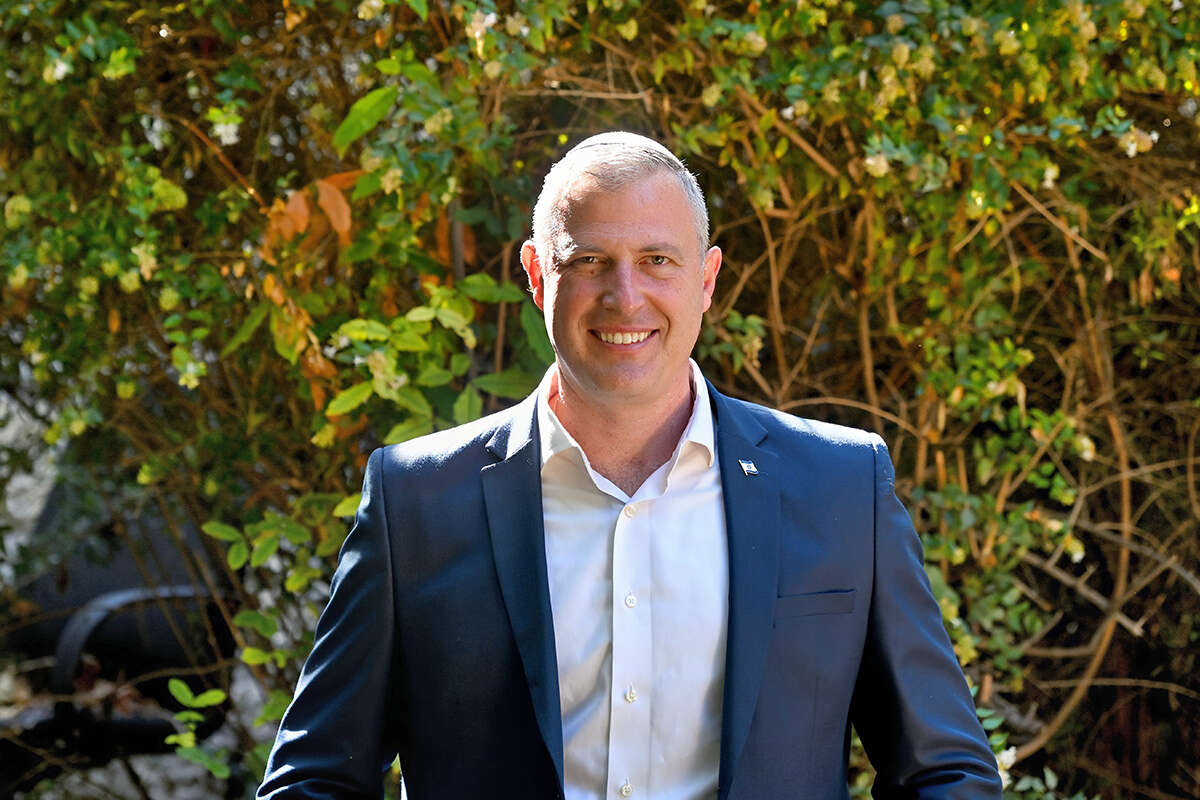
Rosenshein reveals that he knows Flávio Bolsonaro personally, a relationship that began through family connections. "We were both born in Rio de Janeiro and are roughly the same age, and Flávio attended university with my brother. He follows my social media activity and occasionally comments on my posts, expressing support for Israel. He also attended a public diplomacy event I organized in Brasília, the capital, which gave me an opportunity to meet him in person.
"It's important to distinguish Flávio Bolsonaro from his father, Jair. The Bolsonaro name is obviously a major political asset for him, but Flávio also brings substantial political experience of his own. He is a trained lawyer who served for many years in the Rio de Janeiro state legislature before being elected to the Federal Senate. He knows Brazil's political system, Congress and its decision-making processes very well."
In his public demeanor, Flávio differs from his father, Rosenshein explains. While Jair Bolsonaro is known for his direct, combative and sometimes provocative style, Flávio generally adopts a more restrained and calculated approach. He seeks to combine the conservative positions associated with his father with a more statesmanlike image. When it comes to Israel, his support is open and consistent.
Political tides rise and fall
The prospect of the younger Bolsonaro becoming Brazil's president offered a genuine opportunity to repair relations between Brasília and Jerusalem. Israel had hoped for a complete reversal in Brazil's voting record at international institutions, potentially influencing other countries as well.
Such a political shift could have paved the way for a long-term strategic partnership between the two nations. Now those hopes will be put on ice. Lula's success in remaining in power interrupted an extraordinary string of victories by right-wing candidates across Latin America. The continent's shift to the right had become so pronounced that many sought explanations for it.
One theory held that the closure of the US Agency for International Development (USAID) contributed to the trend. According to this argument, as long as the American agency operated and funneled billions of dollars to left-wing organizations in Latin America, left-wing candidates benefited from its funding and won elections. Once the flow of American money stopped, so did their electoral victories.
"There's no doubt that we've seen a significant strengthening of right-wing and center-right forces in Latin America in recent years," Rosenshein says. "We can see it in Argentina, Chile, Bolivia, Ecuador, Colombia and other countries. I think one of the main reasons for this shift is public dissatisfaction with economic conditions and personal security. In some countries, organized crime, declining purchasing power and the feeling that the political system isn't providing solutions have become central issues. As for USAID, I'm cautious about linking the closure of American aid programs to election results. In my view, the real underlying phenomenon is the crisis of confidence in traditional political systems. People are looking for leaders who offer clear answers to the problems they face in everyday life."
Is the shift to the right a generational realignment or a passing political wave?
"I don't believe political changes are irreversible. Democracy is built on precisely the possibility that the public can change its mind and choose a different path. Latin America has experienced periods when the left gained strength, periods when the right gained ground and periods of rapid changes in government.
"What will determine whether the current shift lasts is not simply victory at the ballot box, but results on the ground. If right-wing governments succeed in improving public safety, reducing the cost of living, strengthening institutions and creating economic opportunities, they will be able to build a stable base of public support. If not, voters may look for an alternative."
How will Lula's continued leadership affect Brazil's position as a leader of the Global South?
"Lula sees BRICS and cooperation among Global South countries as central pillars of his foreign policy. Flávio Bolsonaro, by contrast, sought closer ties with the US and countries that share a similar political outlook, while safeguarding important economic interests. The question will be how Brazil balances its relations with the West against its ties with emerging powers.
"From an Israeli perspective, it's important to remember that even countries with political disagreements can cooperate in science, technology, agriculture and health care. I believe Israel should cultivate its ties with Brazil as a long-term relationship between two countries, rather than merely a personal relationship between leaders."
Spreading the word
Most Israelis are unaware of the enormous evangelical Christian community in Brazil.
"You cannot understand Brazil without understanding the strength of its evangelical community. According to Brazil's 2022 census, approximately 30% of residents aged 10 and older identified as evangelical Christians. That's tens of millions of people, and the community continues to be a major social, religious and political force.
"For evangelical believers, Israel isn't just a country they see in the news. It's part of the Bible, their prayers and their faith. I encounter this reality firsthand. In recent years, I've significantly strengthened my ties with Brazil's evangelical communities and their leaders. When I visit Brazil, I'm regularly invited to speak in churches, participate in Christian community events and meet religious leaders with considerable public influence. During my most recent visit, I participated in three events, each attended by more than 2,000 people. I met people who expressed genuine love for the people of Israel, alongside others who came to ask questions and better understand the situation."
Can Brazil's evangelicals become a force pushing for better relations with Israel, as they have in the US?
"My encounters with evangelicals move me every time. It's precisely the connection between my Jewish identity and their Christian faith that sometimes creates a particularly profound dialogue. A significant part of my strategy in recent years has been to strengthen these relationships and turn sympathy for Israel into an influential force in public life. Brazil's evangelical community has considerable political power. In a sense, we can learn from the way Arab and Muslim communities in various European countries have succeeded in putting the Palestinian issue on the public and political agenda through community organizing, civic activism and relationships with elected officials.
"I believe support for Israel can also gain greater prominence in Brazil's public discourse and political system, while respecting the political independence of these communities and their members. As far as I'm concerned, support for Israel shouldn't belong exclusively to one political or religious camp. Ties with evangelical communities are extremely important, but Israel must also cultivate relationships with Catholics, Jews, secular Brazilians and citizens across the political spectrum. My goal isn't simply to strengthen sympathy for Israel, but to build long-term relationships that will allow pro-Israel voices to be heard in Brazil's public debate."
How is Israel portrayed in Brazil's news media, on social media and at universities?
"On October 7, 2023, when terrorists from Gaza carried out the massacre in Israel, I began giving almost nonstop interviews to Brazilian media outlets as part of my role as the IDF's Portuguese-language spokesman. I quickly realized that we were facing not only a military war, but also a battle for public opinion and over how the world understands the reality in Israel. Brazilian media outlets represent a wide range of views, but much of the discussion about Israel focuses on the images and devastating consequences of the war. Sometimes that coverage lacks the context of the October 7 attack, Hamas' use of Gazan civilians as human shields, the activities of terrorist organizations and the operational and legal dilemmas involved in fighting in populated areas. At universities, active groups express fierce opposition to Israeli policies. On social media, the situation is even more complicated. Incomplete information, propaganda and false claims can spread at tremendous speed and reach millions of people within hours.
"One of the most worrying developments since the October 7 massacre has been the sharp rise in antisemitism in Brazil. According to the Brazilian Israelite Confederation, the umbrella organization representing Brazil's Jewish community, 397 antisemitic incidents were recorded in 2022. In 2024, that number surged to 1,788. In 2025, 989 incidents were recorded, a decline from the 2024 peak but still an increase of approximately 149% compared with the prewar period. Antisemitism isn't confined to social media. It also includes expressions of hatred toward Jews, threats, verbal and physical assaults, and attacks on Jewish institutions and symbols. For me, as the grandson of an Auschwitz survivor and someone who was born and raised in Brazil, this is particularly disturbing. Brazil was a country that welcomed Jews fleeing persecution in Europe, including members of my own family. Seeing antisemitism rear its head again in that country is something that cannot be ignored."
Getting ahead of the propaganda
Now that hopes for a change of government have evaporated, will Israel have to get used to a Brazil that grows increasingly hostile toward it? Lula's record offers little reason for optimism. In January 2024, his government supported South Africa's proceedings against Israel at the International Court of Justice, alleging violations of the Genocide Convention.
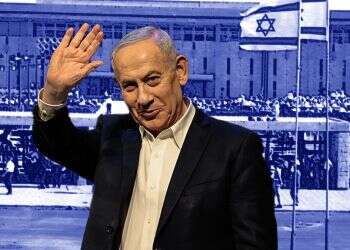
Another low point came in February 2024, when Lula compared Israeli military operations in Gaza to the Nazis' actions during the Holocaust. His remarks sparked widespread outrage, and Prime Minister Benjamin Netanyahu and then-Foreign Minister Israel Katz condemned them in the strongest terms. Katz declared Lula persona non grata in Israel until he retracted his remarks and apologized.
No apology ever came. Lula deliberately chose to embrace Hamas. He condemned the pager operation targeting Hezbollah commanders. He subsequently voiced support for Iran, questioning allegations about its nuclear ambitions and siding with Tehran in its war against Israel and the US.
It is hardly surprising that Iran's president was among the first to congratulate Lula this week. Palestinian Authority President Mahmoud Abbas and other senior PA officials followed suit. The global axis of evil rewarded Lula for his friendship, affection and support.
Nevertheless, Rosenshein refuses to give up. "I refuse to accept the claim that the Brazilian public is necessarily anti-Israel," he says passionately. "It was precisely this understanding that led me to expand my activities and establish a nonprofit organization in Brazil called Facts Without Borders, whose mission is to combat disinformation and make reliable information about Israel accessible to Brazilians in Portuguese. Today, our activities have more than 1 million followers on social media, and our content reaches millions of people every month. We're seeing engagement rates of more than 20%, an exceptionally high level of audience involvement. Even amid political polarization, anti-Israel campaigns and rising antisemitism, it's possible to reach large audiences, generate interest, foster discussion and build trust."
What should Israel do to minimize the harmful influence of Lula and leaders like him? What works in Brazil, and what has failed?
"For years, Israel hasn't invested enough resources in Portuguese-language public diplomacy, certainly not in proportion to Brazil's population and importance, which extends far beyond its borders. In my experience, one of the biggest mistakes in Israeli public diplomacy is the tendency to act primarily during crises. A security incident occurs, an accusation against Israel is published, and only then do we begin explaining our position. But by that stage, the narrative has already taken hold, and changing the perception that has formed can be extremely difficult.
"I've also learned that you can't simply take a message intended for an Israeli or American audience, translate it into Portuguese and expect it to have the same effect in Brazil. You have to understand the local culture, its sensitivities, the language and the way Brazilians consume information.
"What works is direct, sustained engagement with the public. Not just television interviews, but daily social media activity, face-to-face meetings, lectures, conversations with journalists and relationships with religious and civic leaders. But I believe there's a much bigger opportunity here. Israel and Brazil can deepen cooperation in technology, agriculture, defense and other fields. Such ties create shared interests and strengthen relations between the two countries in ways that don't depend solely on who happens to be president.
"The bottom line is that Israel must stop treating Brazil merely as an arena where it needs to respond to criticism and start seeing it as a potential strategic partner worthy of long-term investment. Ultimately, governments can change every four years, but trust between peoples is built over generations."