Iran's Islamic Revolutionary Guard Corps (IRGC) has begun identifying new targets and planning operations in "new geographic theaters" in preparation for another possible attack on the country, IRGC spokesman Hossein Mohabi announced Sunday. His remarks came a day after Iran's supreme leader, Mojtaba Khamenei, ordered the country's military leadership to respond to any threat without "geographic limitations."
"Maximum deterrence means acting in such a way that no country can even take a political position against Iran, let alone covet its territory and assets," Mohabi said, according to the Iranian news agency ISNA.
"The leader said we have no geographic limitations, and removing those restrictions gives us a broad theater in which to plan operations against an enemy attack, strike the enemy and achieve full deterrence," the Revolutionary Guards spokesman explained. According to Mohabi, deterrence would be achieved "through the unity of the various fronts and the identification of new targets."
In a statement issued Saturday following a special meeting with senior military commanders, Khamenei's office said he had ordered an "immediate, effective and geographically unrestricted" response to any threat. The statement added that if attacks resumed, Iran's armed forces and the Iranian nation would "determine when and under what conditions they end."
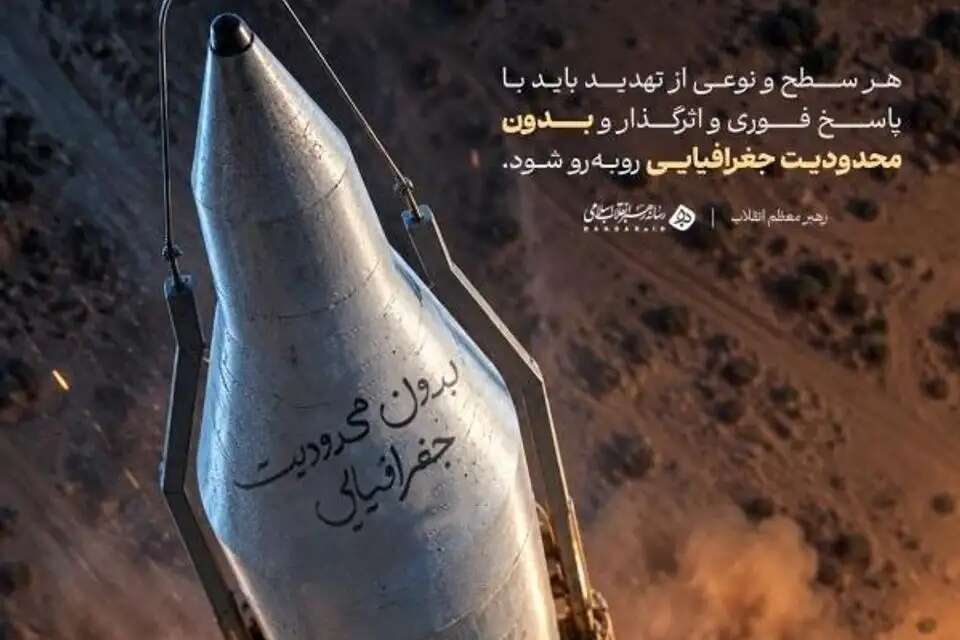
Khamenei's official media channel also circulated a graphic depicting a missile bearing the words "No Geographic Limits." In addition, Iranian Chief of Staff Ali Abdollahi said the military had prepared "a new bank of enemy targets and assets," warning: "We will respond to the enemy with force and severity, without geographic limitations."
This is not the first time Iran has threatened to expand the geographic scope of a conflict. During the war, missiles and drones were launched toward Turkey, Azerbaijan and even Cyprus, while two missiles were fired toward the joint US-British military base on Diego Garcia in the Indian Ocean. In September, Mohabi himself warned that if Iran were attacked again, "we will certainly change the geography of the war."
This time, too, the threats are directed at US military bases. A video released by the Fars news agency, which is affiliated with the Revolutionary Guards, shows a map of military bases in nine European countries, including Britain, Germany, Italy and Greece.
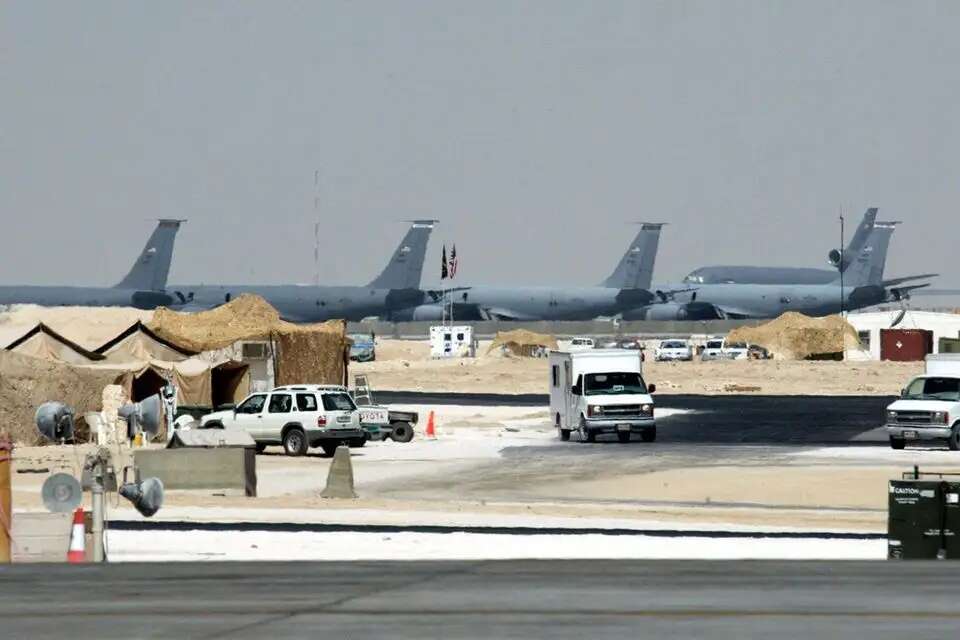
Danny Citrinowicz, a researcher at Israel's Institute for National Security Studies and former head of the Iran branch in the IDF Military Intelligence Directorate's Research Division, told Israel Hayom that "the Iranians appear to be seeking to expand their target bank to include assets that were not attacked in previous conflicts, including communications infrastructure and other strategic assets in Gulf states."
Meanwhile, the drums of war continue to beat in the US, with attention focused on the period immediately following Tuesday's midterm elections.
According to The Wall Street Journal, US Central Command chief Adm. Brad Cooper briefed President Donald Trump at the White House on Thursday about military options against Iran. The meeting was unusual because Cooper rarely briefs the president personally, the newspaper reported. The Journal also reported that the US had warned several Gulf states to prepare for a "short and intense" round of strikes. According to a separate report by MS NOW, the operation could begin as early as Wednesday.
Diplomatic efforts are continuing in parallel with the military preparations. An Iranian delegation held talks with Qatari mediators in Doha on Saturday, following more than 12 hours of discussions in Tehran on Friday that were coordinated with Washington, Reuters reported. According to the report, Qatar presented a seven-day plan about a week earlier under which the US and Iran would take daily confidence-building measures ahead of broader negotiations. A senior Iranian official, however, said Tehran did not consider the proposal sufficient.
Another diplomatic initiative involves a letter recently sent by Vice President JD Vance to Mohsen Rezaei, secretary of Iran's Supreme National Security Council, in an effort to revive negotiations. According to The Washington Post, Vance proposed meeting Rezaei in either Istanbul or Doha. He emphasized that Washington's primary objective was to prevent Iran from acquiring nuclear weapons, while acknowledging Iran's interest in rebuilding its economy. Rezaei said the tone of the letter had "changed completely" and described it as a positive sign, although Tehran has yet to respond.
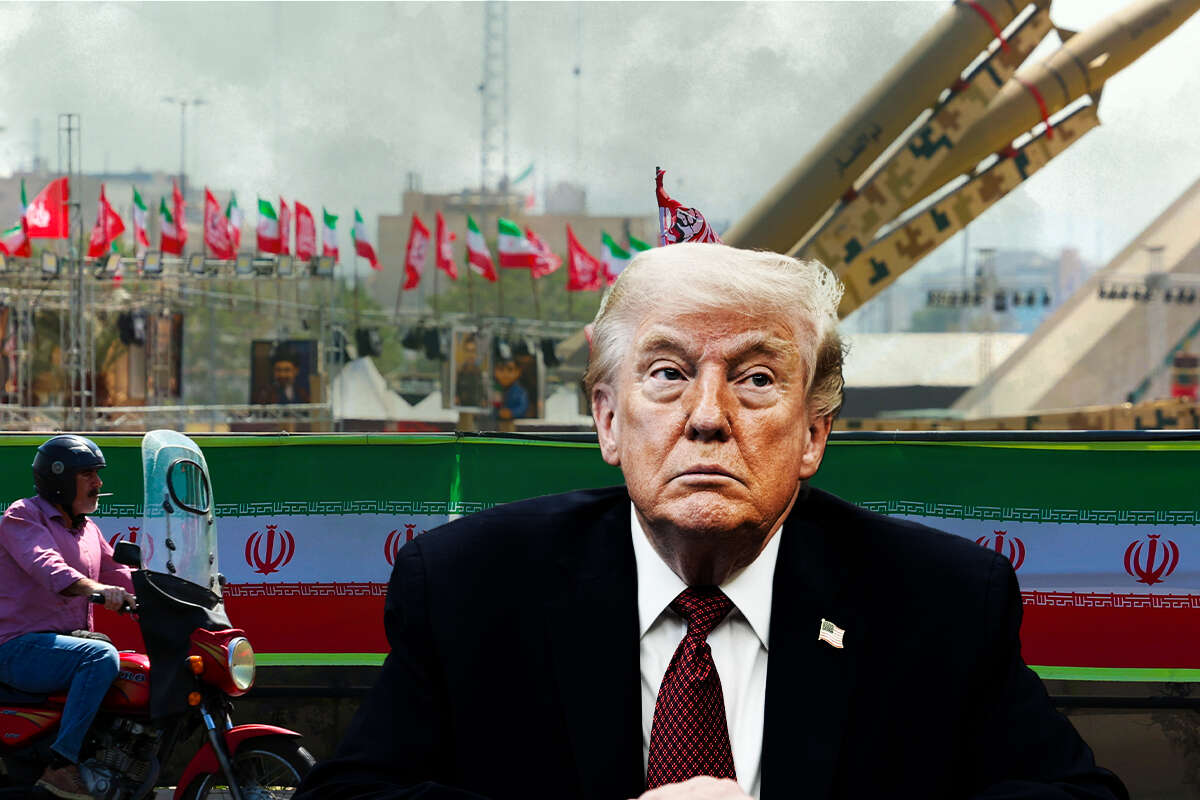
'Both sides want a deal, but the gaps remain deep'
Trump himself downplayed the initiative, saying he had approved it only to facilitate the delivery of medical supplies. "Basically, it's about getting supplies in to help sick people," he said.
Iran, for its part, has been advancing its own proposal since September. Under the plan, the US would lift its blockade of Iranian ports, release frozen assets and approve Tehran's proposed shipping route through the Strait of Hormuz. Only then would Iran reopen the strait. Rezaei made clear Saturday that the waterway would remain closed until Iran's conditions were met.
Citrinowicz warned that "the next conflict, if it breaks out, could be far broader, longer and more difficult than Washington hopes." Both sides would prefer to reach an agreement, he said, but the differences between them, "from the Strait of Hormuz to Iran's nuclear program, remain deep."
"If the negotiations collapse, we must not assume that the next war will be short or that its scope can be controlled," he warned.