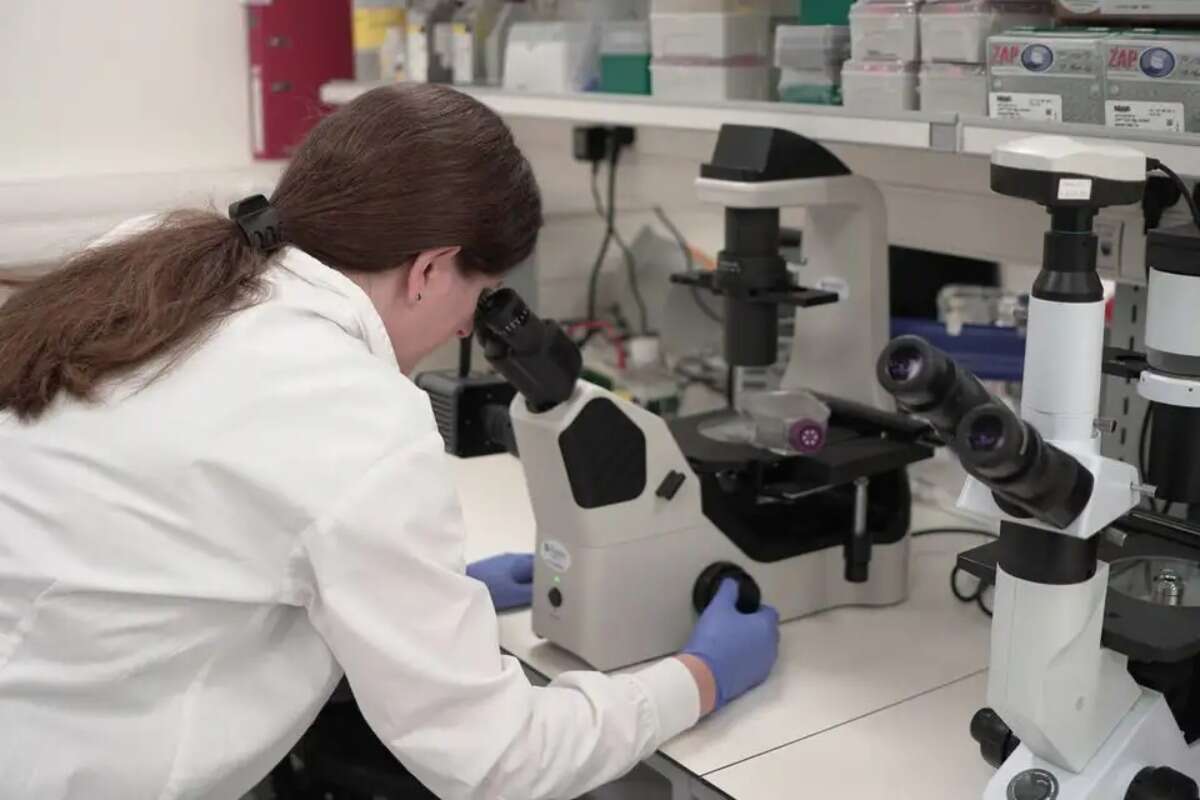
In special containers in its laboratory, Israeli biotech company NurExone produces trillions of exosomes: tiny particles released by the body's cells to transfer substances and messages between them. The company believes that by adding molecular cargo to these particles, it may be possible to encourage the nervous system to repair damaged connections and perhaps help people who have lost the ability to move or see regain at least some of their lost function.
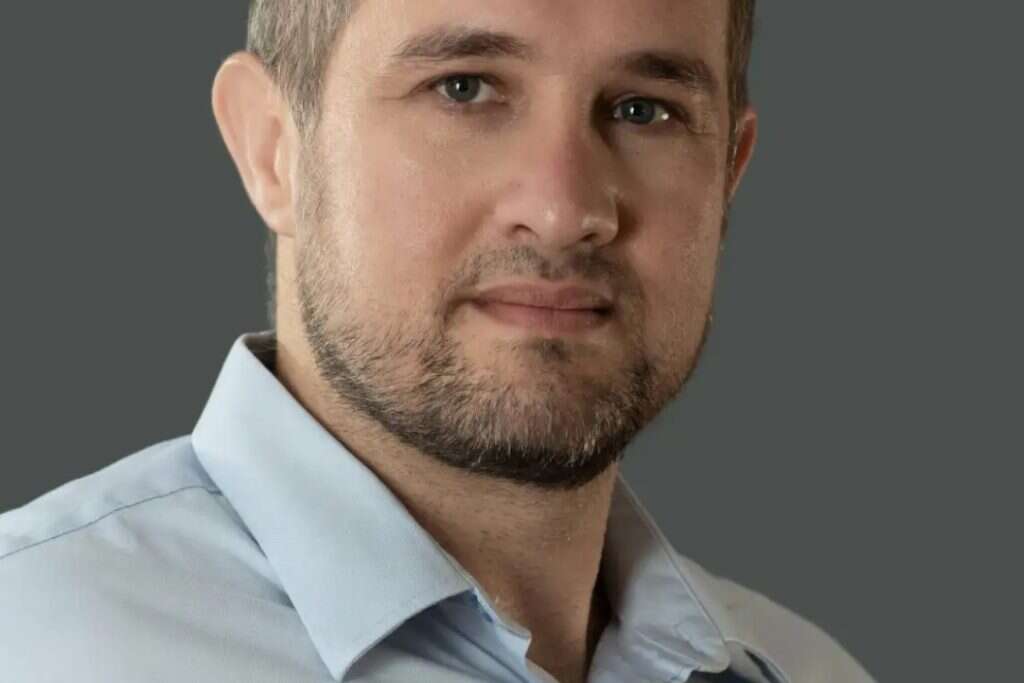
Behind these tiny particles lies a major medical ambition: to encourage the nervous system to repair damaged connections and restore lost functions. "The goal is to restore some of the patient's function, both motor and sensory," says Dr. Lior Shaltiel, CEO of NurExone, in an interview with Israel Hayom.
The company is encouraged by the results of experiments in rats, in which partial functional recovery was observed following severe spinal cord and optic nerve injuries – injuries previously considered seemingly irreversible. The findings raise hopes that neural regeneration could also be encouraged in humans, although the treatment has not yet been tested in people.
Packages with instructions
To understand why exosomes might help accomplish this task, we need to take a brief journey inside the body. Our cells do not operate in isolation: they communicate with one another, send messages, and coordinate their activities. One way they do this is through exosomes, tiny vesicles that cells produce and release into their surroundings.
These vesicles can carry proteins and RNA molecules and, in some cases, influence the activity of other cells. "They're not empty particles," says Shaltiel. "They're like packages from Amazon, containing lots of good things that can help damaged tissue."
At NurExone, researchers are trying to harness this natural delivery system. The company loads the particles with a special cargo, a kind of molecular instruction intended to encourage damaged nerve cells to regrow.
This instruction is needed because, in certain parts of the body, the natural capacity for repair is extremely limited. A cut in the skin heals, and a broken bone can mend, but mature nerve cells in the central nervous system – the brain, spinal cord, and optic nerve – struggle to regrow their extensions after injury.
"We add cargo to the exosomes that gives a stronger boost to the regeneration and repair of damaged tissue," says Shaltiel.
Releasing the brake
NurExone's treatment targets a protein called PTEN, which plays a role in regulating cell growth. This is an essential mechanism: among other things, it helps prevent cells from dividing uncontrollably and developing into cancerous tumors. But the same regulatory system is also involved in limiting the ability of mature nerve cells to regrow their extensions.
"It's like a police officer inside the cell," says Shaltiel. "It operates within a chain of mechanisms that determine whether the cell can grow and develop."
The cargo the company adds to the exosomes is a small RNA fragment called siRNA, designed to reduce PTEN production at the injury site. The idea is to temporarily ease some of the brakes on growth, giving cells an opportunity to recover.
Because the protein also plays an important role in protecting the body, the company aims to influence it in a targeted manner and for a limited period.
"We don't want to reduce this protein over the long term," Shaltiel explains. "The idea is to administer the treatment at the injury site, for a short period."
From the laboratory to the patient
The development has its roots in research led by Prof. Shulamit Levenberg of the Technion and Prof. Daniel Offen of Tel Aviv University, together with other researchers. They sought to determine whether repair could be encouraged at a spinal cord injury site by activating the body's natural growth mechanisms, without the need for tissue transplantation – a complex, invasive procedure in a particularly sensitive area.
The enormous promise of the development can be illustrated by a laboratory experiment in which, according to Shaltiel, something that sounds almost impossible took place. Researchers administered the treatment to rats whose spinal cords had been completely severed, seeking to determine whether the regeneration of the disrupted neural connections could be encouraged.
"They saw rats regain motor function. In other words, rats started walking again," he recounts.
When I ask to make sure I have understood correctly – they couldn't walk, and then they walked again? – he replies: "Correct. It's really binary."
Shaltiel describes the result as "hugely dramatic" and "very, very strong proof of concept."
There was another surprise in the study: the substance was administered intranasally, and the particles reached the spinal cord injury site.
"They did it through non-invasive administration, using nasal drops," says Shaltiel.