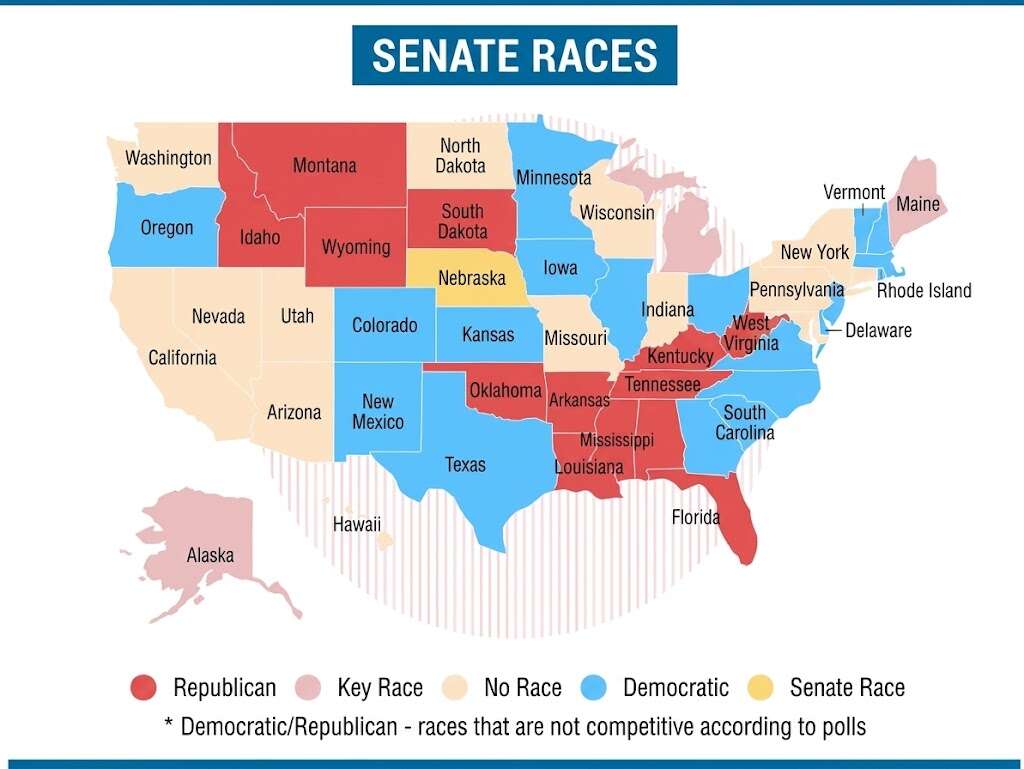
Control of the Senate passed to the Democrats in this year's balloting, according to a projection by CBS News, as the party toppled Republicans in a run of pivotal races and flipped the upper chamber.
The projected gains ran through Ohio, Iowa, Kansas, Texas and the Carolinas, contests that turned surprisingly close down the stretch, while the party defended Georgia and New Hampshire. The eventual margin is not yet settled.
As of Wednesday morning Israel time, the Democrats were projected to win at least 53 seats in the 100-member Senate. In the House, although the networks have so far officially projected only 206 of the 435 in the House would go Democrat, the remaining uncalled races are virtually guaranteed to end in enough victories to secure a strong majority in the lower chamber as well.
More than a third of the Senate was on the ballot, and while the GOP had more ground to guard, most of it lay in states Trump had carried easily. Late in the race, fury over the Iran war and painful gasoline and diesel costs pulled fresh states into play. Despite pouring hundreds of millions into defending turf across Alaska, Nebraska, Ohio, Iowa, Kansas and Texas, states Trump had won by double digits two years before, the party fell short.
The Democrats last held the majority in 2022 before surrendering it in 2024, and the win hands them leverage over Trump's final two years: they can stall nominees and set the floor agenda, boxing in his legislative plans. CBS News also called the House for the party.
Reached by phone, Trump told The New York Times he was "absolutely willing" to accept the midterm verdict and ready to deal with the incoming majority. "We'll, you know, look forward to working with them," he said, adding, "We'll probably work something out."
He pinned the defeats on his own absence from the ticket and stood by his choice to wage war on Iran, branding it a "very wise decision." He voiced no regret over endorsing losers such as Senator Darline Graham of South Carolina and Texas attorney general Ken Paxton, both beaten in their Senate runs.
Watching returns at the White House close to 10:30 at night, the president sounded deflated. "I'm just looking at these results as I'm talking," he told The Times, before adding: "I see that Darline lost. Wow, that's amazing. How do you think Lindsey would have done if he ran?" The question nodded to Senator Lindsey Graham, who died in July and who, Trump reckoned, would most likely have won.
Even so, he refused to second-guess his own record. "I consider it to be the most successful two-year period in the history of any president," he said. The pledge to respect the count followed a year of Trump questioning election integrity, and hours earlier the Homeland Security Department had vowed on social media to arrest noncitizen voters it has struggled to track down.
The blue wave rolled from coast to coast, and when it receded the Senate belonged to the Democrats. Republican-held seats fell in Texas, Ohio, Kansas, Iowa, North Carolina and South Carolina, even as the party kept its incumbents in New Hampshire and Georgia.
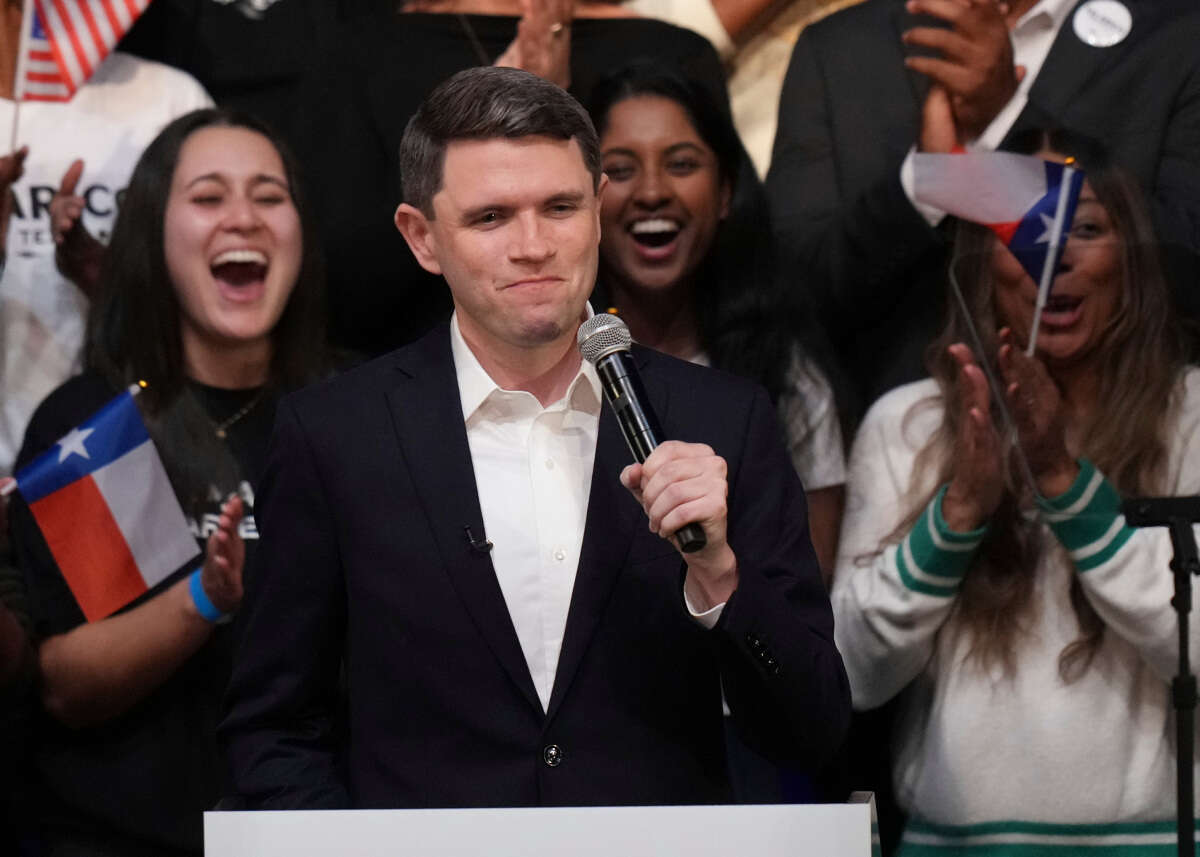
Texas produced a pair of Democratic triumphs. A pivotal Senate seat went to James Talarico, who turned back Ken Paxton, the Republican attorney general, while Gina Hinojosa unseated three-term pro-Israel governor Gov. Greg Abbott. Iowa, which had not sent a Democrat to the Senate since 2008, flipped its open seat to Josh Turek, a Democratic state representative.
In Kansas, Adam Hamilton toppled sitting Sen. Roger Marshall, becoming the first member of his party to claim that seat in almost a century. South Carolina delivered the night's biggest shock. Annie Andrews, a Democrat, ousted GOP Sen. Darline Graham in a state that normally votes red, even though Trump had thrown his weight behind the incumbent, The Wall Street Journal noted.
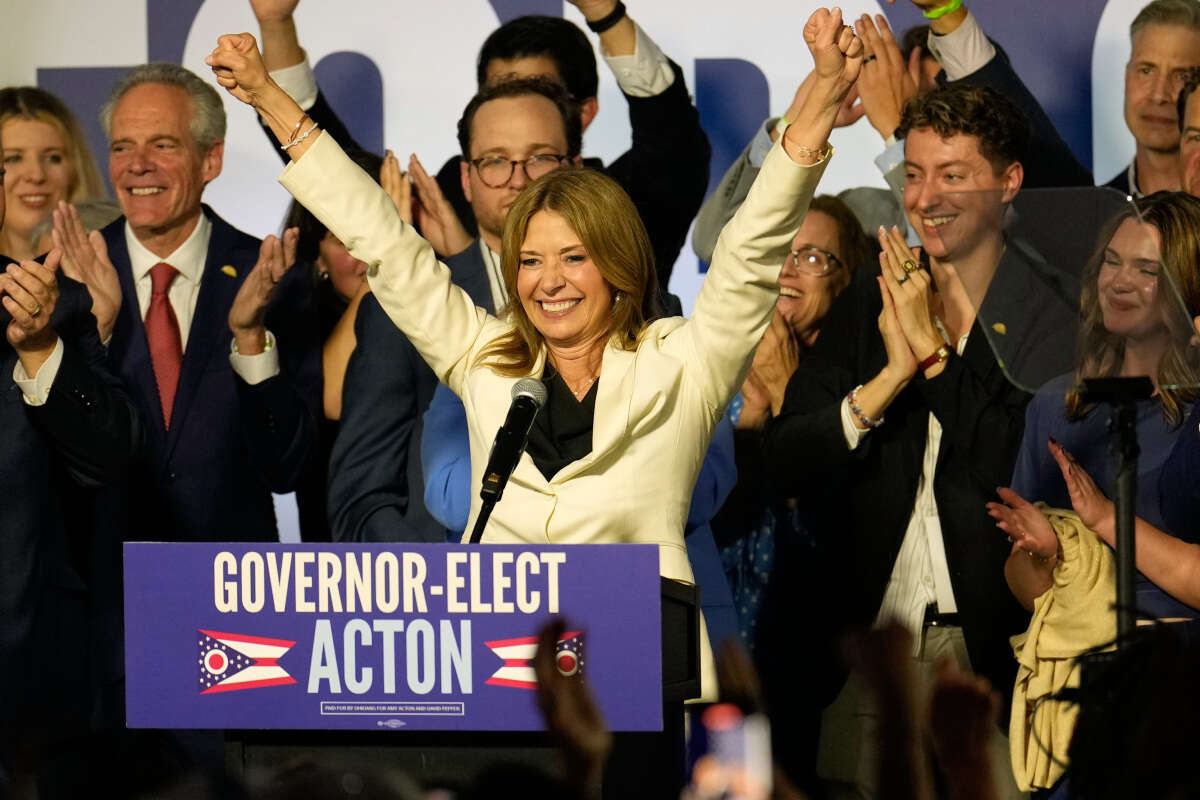
The governorship of Ohio went to Democrat Amy Acton, who overcame Republican Vivek Ramaswamy to become her party's first holder of that office since 2006, the Associated Press reported. North Carolina gave Democrats their earliest pickup of the night, when former Gov. Roy Cooper captured the seat being vacated by GOP Sen. Thom Tillis.
In Georgia, Sen. Jon Ossoff, a sitting Democrat ranked among Trump's fiercest critics, held off challenger Mike Collins, a Republican, while the governor's office went to Keisha Lance Bottoms, who becomes Georgia's first Black woman governor and the first nationwide.
Florida bucked the Democratic tide as Republicans captured two marquee statewide contests, with Sen. Ashley Moody keeping her seat and Rep. Byron Donalds, in a historic outcome, poised to become Florida's first black governor. As the returns rolled in, Trump moved to put space between himself and the outcome, declaring, according to The Wall Street Journal: "I wasn't on the Ballot and if I was, we would have won IN A LANDSLIDE!"
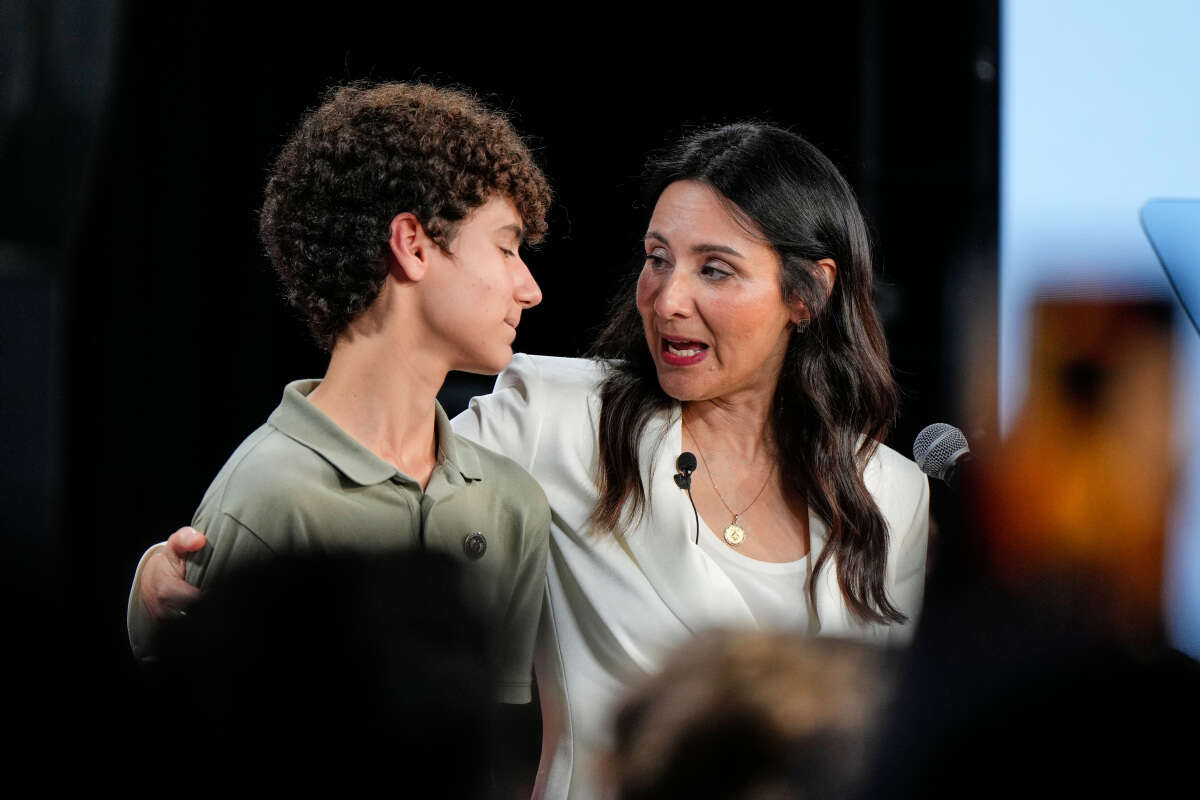
Texas' stunning defeat to Hinojosa, a Democratic lawmaker, comes after months in which she had been dismissed an unserious threat, Reuters reported. The loss severs a Republican grip on the post that had held firm for thirty years, and it makes Hinojosa the first Hispanic ever to lead the state.
Not since 1994 had a Democrat prevailed in any statewide Texas contest, the nation's longest such streak, which made her breakthrough especially startling. It arrived amid a lopsided evening for her party, which appeared set to seize both chambers of Congress and notched improbable wins in strongholds like Kansas and South Carolina, according to Reuters.

Having sunk $100 million into his bid for an unheard-of fourth term, Abbott entered the race as one of America's richest and most prominent Republican executives. Democrats, by contrast, had nearly conceded the seat, scrambling to field anyone against him until a national drive to compete everywhere drew Hinojosa in once no one else stepped up.
Her triumph fit a punishing pattern for Republicans in their heartlands, where anger at President Trump, the economy on his watch, and the Iran war fueled Democratic gains. Beyond Washington, the party went after statehouses and governor's seats, countering a rare mid-decade Republican effort to redraw the map, Reuters noted.