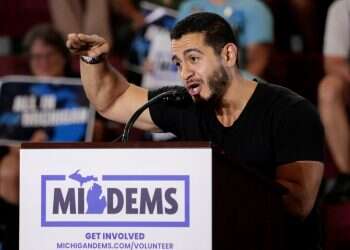
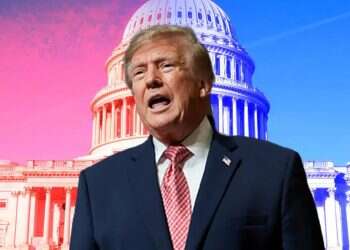
Just one day after Republicans suffered a crushing defeat in the US midterm elections, losing control of both houses of Congress, Vice President JD Vance made an unusually public move that appeared designed to distance himself from one of President Donald Trump's signature decisions: the war in Iran.
In a lengthy post on X on Wednesday, Vance blamed the defeat on the war, the rising cost of living and growing frustration among voters who helped deliver Trump's 2024 victory but switched their support to Democratic candidates this time.
"The reason we lost is the war. The president himself said so last night," Vance wrote. "If you'd like to argue it was worth it, that losing the Senate for the next 6 years was worth it, then do so. Argue it was a worthwhile cost to pay. Agree or disagree, that's at least honest."
One of the things the data analysts on our side obsessed over was "composition"—whether the electorate looked close enough to 2024 for Republicans to win. And despite polls that showed a Democrat blowout, the data kept on telling us the same story: in some states turnout was merely OK, in other states it was downright amazing, and in no state was it catastrophic. There was a genuine sense of optimism on our team: our people were showing up.
So, I asked the smartest data guy I know, does that mean we're going to shock the world? "No," he told me. "We might do better than the polls suggest. But the data is telling us that a lot of Trump/Vance 2024 voters are pissed and planning to vote for the other guys. Our voters are turning out, but they may not vote for us."
Well, that looks prophetic now. Our voters did show up. In Florida, for example, the electorate was 9 points more Republican than Democrat, just a couple points worse than 2024. Undoubtedly there were places we could have done better on turnout. But the main problem is not turnout. The main problem is that many people who voted for Trump/Vance in 2024 voted for Democrats in 2026.
There will be a lot of infighting and arguing over what happened and why that is. One of the pollsters I really respect told me that our economic messaging wasn't sharp enough down the stretch. I'm sure that's true.
But the real reason we lost is obvious to almost everyone.
Another pollster—one of the smartest people I know in politics, told me yesterday we'd lose the generic ballot by 13 points. I felt negative going into Tuesday, but even I was shocked by this. In his polling, he saw that a lot of Trump 2024 voters were angry and planning to vote for Democrats. He asked those voters who had abandoned us what would cause them to come back on our team. The top four answers, accounting for nearly all of the responses were:
1) End the war
2) Focus on cost of living/inflation
3) Put America First
4) Change our relationship to IsraelOur voters showed up. And the above four reasons are why many of them voted for Democrats. This is according to a pollster who nailed the results. While many spent Monday attacking Rachel Campos Duffy for calling for a diplomatic resolution to the conflict, it turns out her political advice was sound. (She's also a great person.)
In the next few months, there's going to be a lot of gaslighting. Expect to hear any number of establishment politicians say the solution to our woes is amnesty. I'm open to the idea that we should change enforcement—by focusing more on businesses that hire illegal labor, for instance. But anyone pushing amnesty is lying to you.
The reason we lost is the war. The president himself said so last night.
If you'd like to argue it was worth it, that losing the Senate for the next 6 years was worth it, then do so. Argue it was a worthwhile cost to pay. Agree or disagree, that's at least honest.
But everyone knows why we lost. And any honest conversation about where we go from here must start there.
I remain hopeful about our country. To the people who are pissed off and want to say, "I told you so": you're right, you did tell us so. Take that energy into electing Republicans who share your worldview. To the people who are just pissed at the results, you should be. Let's take that anger and get back to the work of saving our country.
— JD Vance (@JDVance) November 4, 2026
Vance said a political pollster he had spoken with believed some Trump voters from 2024 could return to the Republican Party if the war ended and the party refocused on the soaring cost of living.
According to Vance, the pollster asked disaffected Trump voters what would bring them back to the Republican fold. Their four leading responses were ending the war, focusing on the cost of living and inflation, putting America First, and changing the US relationship with Israel.
The Make America Great Again (MAGA) movement was built in large part on a promise to avoid prolonged military entanglements overseas. Americans are weary of war, and the experiences of Vietnam, Iraq and Afghanistan remain deeply embedded in the national consciousness. If midterm elections serve as a kind of referendum on the administration in power, Vance's message is clear: We heard you.
The war in Iran, coupled with rising fuel and consumer prices, has put those promises to the test. According to an Associated Press survey of more than 100,000 voters, roughly six in 10 Americans believed the decision to use military force against Iran was wrong. Still, the war was not the only major issue shaping the election. The cost of living and corruption ranked higher among voters' most pressing concerns.
According to a Politico report published Thursday, Vance personally wrote the 614-word post and informed the White House of his intention to publish it beforehand. A senior White House official told the outlet that Trump was "totally fine" with the remarks.
In fact, Vance had begun signaling differences with Trump earlier in the war. Shortly after the fighting began, the president acknowledged that his vice president was "a little bit different philosophically" and had been "perhaps less enthusiastic about going" to war, while dismissing suggestions of a rift between them.
Vance later took on a central role in efforts to bring the campaign to a swift conclusion, traveling to Islamabad, Pakistan, in April for talks aimed at ending the conflict. "JD is not the Iran guy, and everybody knows it," a person familiar with his efforts told Politico.
Trump is in no hurry to back down
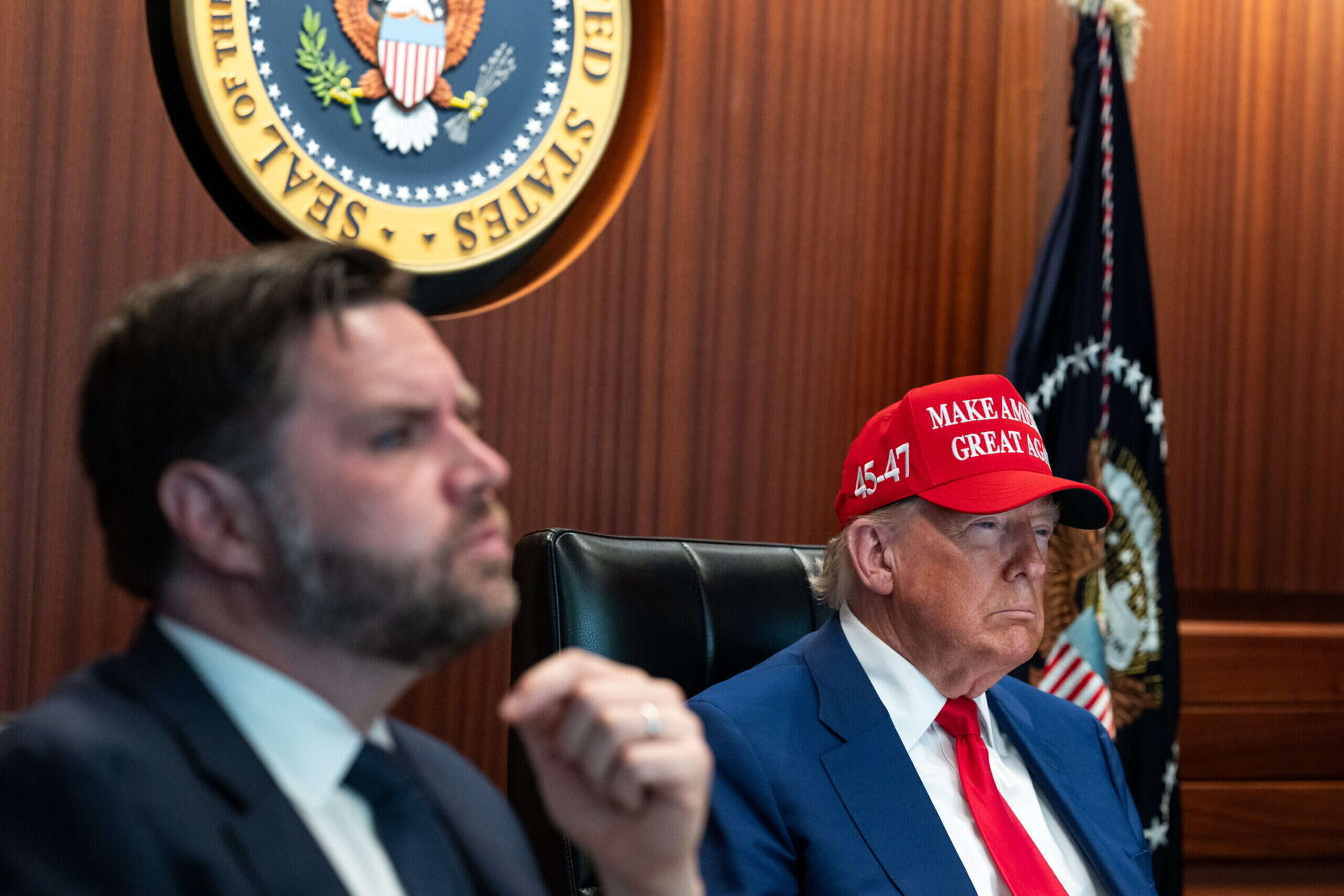
Trump said Wednesday that he understood Vance's position on Iran but stood by his decision to go to war. "I know how he feels about it. I think it was fine. We knew that. I knew that going into it," the president said.
Trump subsequently made clear that he had no intention of setting a timetable for ending the campaign. "The war will end when I want it to end," he declared, adding that the US would not allow Iran to acquire nuclear weapons.
The contrast between the two men is particularly striking because Trump himself acknowledged that the war had contributed to the Republican election losses, while insisting that he did not regret his decision. Vance, by contrast, portrayed the loss of Senate control as a political price that demanded serious soul-searching.
The vice president's post quickly received public backing from Donald Trump Jr., the president's son and a close Vance ally. His endorsement suggests that criticism of the war is not necessarily viewed as an act of rebellion within Trump's political camp, but may also be part of a broader debate over the movement's future.
Every word of this is 💯💯💯
— Donald Trump Jr. (@DonaldJTrumpJr) November 4, 2026
All eyes on 2028
Behind Vance's unusual public remarks lies a much bigger political question: Who will succeed Trump and lead the Republican Party into the 2028 presidential election?
Vance has long been considered one of the leading contenders to succeed Trump. Until now, however, his political strategy has depended heavily on the sitting president's support. He has even said in the past that Trump would ultimately determine who becomes the next Republican presidential nominee.
Now, following the midterm defeat, it appears there may be a substantial constituency within the party looking for a candidate who can offer an alternative to some of the current administration's policies. Vance is trying to appeal to those voters without directly confronting the president whose endorsement he still needs.
It will not be easy. According to Politico, some Republicans believe it will be extremely difficult for Vance to separate himself from the war in Iran, rising prices and the administration's other decisions. One Republican member of the House of Representatives suggested that the vice president could no longer escape responsibility for what has happened.
Even Vance's allies acknowledge that his ability to distinguish himself from Trump has limits. "He can create some differentiation, but there's no way he can completely separate himself," a person close to both the vice president and the White House told Politico. "He's still Trump's vice president. This is still the Trump administration's war."
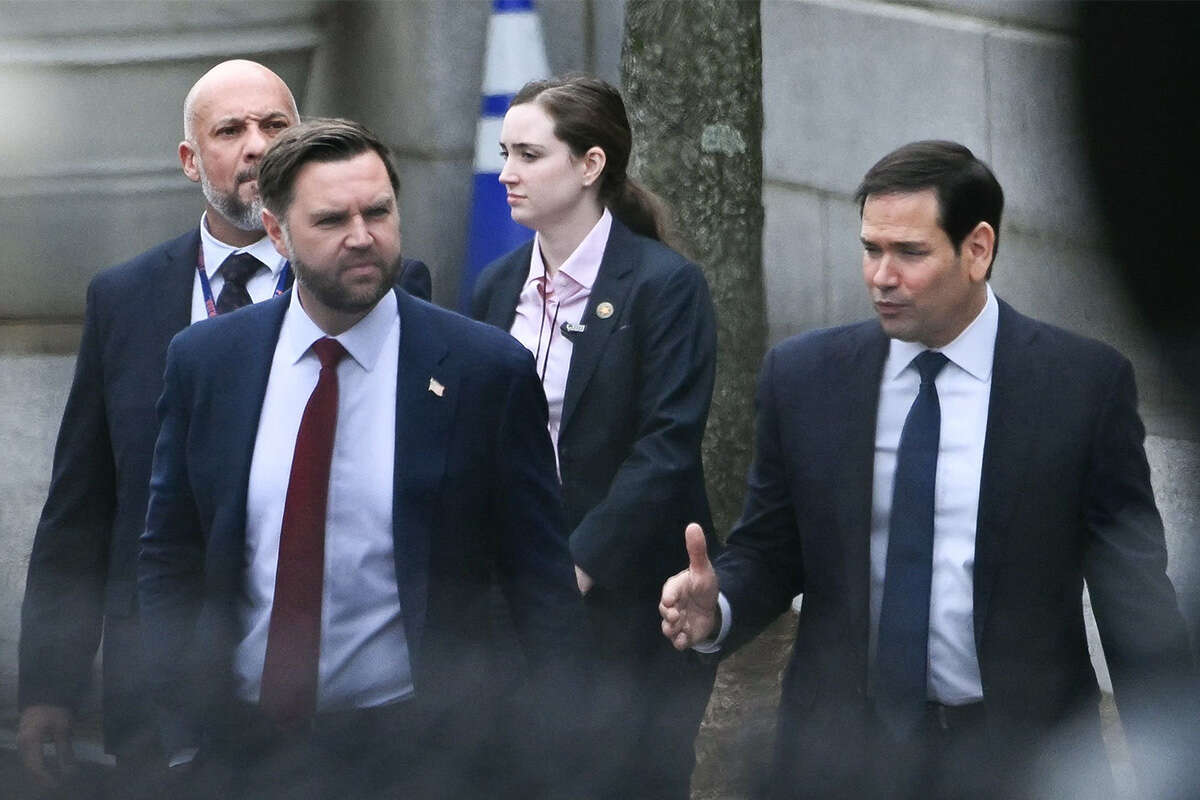
There are also potential rivals within the Republican Party. Secretary of State Marco Rubio, who is closely associated with the administration's hawkish foreign policy, could find himself politically vulnerable if Vance succeeds in framing the war as a strategic mistake. If Republicans conclude that military intervention in Iran cost them dearly at the ballot box, those who supported a hard-line approach toward Tehran could also face scrutiny.
Can Vance inherit Trump's movement without breaking with him?
Vance faces an almost impossible political balancing act. He wants to present himself as a leader who listens to voters who abandoned the Republicans, without appearing to turn his back on the president who made him vice president and elevated him to a leading position within the Republican Party and MAGA movement.
Moreover, his criticism of the war does not erase his support for a long list of other administration policies, including tariffs, immigrant deportations and the White House's broader economic agenda. Some of those policies are themselves at the center of the frustration voters expressed in the midterms.
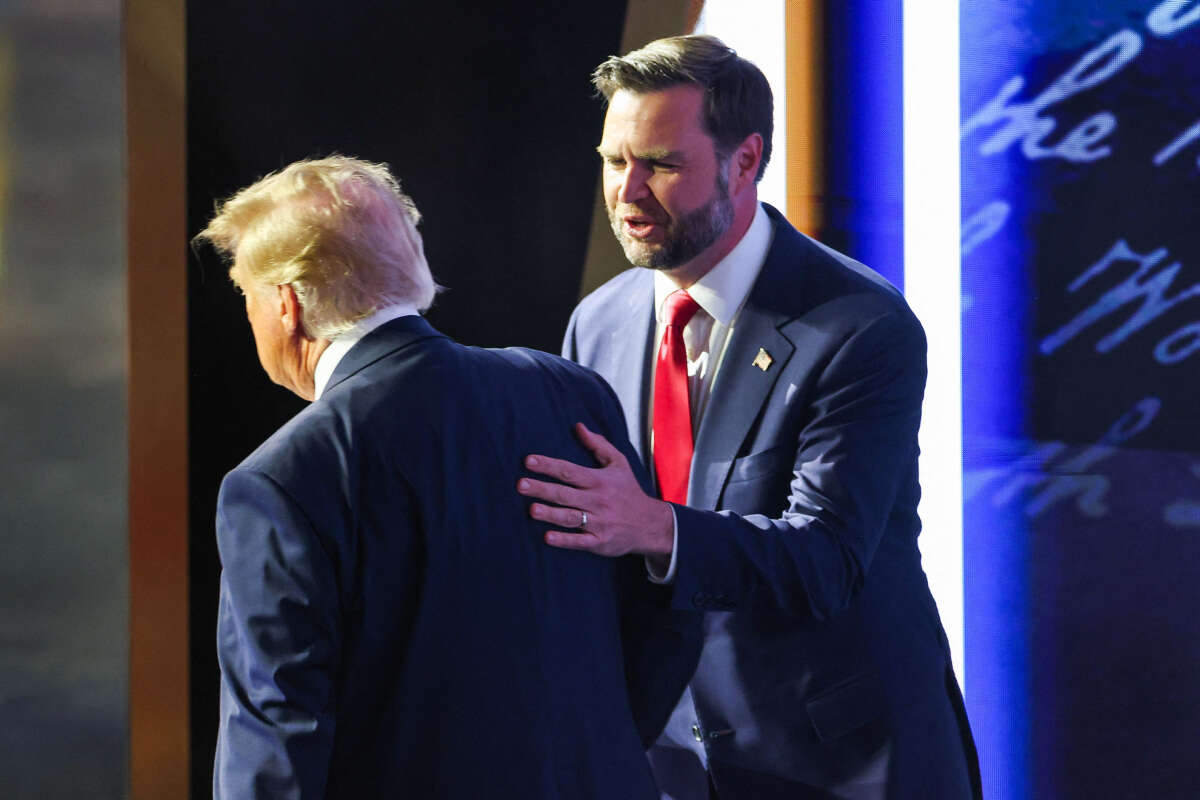
Vance appears to recognize that the coalition that carried Trump to victory can no longer be taken for granted by Republicans. The question is whether he can establish himself as the face of MAGA's next generation or remain tied to an administration that voters punished at the ballot box.
For now, he is taking the first step. Not against Trump, at least not explicitly, but toward redefining what the movement he hopes to lead should stand for.