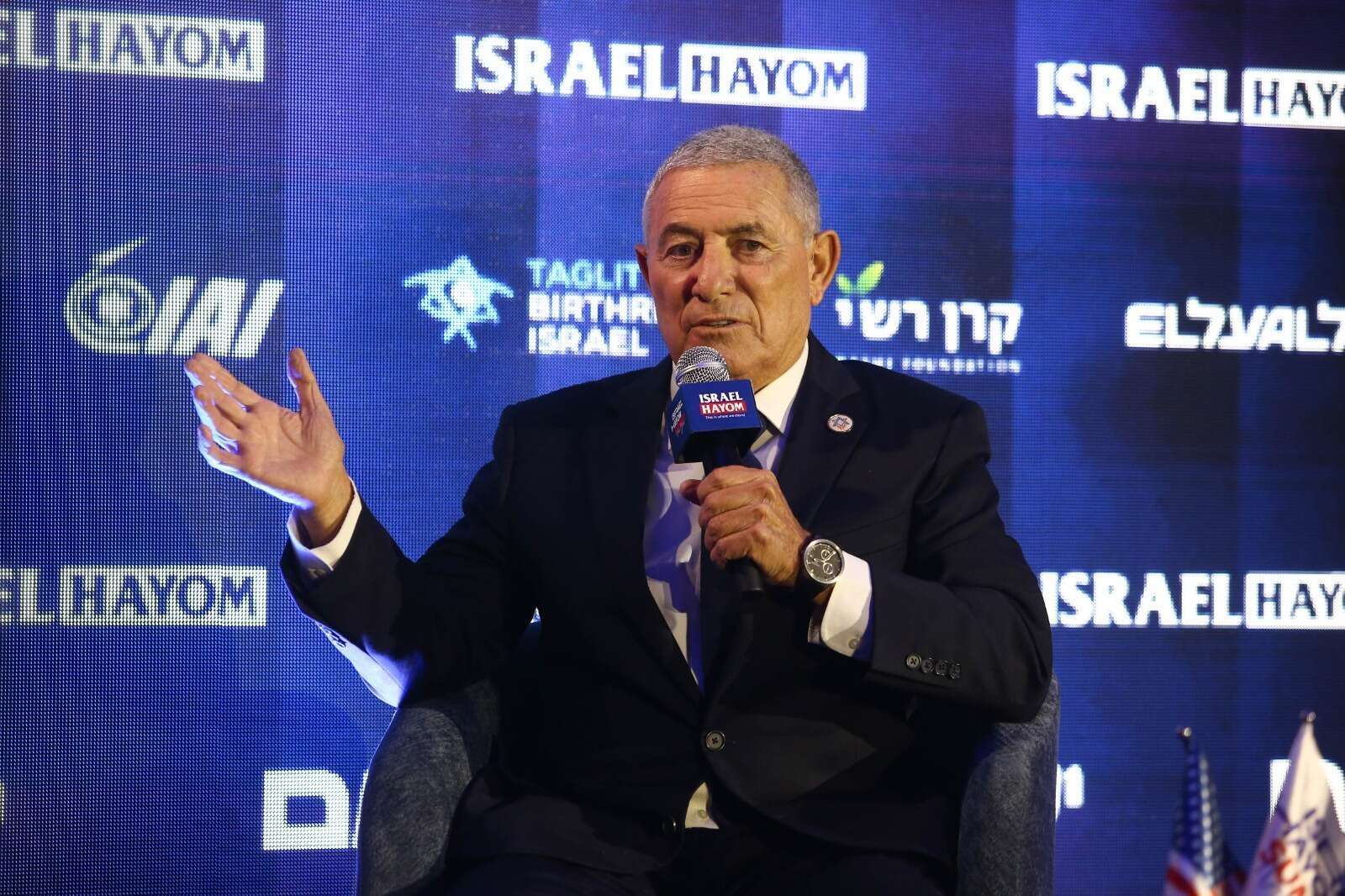
The Israel Hayom Summit opened Wednesday in New York, bringing together senior figures from Israel and the US, government officials, business leaders, heads of organizations and prominent members of the Jewish community. Held for the second consecutive year at the InterContinental hotel in Manhattan, the summit is attended by Israel Hayom publisher Prof. Miriam Adelson and features discussions, interviews and panels on the major challenges facing Israel, the US and the Jewish world.
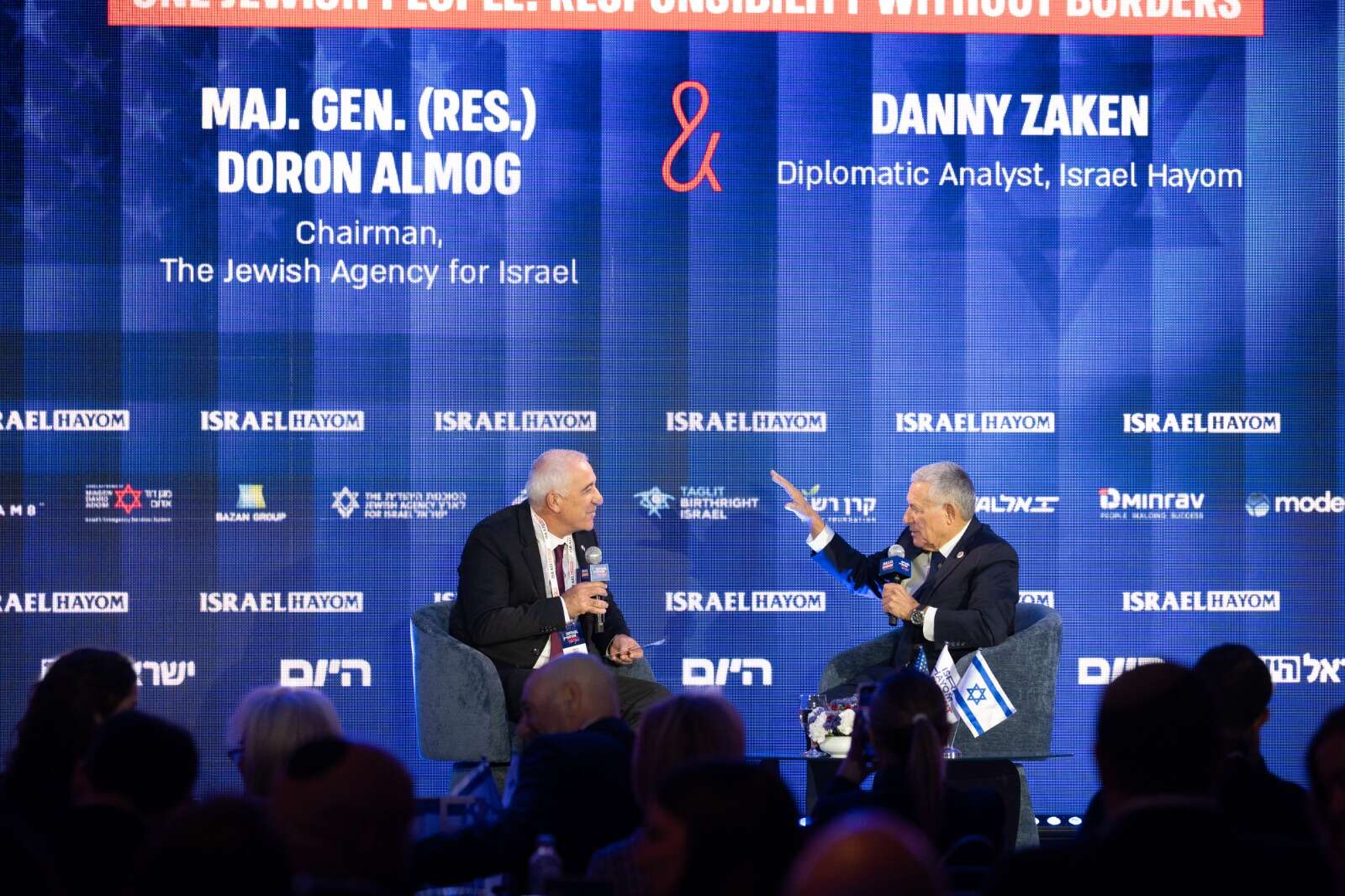
Jewish Agency Chairman Maj. Gen. (res.) Doron Almog told journalist Danny Zaken that approximately 75,000 new olim had arrived in Israel since Oct. 7, 2023, while the number of immigration applications opened in Britain had quadrupled.
"We're seeing an increase in the number of aliyah files being opened, sometimes twofold or fourfold, as in the case of England," Almog said, referring to the process of applying to immigrate to Israel. He added that the number of olim arriving from France had more than doubled. "What we're seeing now is the younger generation, educated professionals and young families with children coming to Israel with tremendous motivation," he said.
Almog also described conversations with the parents of lone soldiers, who serve in the Israel Defense Forces without their immediate families living in Israel. "I talk to them and ask, 'How can you let your children come to Israel and join the army?' They tell me, 'It's easy. This is our beloved country. We have one homeland, Israel.'"
Almog added that some lone soldiers were afraid to return to their countries of origin, citing South Africa as an example. He claimed that because of South Africa's accusations of genocide against Israel, soldiers returning there could face military trials. "We at the Jewish Agency bring their parents here," he said.
'An earthquake for the Jewish people'
Zaken asked how the Jewish Agency's work had changed since the outbreak of the war. "October 7 was an earthquake for the Jewish people," Almog replied. "The world is shaking, but this is also the Jewish people's finest hour. Thousands have donated, come to volunteer and helped us raise funding."
According to Almog, the number of people receiving assistance from the Jewish Agency's Fund for Victims of Terror has surged from approximately 200 annually to more than 30,000 since Oct. 7. Recipients received an initial grant of 4,000 shekels (approximately $1,200) within 24 hours, he said.
Almog shared that members of his own family from Kibbutz Kfar Aza had also received assistance from the fund. He recalled Nadav Goldstein-Almog and Yam, who were murdered, and Chen, Agam, Gal and Tal, who were abducted and later returned from captivity. "As soon as they came back, I met them at Schneider Children's Medical Center. The following day, they received money from the Fund for Victims of Terror," he said.
He also described the ongoing assistance available to survivors, including support from social workers and psychologists. "Whatever they need," he said.
Discussing the response from donors, Almog said, "Since October 7, we've seen significant Jewish philanthropy. The State of Israel now has a larger defense budget, so philanthropists understand that they need to support Israel."
"In effect, Israel has two budgets: one from the Israeli government and another from philanthropy, worth billions," he added.
He cited the Adelson, Hartman and Schneider families among those contributing to the effort. "They understand better than ever that we need to support and strengthen ourselves," Almog said.
From aliyah to integration
At the beginning of the conversation, Almog reflected on his participation in covert operations to bring Ethiopian Jews to Israel through Sudan.
Asked what had stayed with him from those missions, he replied, "Above all, the love Ethiopian Jews had for Jerusalem, their prayers and their excitement at finally reaching Israel."
Almog recalled attending the shiva, the Jewish mourning period, for Haimi Aharon, who headed aliyah operations in the 1980s. Aharon's son showed him a photograph of the two men with then-Prime Minister Yitzhak Shamir following one of the operations. "What stands out most in that photograph is the commitment of Israel's prime minister and the State of Israel to bring our people home. It's as simple as that: the ingathering of the exiles," he said.
Almog said Israel had improved its ability to integrate new olim, with preparations now beginning before they arrive. "If you're a doctor in France, we arrange your professional license before you arrive. Now you can start working as soon as you land," he said.
He added that arrangements were also made in advance for families with children who have special needs. "We're doing things faster and better when it comes to integration," he said.
Almog also described volunteers teaching Hebrew at immigrant absorption centers and inviting newcomers to Friday night dinners. "Everyone in Israeli industry understands that aliyah is an engine of growth," he continued. "I have friends in high-tech who tell me, 'We want olim. We want talented olim. We need them to help drive us forward.'"
He said 300 doctors had come to Israel through the Masa Israel Journey program to work in Israeli hospitals for a year, with approximately 30% remaining in the country afterward.

'We need more emissaries'
Asked about strengthening Jewish identity among young people, Almog said the key lay in firsthand experiences and personal encounters with Jewish Agency emissaries.
He noted that the agency's emissary network included more than 3,000 people, among them nearly 1,000 recently discharged Israeli soldiers who had been trained and sent to summer camps abroad. "How do we continue strengthening Jewish identity? With the help of people like Miriam Adelson, who give from the heart, alongside other philanthropists," he said.
He also mentioned the Adelson Institute in Jerusalem, which trains the agency's emissaries.
Asked what the Israeli government should do to strengthen ties with Diaspora Jewry, Almog acknowledged that more was needed. "I admit it. We need to do more," he said. "To strengthen the connection and relationship between the State of Israel and Diaspora Jewry, we need more emissaries."
Almog described how spending a year as an emissary in a Jewish community abroad benefits both the young Israeli and the host community. "After a year, when that emissary returns home, they become the best possible ambassador for the Jewish community, whether in New York, Atlanta or Cleveland. Everybody benefits," he said. "That's why strengthening the relationship between Israel and Diaspora Jewry requires more emissaries and greater engagement."