When Sefi and Reut Ben Haim, founders of the Tzav 9 movement, learned last week that Britain and Australia were imposing sanctions on them, their hearts sank.
"I was shaking," Sefi admits. "I still remember the sanctions imposed by the US early in the war, which fortunately have since been lifted. Our cycling tour company employs people, and I have nine children. I felt as though everything was falling apart."
Reut saw the hurt and humiliation in her husband's eyes and decided to take a different approach.
"I felt this was an outrageous moral distortion," she says. "I remembered how worried I had been about him during the previous sanctions. They came while he was doing repeated tours of reserve duty, and he was devastated. At that moment, I realized someone was marking a target for me. If until then I had any doubts about the direction we had chosen for Tzav 9, I understood that we must not give in. We must be doing something right."
The sanctions announced by Britain and Australia last week go well beyond condemnations in the media, strongly worded statements or calls for Israel to change course. In just two days, the two countries intensified pressure on Israel, shifting the diplomatic confrontation into the economic and personal spheres. The sanctions targeted construction companies, nonprofit organizations and private individuals who live and work in Judea and Samaria. The message from both countries is clear: In their view, Israeli policy in Judea and Samaria, settlement expansion and violence against Palestinians have crossed red lines.
The measures do not amount to a blanket boycott of Israel, but their implications extend well beyond the names on the sanctions lists. The individuals and organizations targeted face asset freezes, blocked bank accounts and restrictions or prohibitions on business dealings, as well as a chilling effect on companies and organizations that work with them.
Neither country is acting in a vacuum. Israeli banks came under similar pressure in August 2025, when Norway's sovereign wealth fund excluded Israeli banks from its investment portfolio, citing their contribution to settlement construction.
The big question is what happens next. Are these isolated measures intended to send a message to the Israeli government, or the beginning of an international trend that will spread to other countries?
Owners of farms and construction companies targeted by the restrictions were reluctant to speak this week, saying they did not want to aggravate the situation with the countries imposing sanctions. They spoke among themselves and persuaded those considering interviews not to give them.
"Someone in another country is effectively telling you that work authorized by your own government is illegal in their eyes," a senior construction industry official says. "Since October 7, Palestinian workers from Judea and Samaria have not been allowed into Israel. To avoid further inflaming tensions with the Palestinians, they work for these companies in Judea and Samaria. So who exactly do Britain and Australia think they are hurting? The companies will still be able to operate inside Israel, but the workers will be left unemployed and in financial distress."
Roni Brik, president of the Israel Builders Association, echoed those concerns.
"Imposing sanctions on Israeli companies hurts businesses and people who operate within the law and could set a dangerous precedent," he says. "I call on the government to work toward having these restrictions lifted."
Eliav Libi, a bereaved father and owner of Libi Construction and Infrastructure, was personally named on the sanctions lists. The restrictions extend to companies, forums and nonprofit organizations he runs.
"I'm feeling the effects of the boycott firsthand," Libi says. "There are difficulties dealing with banks and suppliers, and my ability to secure financing and credit has been affected. It's certainly a challenge, but I'll deal with it. I know the price you pay when your son doesn't come home from the war, as happened with my late son David. But the farms I'm establishing will help maintain security in Judea and Samaria and ensure that other families don't have to experience that same grief."
But money is not the only issue. Nili Naouri, an attorney who heads the Israeli French organization Israel Is Forever, is facing an unusual legal proceeding. French judicial authorities have issued warrants compelling her and another Israeli woman to appear for questioning, which could lead to arrest warrants.
"I want to be questioned over Zoom and tell them to their faces what I think of what they're doing," Naouri says defiantly. "Unfortunately, this isn't the France I grew up in. It has surrendered to Islam just as it surrendered to Nazism. As far as I'm concerned, this warrant is a badge of honor. They've singled me out as someone who defends Israel. They can call me a terrorist all they want."
Fighting for home
Eliav Libi, 41, who lives on the Mitzpe Michal farm in the Jordan Valley, had already paid the ultimate price long before the restrictions were imposed.
David, 19, the eldest of his eight children, was killed in May 2025 when an explosive device detonated in Jabaliya while he was operating a bulldozer. David worked as a civilian contractor for the Defense Ministry, demolishing tunnels and terrorist infrastructure. He was the third civilian contractor to be killed since the war began.
Libi and his wife, Sarah, are among the pioneers of Jewish settlement in the Binyamin region and were among the founders of a farm bearing the name of the community of Malachei Hashalom. It had been Libi's dream since childhood. He established several farms, one after another, before settling in Mitzpe Michal. He and Sarah raise goats and sheep and operate a coffee stand on the farm. The hilltop overlooks the agricultural fields of the Jordan Valley.
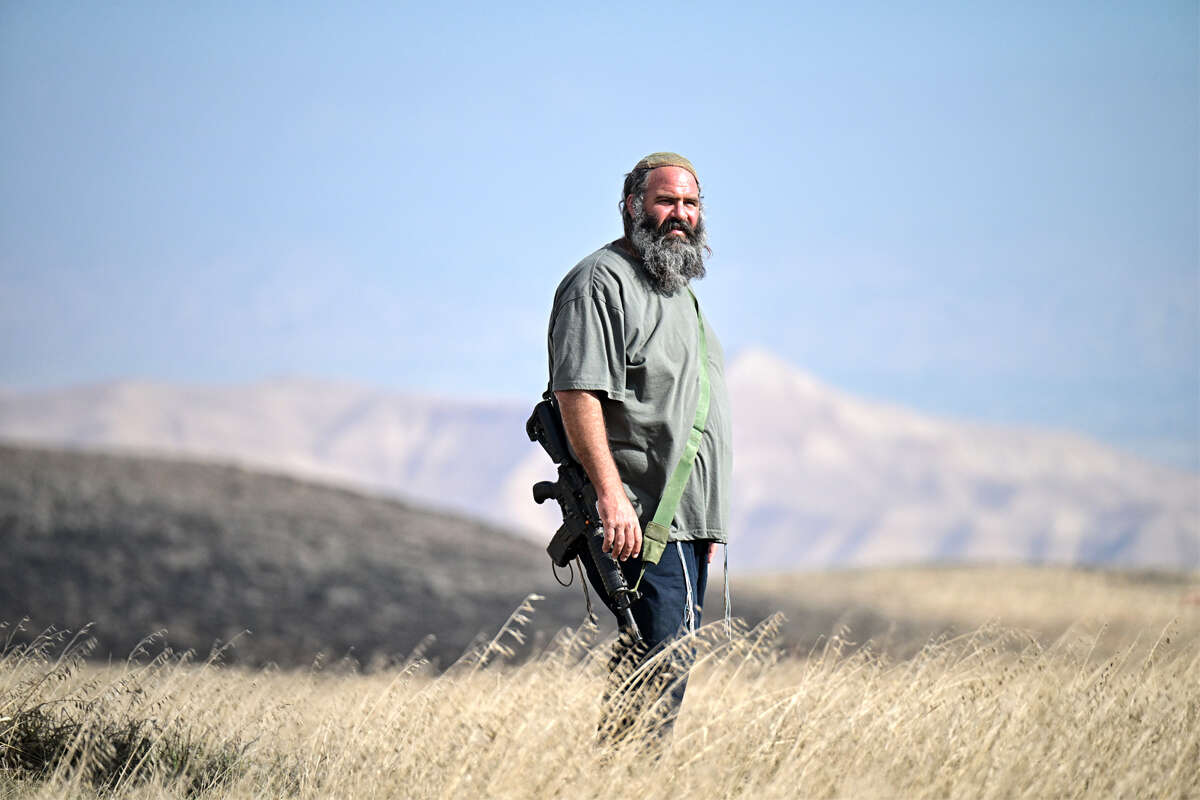
Driven by his pioneering spirit, Libi, who also heads Habayta, a forum advocating the expansion of Jewish settlement into Areas A and B, established Libi Construction and Infrastructure with his brothers. The company primarily develops new Jewish communities.
When a shortage of engineering equipment arose in Gaza, the brothers responded to a request from the Israel Defense Forces, providing several pieces of equipment and experienced operators.
Libi's activities put him in Europe's crosshairs. In September 2026, Britain imposed personal sanctions on him over alleged involvement in threats and acts of violence against Palestinians. The measures include an asset freeze and a travel ban. Australia has now followed suit, describing its measures as part of efforts to combat settlement expansion and violations of Palestinian rights.
Refusing to break
Libi learned of the measures against him not through official channels but from reports published by Israeli news websites. He sees the boycott as an attempt to halt his settlement activities.
"We regard farming and grazing in Area C as legitimate activities that safeguard the land and maintain Israel's presence. I've paid the highest price anyone can pay in life. My son was killed so that this country could continue to exist.
"What matters to me is that no other family should have to pay that price. I don't want to see more and more families suffer such a loss, and that's why I remain committed to what I do and to my values. This is our future, and no economic boycott will stop me from doing what needs to be done. We survived Pharaoh. We'll get through this, too."
What price are you paying for the sanctions in your daily life?
The banks put obstacles in my way and held my money for quite some time without allowing me to access it. I spend all day dealing with lawyers who are helping me resolve these problems and release the funds. It's made securing credit extremely difficult. Suppliers I work with can see that my credit rating has fallen. The company remains financially strong, and fortunately, I have no business dealings outside Israel or anything involving imports.
Still, damage has been done, and I also have to deal with insurance companies. The way we're treated by foreign governments and the international media threatens our agricultural activities. We currently hold 1.1 million dunams (approximately 272,000 acres) of land, and everything I do is for the State of Israel. We're experiencing the loss of teachers, youth leaders, students and friends, while the Europeans are helping the Palestinian Authority. The countries imposing sanctions will cause us to wake up to another October 7 in Rosh Haayin, Kfar Saba, Tel Aviv and Netanya.
I feel as though I'm at war now. Soldiers risked their lives and sacrificed their bodies and souls, and this is our sacrifice. It's not just about security. It's also about religious faith. Lift your eyes and see that we are an eternal people. No economic sanctions will break me.
Aren't you afraid of the heavy price you may have to pay?
I've paid the highest price anyone can pay in life, and it's a price I don't want anyone else to pay. That's why I'm unwilling to give up the fight for Jewish settlement. I can't undo my loss. I can only fight for the future of other families. Economic sanctions won't deter me from doing what's necessary to keep us safe. I am here with the State of Israel, for the State of Israel and in the name of the State of Israel.
Cutting off the lifeline
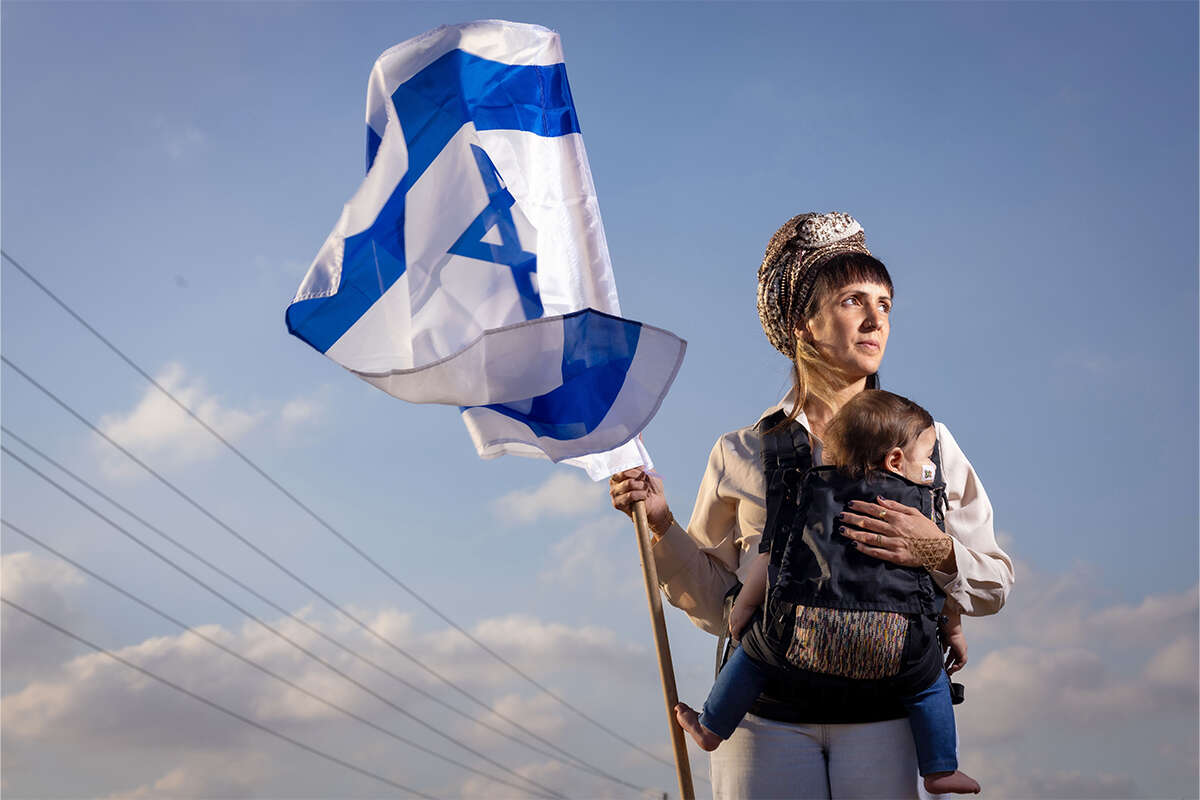
Reut Ben Haim, 40, from Netivot, is a mother of nine. Her youngest child, a 10-month-old boy, currently requires a feeding tube, and she accompanies him to hospitals for treatment.
In between, she is pursuing a master's degree in social work, completing a practical placement at the Welfare Ministry, providing premarital guidance to brides and supporting survivors of sexual assault.
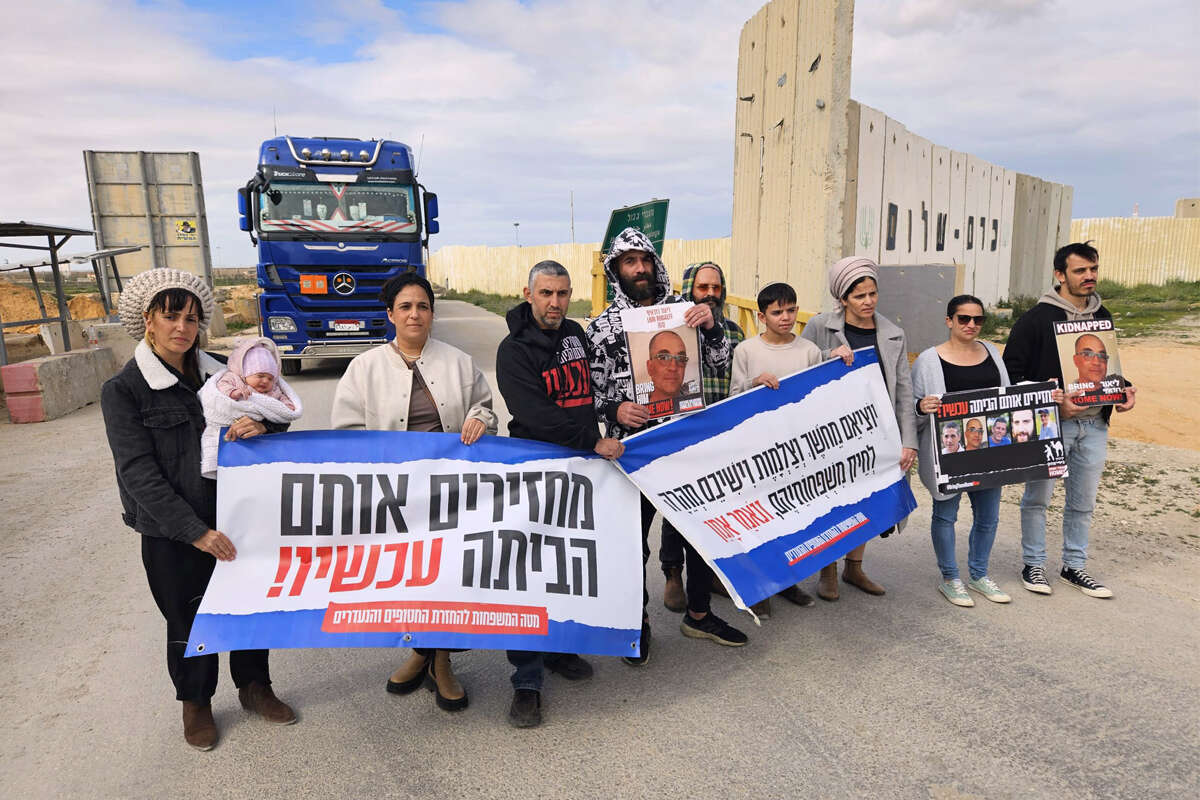
She also now runs Tzav 9 on her own. She founded the protest movement with her husband, Sefi, after October 7, 2023, to oppose the delivery of humanitarian aid to Gaza. The movement advocated putting pressure on Hamas to secure the release of the hostages, held demonstrations at border crossings and blocked roads used by aid trucks. It was these activities that prompted Britain and Australia to impose restrictions on them.
"I still remember the sanctions imposed by the Biden administration," she says. "Our bank account was blocked, no one could do business with us, hundreds of thousands of shekels in donations to Tzav 9 were frozen, and our social media accounts were shut down. When my sister opened a PayBox account [an Israeli digital payment service] to help me, she received a warning that she, too, would be blocked. The sanctions were lifted when Trump took office, and we thought that difficult period was behind us. It turns out it wasn't."
What prompted you to establish Tzav 9?
October 7. We saw a post about hostage families calling for aid to Gaza to be halted, and Sefi and I decided to join them. We went to the Pitha Junction to support the families. That's where we met the Wenkert family, the parents of Omer, who was being held hostage.
A police car was blocking the way, so we drove in the opposite lane and reached Kerem Shalom. We walked among the Egyptian trucks and blocked them. We returned two days later and met the family of the late Lior Rudaeff, the deputy security coordinator of Kibbutz Nir Yitzhak.
That was the beginning of the movement. It was important to us that a range of views be represented and that the protest remain nonviolent. Our motto was, "Return the hostages and you'll get aid." We must not strengthen the enemy.
That sounds like a noble cause, so why did you end up on the blacklist?
On Israel's Memorial Day, a little over six months into the war, there was a protest in the village of Tarqumiya that we hadn't organized. There were teenagers there who behaved inappropriately, unloaded trucks and set one of them on fire. We immediately issued a statement saying this was not our way, but we're the ones paying the price.
Do you know what the current restrictions mean for you?
First of all, it's important to point out that we learned about the announcement through the media. No official from Britain or Australia bothered to contact us. That's why a lawyer is still examining the nature of the restrictions, and we don't fully understand them yet.
I find it difficult to understand how foreign authorities allow themselves to impose sanctions on organizations in another sovereign country. We're not terrorists or money launderers.
Under the American sanctions, for example, I couldn't transfer money between our family's bank accounts, and we couldn't pay the employees of our cycling tour company. It affected us personally. My husband is American, and most of our children also have American citizenship, but we couldn't fly there.
Are you already feeling the effects of the latest sanctions firsthand?
Absolutely. People from abroad who want to go on cycling tours aren't coming to us. I can't receive the donations that Tzav 9 relies on. Anyone who tries to donate receives a notification that their payment processing system is being blocked. They're cutting off our lifeline.
Even you wouldn't be able to donate to me because I have no way of processing payments. I know Israeli organizations that aren't on the sanctions lists but have been blocked because they helped farms that are.
How do you feel about the situation?
I'm afraid of the threats and the sanctions, and as far as I'm concerned, my own country is putting me at risk right now. The silence from the government is frightening. I have no one backing me, even though my struggles are for the country's benefit. In my view, Europe is completely blind to what's happening. This is outright antisemitism.
Is this the beginning of the end for Tzav 9?
Absolutely not. The Erez crossing opened last week, and we were there. We won't allow Gaza to be rehabilitated until Hamas has been disarmed. As a resident of Netivot, I don't want to experience another October 7. The ideal scenario for shutting down the movement would be the day the threat to Israel is completely eliminated.
No going back
Attorney Nili Naouri, 50, from Jerusalem, is one of two Israeli women who have been issued warrants by French judicial authorities over allegations of genocide-related offenses and complicity in crimes against humanity.
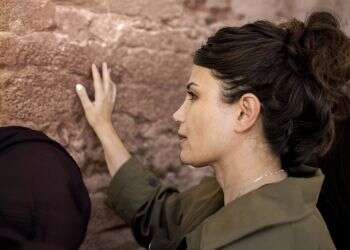
Naouri has run a real estate law practice in Jerusalem for 25 years, but she is better known to the public for her frequent visits to the Temple Mount, where she sings Israel's national anthem, Hatikvah, despite the status quo arrangements prohibiting such activity. Occasionally, she also raises the Israeli flag on the mount, after which she is detained for police questioning and barred from the site.
Born in Paris, Naouri was imbued with a love for the land of Israel from childhood. Her father, Jacques Kupfer, was a well-known activist on the Zionist Right in France. He headed the Betar movement in France and chaired the local branch of Likud.
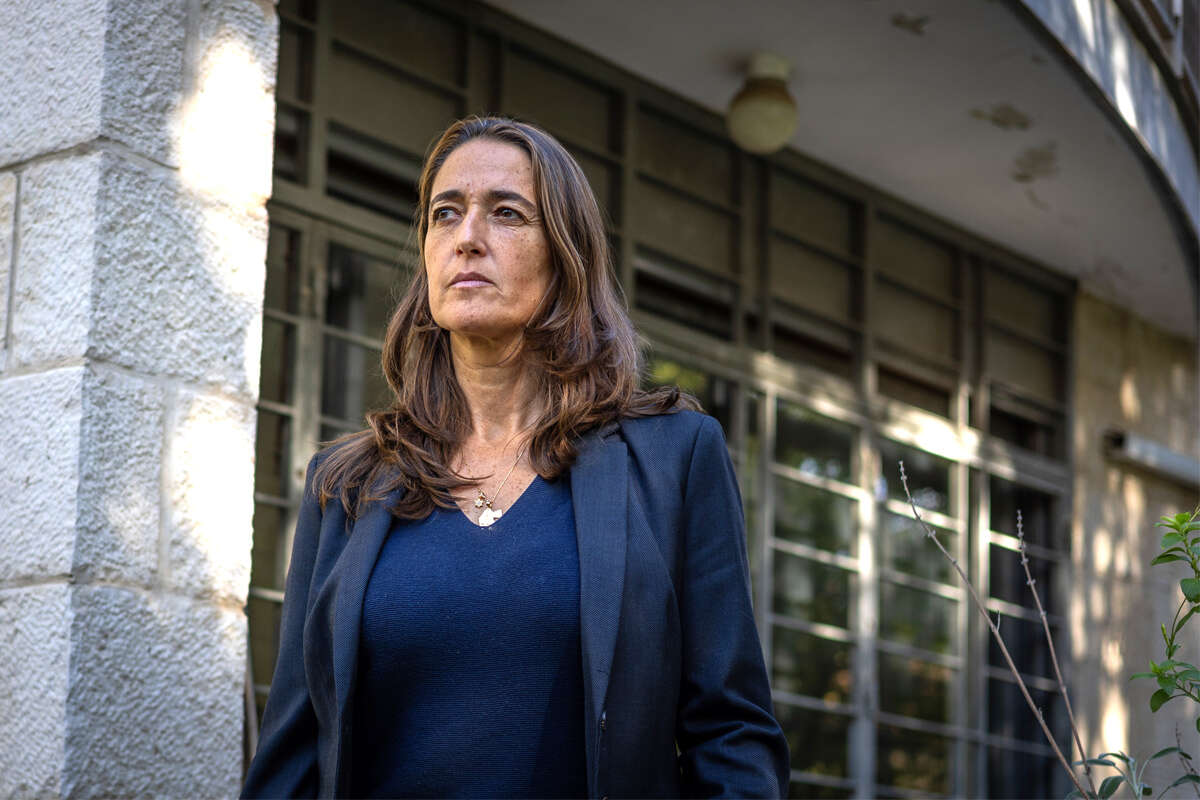
After immigrating to Israel, Kupfer founded Israel Is Forever, a French-speaking Israeli Zionist organization built around a worldview advocating Israeli sovereignty in Judea and Samaria and encouraging visits to all holy sites.
Since her father's death five years ago, Naouri has chaired the organization, which also maintains an active branch in Paris that encourages aliyah, Jewish immigration to Israel.
"I'm under the spotlight of the French far Left because of my advocacy for Israel," she says with a smile. "They claim that I'm the one starving the population of Gaza. Members of my organization in France have been questioned by an investigating judge in Paris over this."
What does the warrant mean for you in practical terms?
I can't visit France, Europe or any other country that has an extradition agreement with France. The warrant was issued without my knowledge, and I found out about it by chance. They only sent it to me in February of this year, and I haven't traveled abroad since.
It's very difficult because our organization in France also encourages aliyah from Canada and Belgium, and I can't travel there to help. These days, I only give lectures over Zoom.
How did the campaign against you begin, ultimately leading to the warrant?
A far-left member of the French Parliament, Aymeric Caron, who belongs to Jean-Luc Mélenchon's France Unbowed party, keeps filing complaints against me with prosecutors, trying to get them to indict me. So far, he hasn't succeeded, but he won't give up. Mélenchon doesn't understand that he's Islam's useful idiot in France.
I'm not facing economic sanctions, but the far Left is obsessed with me, and they're trying to shut down Israel Is Forever's activities in France. Every time I organized an event there, including a memorial for my father, thousands of pro-Palestinian demonstrators gathered outside.
The same thing happened when the war began and I raised money for Israeli soldiers. It was madness. The police came and demanded that the venue's owner cancel the event. We had to quietly move to another location without letting anyone know where it was, but protesters still showed up. The French police have given up. No one is looking out for the Jews there.
Naouri immigrated to Israel on her own at the age of 17 and a half. Her parents and sister followed. Anyone familiar with Israel Is Forever would regularly see her alongside her father at conferences and other activities.
"Every time, we were detained and barred from the Temple Mount because we weren't even allowed to whisper a prayer. In 2017, we sang Hatikvah there for the first time and raised the Israeli flag on the 50th anniversary of the liberation of Jerusalem. The last time I was detained for questioning was three months ago, when I visited on Tisha B'Av."
Essentially, you can't travel to the country where you were born.
In the eyes of the Paris prosecutor's office, I'm a terrorist. They can hold me for up to 96 hours, and there's also a risk, albeit a relatively small one, that they'll confiscate my passport and I won't be able to return to Israel. There's also a slight risk that they'll decide to keep me in pretrial detention as they pursue an indictment.
Do you miss France?
I miss the tennis tournament I used to attend every year. Now I watch it on television.
It's important to me that people understand this isn't about my personal story. If I'm indicted in France, it will set a precedent. There are 6,000 soldiers in Israel who hold French citizenship, including lone soldiers. If they're all indicted in France, it could prompt other countries to adopt the same policy.
What do you think of the economic sanctions imposed by Britain and Australia?
It's completely inappropriate interference. It's disgraceful. Other countries are putting pressure on private individuals, and our own government should be the one standing up to them. It's outright antisemitism.