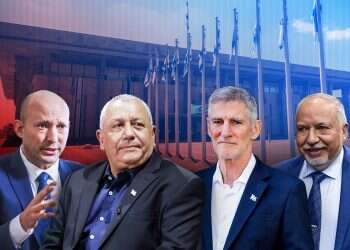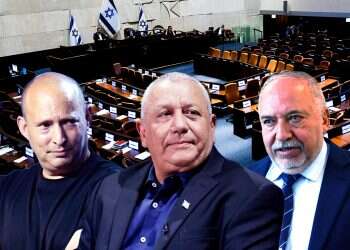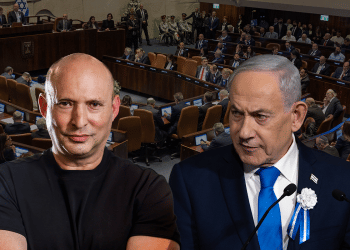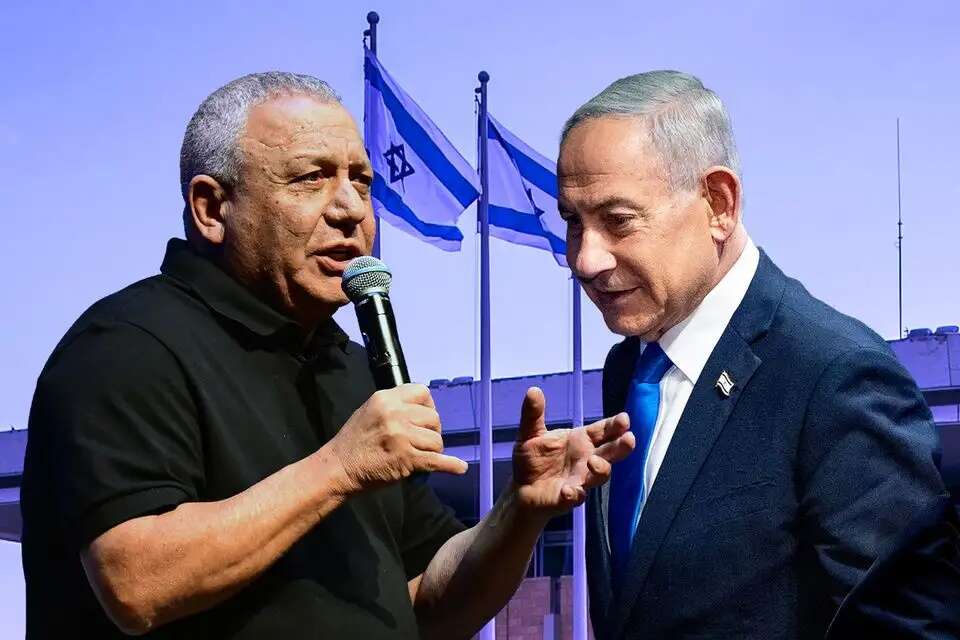
Prime Minister Benjamin Netanyahu issued an unusual statement Saturday, declaring that he was prepared to relinquish the premiership at the start of the next government's term and allow Gadi Eisenkot to serve as prime minister first.
"Likud, under my leadership, is the largest party in the country, with a considerable margin of a quarter of a million more voters than Eisenkot's party," Netanyahu said. "Naturally, I should lead the unity government, or at least go first in the rotation. But given the magnitude of the existential threat and the possibility that a government will be formed that is incapable of confronting it, my responsibility as a leader requires me to put everything aside, including the principle that the largest party should lead, and agree to Gadi Eisenkot serving as prime minister first, while I serve as alternate prime minister at the beginning of the term."
Netanyahu called on the other side to make similar concessions.
"Given my agreement to this, I expect us to immediately begin genuine, sincere and expedited negotiations, with a similar willingness to compromise and make concessions on the other side, to establish a national unity government that will ward off the threats and secure Israel's security and future."
According to Netanyahu, a unity government is "the need of the hour" and the only way to confront the immediate threats to Israel's existence, bringing together all parties that recognize Israel as the nation-state of the Jewish people. Netanyahu stressed that such a government would reach agreements on all outstanding issues, chief among them "military conscription and Torah study, on which we will reach understandings with our ultra-Orthodox partners."
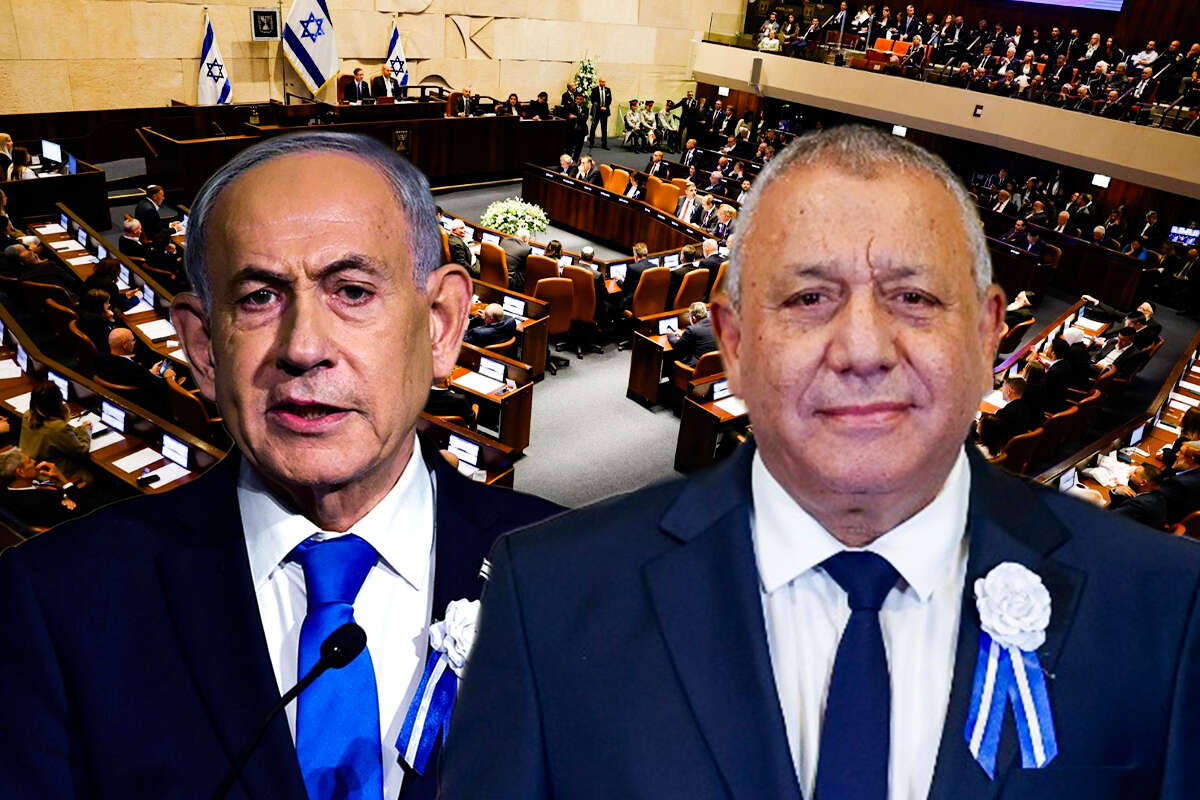
Eisenkot responded to Netanyahu: "The unity Israel needs, which I am prepared to embrace and for which I am willing to pay a political price, is unity among Israeli citizens based on shared values. That is why last Sunday, a detailed proposal was conveyed to Netanyahu through a confidential channel established at his request, addressing substantive issues. On some of those issues, we offered significant compromises before signing a separate coalition agreement. To this moment, we have received no response on these matters.
"If Likud is prepared for genuine unity," Eisenkot continued, "I am ready to test its seriousness over the next 24 hours. I invite Netanyahu and his team to come tonight to the Dan Accadia Hotel in Herzliya, where I am with my negotiating team, to conduct genuine and expedited negotiations on the government's guiding principles and policy issues, based on the detailed proposal to which Netanyahu has yet to respond."
Following Eisenkot's response, Likud announced that Netanyahu and Eisenkot would meet at 10 a.m. Sunday at the Dan Accadia Hotel, after Eisenkot held talks with the leaders of all the parties in the bloc seeking to replace Netanyahu.
Bennett's demand draws criticism within the bloc
Netanyahu's announcement effectively meets the demand made by Naftali Bennett during talks between the two: a rotation agreement and an unconditional agreement to join a government initially led by Eisenkot. The negotiations were mediated in part by former minister Ron Dermer at his Jerusalem home, which Bennett visited more than once in recent days.
Under the proposed arrangement, Eisenkot would serve as prime minister first. The government would comprise Yashar, Likud and Bennett's party, without the ultra-Orthodox parties or Itamar Ben-Gvir. Bezalel Smotrich and his Religious Zionism party would be brought into the coalition if they agreed to the government's guiding principles.
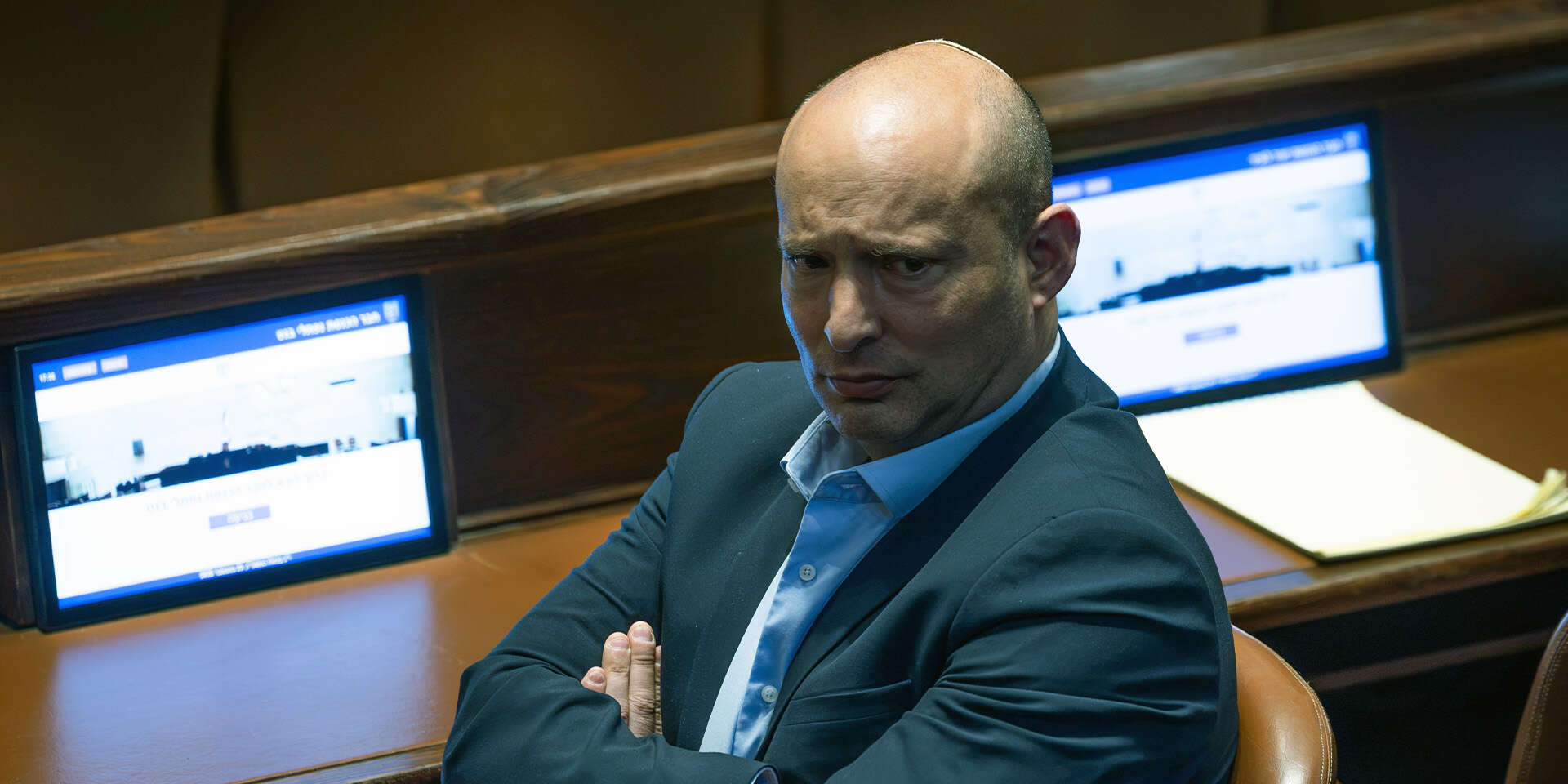
Bennett responded to Netanyahu's announcement: "He made the right decision. We will not be dependent on fringe, non-Zionist parties. The burden of proof is now on Netanyahu to demonstrate that this is a genuine intention rather than lip service. We must not allow stalling or fruitless discussions designed to thwart the formation of a government without him. We will operate on the following principle: Treat him with respect, be wary of him, and then be wary of him again."
A senior figure in the bloc seeking to replace Netanyahu told Israel Hayom: "It is unclear why Bennett insists on a unity government as long as Netanyahu is unwilling to give up the ultra-Orthodox parties. Either way, we cannot advance the 'revolution for those who serve' with United Torah Judaism in the coalition, so what is the advantage of unity?"