
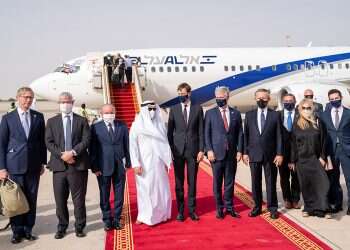
A historic turning point
Although Israel’s ties with the pragmatic Arab camp have been known for some time, this normalization agreement reflects how vital it is for the members of this camp to have a relationship with Israel.

Although Israel’s ties with the pragmatic Arab camp have been known for some time, this normalization agreement reflects how vital it is for the members of this camp to have a relationship with Israel.

On the surface, it appears as a squabble over who’s entitled to potentially abundant hydrocarbons lurking beneath the seabed in the eastern Mediterranean. However, "it’s not about energy,” says Ian O. Lesser, a political analyst with the US think tank the German Marshall Fund.

What at first might appear to be only a convergence of circumstantial interests, temporary and fragile, now turns out to be a true and deep alliance.

While civilians and farmers go about their business of vacationing and tilling the fields, sometimes mere feet from the border fence, the IDF has pulled back, out of the enemy's sight.

Hezbollah has failed twice in trying to settle the score with Israel over the killing of an operative, but it is not about to give up anytime soon.

The escalating dynamics in the northern sector increasingly resemble those on the Israel-Gaza border. Hezbollah may be biding its time until its Iranian patrons order it to spark a war.
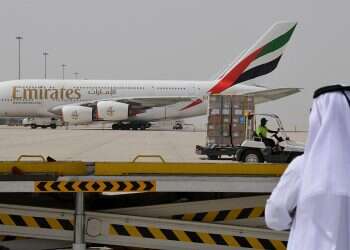
One of the most well-known secrets in the Middle East is that Israeli high tech companies have actually been quietly operating in the UAE for years. Now out in the open, these ties can truly flourish and expand to all industries.

Touted by US President Donald Trump as a major Mideast breakthrough, the agreement was, in fact, the culmination of more than a decade of quiet links rooted in frenzied opposition to Iran's growing threat to the region.

Saudi Arabia, longtime figurehead of regional policy towards Israel has been strangely quiet about the historic peace deal between the United Arab Emirates and the Jewish state.

“Since 2007, there has been a steady drumbeat of a message that Israel is improving its relations with moderate Arab countries,” said Josh Krasna of the Jerusalem Institute for Strategic Studies.