Israel Hayom is a media organization founded on the belief that the Israeli public deserves better journalism—more balanced, more accurate, and more reliable. Journalism that speaks rather than shouts. Journalism that is trustworthy, objective, and matter-of-fact. A different kind of journalism, offered free of charge.
The first print edition was published on July 30, 2007, and in 2010 Israel Hayom became the Israeli newspaper with the highest weekday readership. The newspaper’s publisher is Dr. Miriam Adelson. Its Editor-in-Chief is Omar Lachmanovitch, and its founding editor is Amos Regev.
Israel Hayom’s Hebrew and English websites, as well as its Android and iOS applications, provide around-the-clock news coverage, exclusive content, breaking news and updates, analysis and commentary, video, podcasts, and live broadcasts.
The digital platforms of Israel Hayom include news and opinion channels covering culture and entertainment, lifestyle, technology, sports, business and consumer affairs, health, military affairs, food, Judaism, tourism, and automobiles.
In 2021, a new Hebrew-language website and mobile application were launched to provide users with a fast, up-to-date, secure, and convenient experience.
The content of the newspaper’s print edition is also available online through a daily digital edition and can be received via newsletter.
“The Israel Hayom Clique,” the publication’s exclusive benefits club, offers website users discounts and special promotions on products and services.
Israel Hayom welcomes feedback, criticism, and suggestions for improvement from its readers. You can contact the organization by email at hayom@israelhayom.co.il
When Hungary’s communist regime fell, he put up pictures in his childhood room of the heroes of the struggle, including Viktor Orban. Peter Magyar, a 44-year-old lawyer and the former husband of one of Orban’s justice ministers, built his campaign from the ground up without access to the traditional media controlled by Fidesz. His victory is expected to end Hungary’s automatic veto of anti-Israel initiatives in the European Union.
As President Donald Trump's ultimatum nears its end, there are almost no contacts between Washington and Tehran. Israeli officials believe the failure of the talks is pushing the war into a decisive economic phase. The goal: hitting the Iranian oil and transport sectors until the economy is paralyzed and the regime collapses.
Thousands of soldiers from the 82nd Airborne Division have begun arriving in the Middle East, joining about 2,500 Marines who arrived over the weekend and hundreds of special operations troops. On the table are seizing Kharg Island, breaking the blockade of the Strait of Hormuz, extracting Iran’s enriched uranium stockpile, and launching a final wave of strikes on energy infrastructure as a signal the campaign is ending.
Israel attacked the heavy water facility in Arak and a plant in Ardakan. The reactor in Arak, which was also struck in June, is capable of producing weapons-grade plutonium, while the nearby plant in Ardakan produces “yellowcake,” the raw material used in the uranium enrichment process.
A new report reveals Tehran combines a narrative of victory with one of victimhood to shape public opinion. The use of footage from Israel, edited videos and artificial intelligence is intended to spread messages on a broad scale, aiming to build international legitimacy and exert diplomatic pressure.
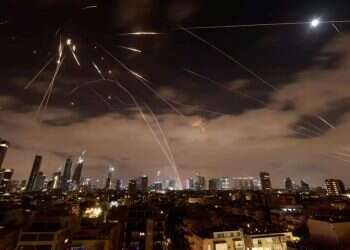
Why the long distance from Iran is actually an advantage for Israeli air defense, and how does Israel deals with the short warning time from Lebanon? We took a look at Israel’s multilayered defense array.
Washington has been engaging Kurdish fighters, Baloch operatives and opposition factions inside Iran as part of a coordinated push toward full regime change – while intelligence assessments warn the Revolutionary Guards are digging in for a long fight.
The Gaza Technocratic Committee is expected to present Hamas with a detailed plan in March outlining how the terrorist organization would dismantle its weapons. Toward the end of the designated period, it would also be required to hand over its light arms to Gaza’s policing forces.