The long election campaign of Peter Magyar and his Tisza party ended in an historic victory that led to the ousting of Hungarian Prime Minister Viktor Orban, who has ruled the country for the past 16 years. Magyar, a 44-year-old lawyer who emerged from the inner circle of power in Orban's Fidesz party, went in less than two years from being an almost anonymous figure to the leader the Hungarian opposition had been waiting for. He is also expected to reshape the balance of power within Europe, which until now had mainly seen the rise of right-wing parties skeptical of the European Union.
Magyar grew up in Budapest in a family of lawyers, and as a child he hung a photograph on his bedroom wall of a young Viktor Orban, then one of the leading figures in the democratic struggle against communism. He was 9 when the regime collapsed. "There was a surge of energy around the change of regime that swept me up as a child," he said in an interview with the Hungarian podcast Fokuszcsoport.
In 2006, he married Judit Varga, who would later become justice minister in Orban's government. He moved with her to Brussels, where she worked as a political adviser in EU institutions, and joined Hungary's permanent mission to those institutions. The couple have three sons.
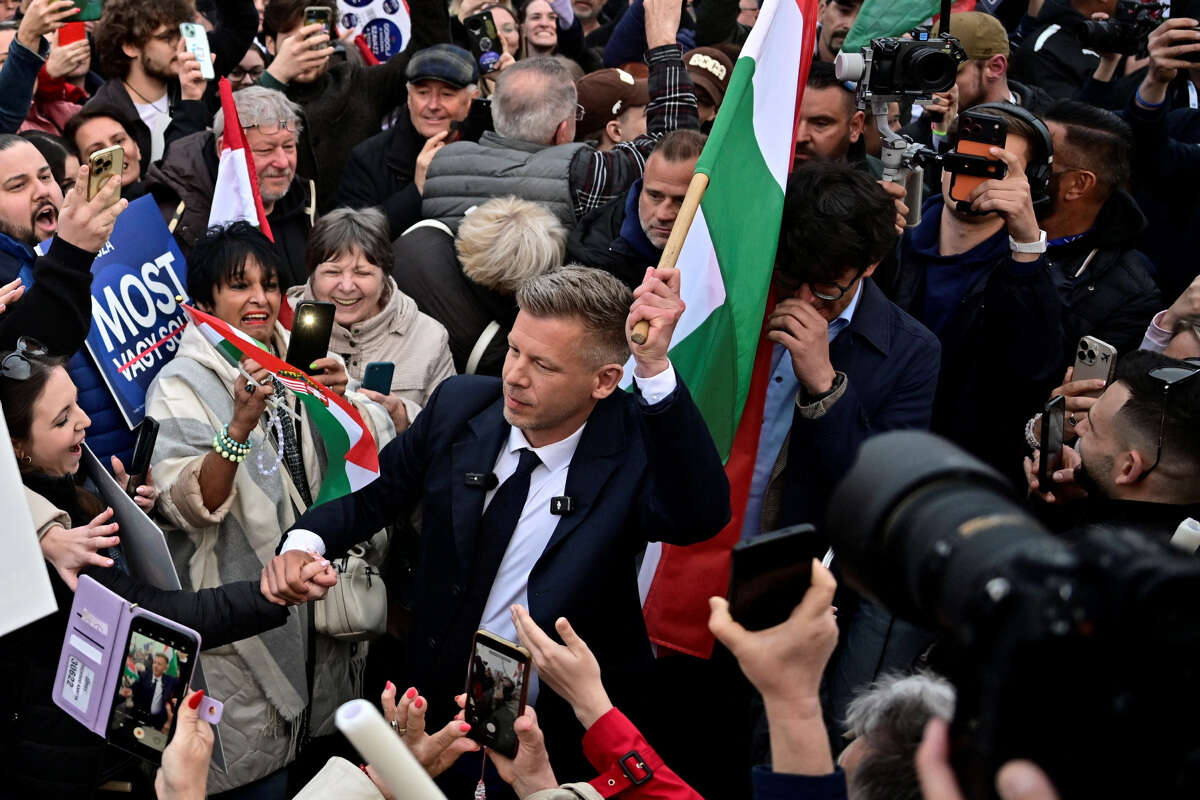
In February 2024, a scandal broke that led to the end of Varga's political career and to Magyar's breakthrough. President Katalin Novák granted clemency to a man convicted of covering up pedophilia at a children's home, and Varga, who had signed the pardon document as justice minister, was forced to resign. Magyar, who until then had been a quiet behind-the-scenes figure, launched an unprecedented public campaign against corruption at the top of Fidesz. In an interview on the YouTube channel Partizán that gained wide attention, he laid out his claims against the party and released embarrassing recordings of senior officials.
A few months later, Magyar joined the Tisza party, which until then had been marginal, and led it to a surprise result in the June 2024 European Parliament election. The party won about 29% of the vote and secured six of Hungary's 21 seats. Magyar's campaign sought to present itself as "Fidesz without corruption": a right-wing politician who supports tough immigration policies and Hungarian nationalism, but focuses on the concrete problems facing ordinary Hungarians, including a faltering economy, the collapse of the health care and education systems, and a brain drain from the country.
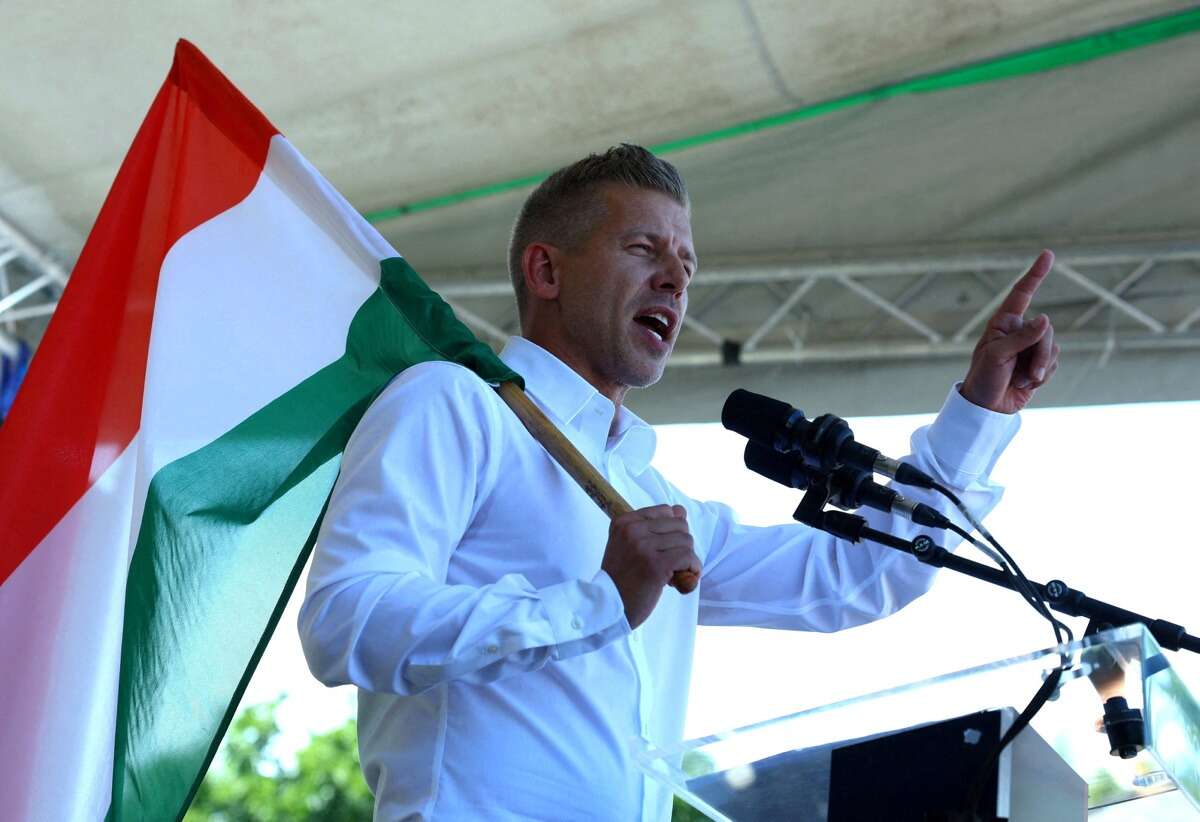
Without access to the traditional media controlled by Fidesz, Magyar had to build his campaign through social media and grassroots organizing. He walked across Hungary with supporters, set up a network of local party branches called "Tisza Islands" and launched a newspaper distributed by volunteers in order to reach rural voters, Orban's traditional strongholds.
Orban portrayed Magyar as an envoy of the Brussels-based EU establishment and as a Ukrainian agent, to the point that at times it seemed his real rival was Volodymyr Zelenskyy rather than Magyar. Orban and his allies repeatedly claimed that Magyar would drag Hungary into the war in Ukraine, an issue that worries Hungarians in part because of the country's energy dependence on Russia. In the final stretch of the campaign, pro-government media circulated allegations that Magyar used drugs, prompting him to travel to Vienna for tests at an independent laboratory to disprove them. Earlier, in February, Magyar announced that Orbán's associates were planning to publish a secretly filmed sex tape of him.

Magyar's rise changed the face of the opposition. Left-wing and center-left parties withdrew from the race one after another so as not to split the anti-Orban vote and to give Magyar a chance. The election effectively became a contest between right and right. The scale of the victory is critical: a two-thirds majority in parliament would allow Magyar to amend the constitution shaped by Orbán over 16 years in power, while a narrow majority would leave his hands tied against state institutions Orbán has filled with his own loyalists.
Magyar's victory is expected to shift the balance of power in the European Union. Russia will lose one of its main assets on the continent. For years, Orban served as an almost automatic blocker of sanctions on Moscow and aid to Ukraine, and with Magyar's victory that automatic veto is expected to disappear. Magyar has promised pragmatic relations with Moscow, while at the same time reducing Hungary's energy dependence on Russia and aligning with EU positions.
The election is also especially critical for Israel. Under Orban, Hungary was Israel's closest friend in the European Union and repeatedly blocked anti-Israel initiatives in Brussels. Magyar, by contrast, maintained deliberate ambiguity throughout the campaign on anything related to Israel, and in Jerusalem the assumption is that even if he is not hostile, he will not clash with the European Union on Israel's behalf.