Israel Hayom is a media organization founded on the belief that the Israeli public deserves better journalism—more balanced, more accurate, and more reliable. Journalism that speaks rather than shouts. Journalism that is trustworthy, objective, and matter-of-fact. A different kind of journalism, offered free of charge.
The first print edition was published on July 30, 2007, and in 2010 Israel Hayom became the Israeli newspaper with the highest weekday readership. The newspaper’s publisher is Dr. Miriam Adelson. Its Editor-in-Chief is Omar Lachmanovitch, and its founding editor is Amos Regev.
Israel Hayom’s Hebrew and English websites, as well as its Android and iOS applications, provide around-the-clock news coverage, exclusive content, breaking news and updates, analysis and commentary, video, podcasts, and live broadcasts.
The digital platforms of Israel Hayom include news and opinion channels covering culture and entertainment, lifestyle, technology, sports, business and consumer affairs, health, military affairs, food, Judaism, tourism, and automobiles.
In 2021, a new Hebrew-language website and mobile application were launched to provide users with a fast, up-to-date, secure, and convenient experience.
The content of the newspaper’s print edition is also available online through a daily digital edition and can be received via newsletter.
“The Israel Hayom Clique,” the publication’s exclusive benefits club, offers website users discounts and special promotions on products and services.
Israel Hayom welcomes feedback, criticism, and suggestions for improvement from its readers. You can contact the organization by email at hayom@israelhayom.co.il
The Kremlin announced a temporary suspension of activity at several rail border crossings with Finland, Estonia and Latvia. Against the backdrop of tensions with NATO, Ukrainian officials believe Moscow is preparing for another mobilization wave as early as this fall.
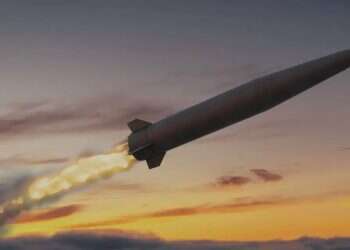
High-altitude interception attempts and a strike without warning raised speculation that Ukraine used its domestically developed FP-9 ballistic missile for the first time. Zelenskyy said he had ordered a strike on an oil refinery deep inside Russia.
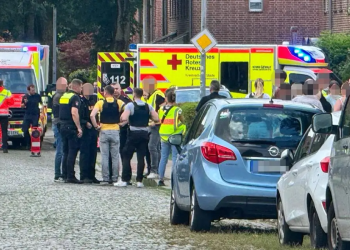
Large police forces arrived at the center of the city of Stade after a gunman opened fire on civilians. The shooter was caught, police claim the shooter's motives are currently unknown.
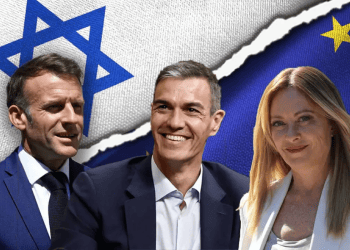
Internal crises and shifting public sentiment across three major European powers threaten to alter the European Union's diplomatic stance toward Jerusalem.
Ukrainian drone strike capabilities have caught the Kremlin by surprise, with officials in Russia conveying alarm and gloom. In Crimea, shortages of food products are being felt and fuel sales have been banned: "People are trying to flee from here on foot or by bicycle."
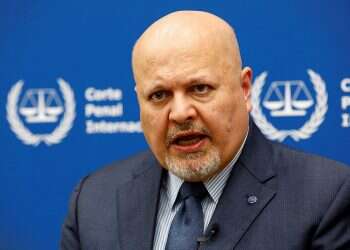
A special UN investigation into the chief prosecutor's misconduct prompts the executive bureau to demand his immediate removal ahead of a critical July vote.
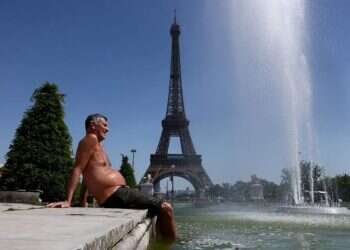
A historic heat wave is gripping Europe, and France in particular, after the country recorded its hottest night since 1945. Temperatures are expected to climb to 43 degrees Celsius (109 degrees Fahrenheit) in Bordeaux and 39 degrees Celsius (102 degrees Fahrenheit) in Paris, while parts of Spain could reach 44 degrees Celsius (111 degrees Fahrenheit). The heat has already claimed the lives of two children found dead in a car. Only about 27% of private homes in France have air conditioning, and the issue has become a political fault line in its own right.
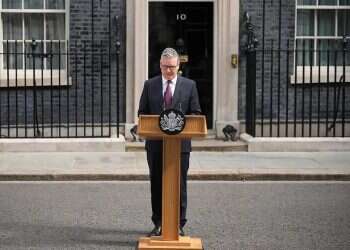
The Labour Party leader said he would step down and allow the party to choose a successor. The leading candidate to replace Starmer is former Manchester mayor Andy Burnham.
French Foreign Minister Jean-Noël Barrot said "there will be no lifting of UN sanctions against Iran without France's consent," adding that Paris would be "inevitably" involved in the nuclear negotiations. He also demanded that any new agreement address Iran's ballistic missile program and the regime's support for Hamas, Hezbollah and the Houthis.
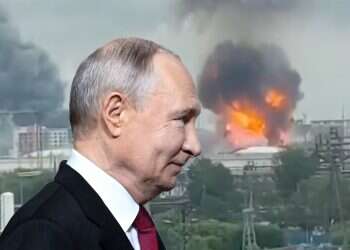
Hundreds of drones and cruise missiles were launched at the Russian capital in what was described as the largest attack on Moscow since the invasion of Ukraine. This was the second time this week that Ukraine has struck the refinery, which produces about 70% of the capital’s fuel consumption. Zelenskyy: “If Ukraine burns, your Moscow will burn too.”