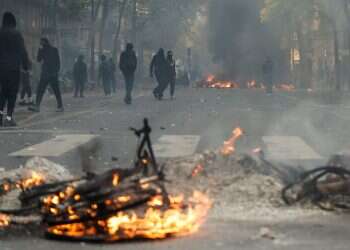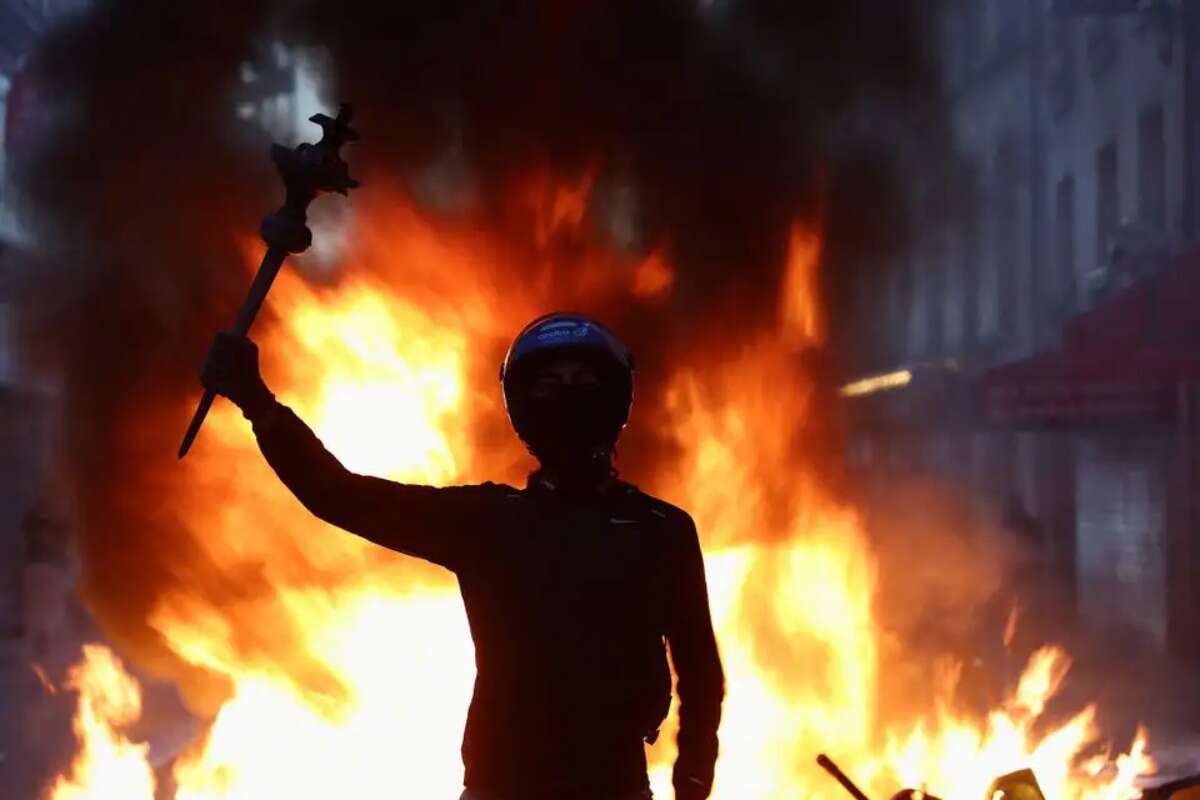
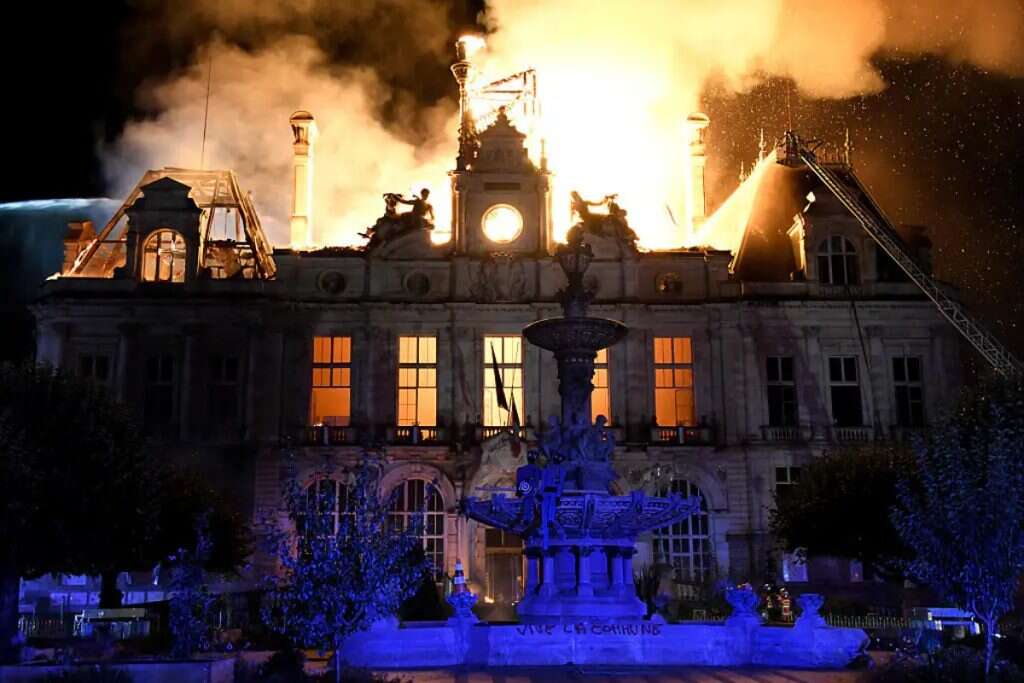
Within France's Jewish community, the largest in Europe, leaders have stated that the violent riots that have struck the nation did not come as a surprise. "What happens first to the Jew, happens afterward to the entire country," said Laetitia Enriquez, a journalist for the Jewish newspaper Actu J. On the day of the riots, stores were looted, vehicles were set ablaze, and public buildings were attacked and torched in numerous cities across France.
According to the French Interior Ministry, 2,397 people were arrested nationwide, and 997 police officers and gendarmes were injured, seven of them seriously. According to the Trade and Retail Federation, approximately 1,500 businesses were affected, with damages estimated at several hundred million euros (approximately $104 million to $300 million). In Marseille alone, more than 600 businesses in the heart of the city were damaged, double the number from the 2023 riots, according to the local chamber of commerce. The riots erupted on the sidelines of demonstrations that organizers stated were directed against the cost of living and the crisis in the education system, drawing between 550,000 and 800,000 people according to estimates by the ministry and organizers, with roughly 110,000 of them in Paris.
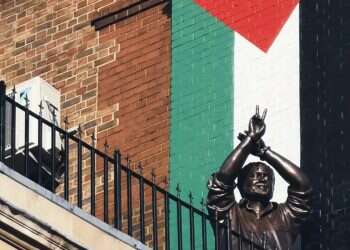
The French government has blamed the far-left for the unrest, but right-wing politicians in France and leaders outside the country have pointed to immigration and radical Islam. "You see their faces, you hear their voices... you know who this is and you know where it comes from," said Eric Zemmour, one of the leaders of the French far-right. The mayor of Nice, Eric Ciotti, an ally of Le Pen, wrote on X, "Yes, these riots are a form of French intifada! In the riots, you see more Palestinian flags than French flags."
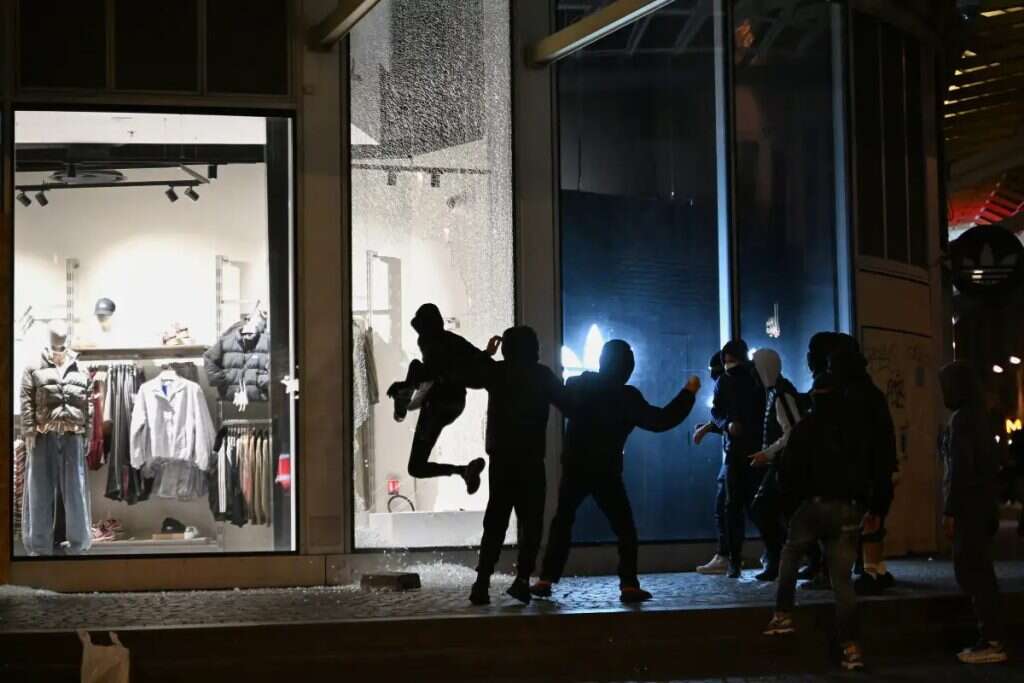
"France is burning! The immigration of people from an entirely different world, people with hatred in their hearts, has shattered that once great country," wrote US President Donald Trump, while Vice President JD Vance blamed "Western liberals," who he stated have "imported the Third World into France." Hungarian Prime Minister Péter Magyar wrote that following the "senseless destruction and unjustified violence," it may now be "clear to everyone" why his country has adopted such a hardline stance on immigration. Italian Deputy Prime Minister Matteo Salvini warned against the "axis of evil uniting left-wing extremists and Islamist fanatics," and the leader of the Spanish right-wing party VOX, Santiago Abascal, labeled the rioters "barbarians."
In France itself, six months ahead of the presidential election, far-right presidential candidate Marine Le Pen, who leads in the polls, did not mention immigration, instead attacking the radical left party La France Insoumise (LFI). "Legitimate social demands have once again been taken hostage by the far left and by the speeches of Jean-Luc Mélenchon's parliamentary members, who legitimize violence and seek to plunge the country into chaos," she wrote. In a filmed speech published on social media, Le Pen also attacked the "Macronist government that has run out of breath, exhausted and confused," stating that "we are paying for decades of retreat."
Mélenchon, who according to a recent poll will reach the second runoff against her, countered by attacking the media. "While news channels are flooded with images of violence in dozens of cities, everything is unfolding peacefully with tens of thousands of people calmly mobilized," he wrote. In an interview with the LCI television channel, Mélenchon stated that "setting fire to the town hall of Limoges is a crime," but placed the blame on the government, which he stated deliberately allows the situation to deteriorate and practices "blind violence."
The first to identify – and warn
The riots themselves were not directed against Jews or Israel. On the night following the unrest, a small synagogue in the 19th arrondissement of Paris was vandalized, with sacred texts and ritual objects thrown onto the floor, but community leaders lean toward assessing the incident as a botched burglary attempt, and police along with the Jewish community protection service (SPCJ) are investigating whether there is a connection to the riots.
For French Jews, violence is not a new phenomenon, though until now it has been directed primarily against them. "There was preparedness on the part of security forces, there were police officers and guards, we knew it would be a tough day, but we were surprised by the intensity of the protests," Enriquez said. "Jews are not surprised by what is happening today, because we already see how much violence there is in the country and among young people."
Enriquez recalled the familiar parable of Jews as the "canary in the coal mine." "For more than 20 years, and even more so in the past three years, we have been telling the population, the government, and the state: 'Beware of what is happening to us, because what is happening to us today will happen to everyone shortly,'" she stated. "And that is what we are seeing now in the streets."
Video: Graphic footage: Police officers grapple with protesters during riots in France.
Sarah Peretz, director of the AJC branch in France, pointed to the exact same connection. "The moment antisemitism rises, there is a danger to democracy, and therefore we say that antisemitism affects all of society and not just Jews, and that is precisely what is happening," she stated. "For three years, antisemitism in France has risen significantly, and what is happening today is no surprise to Jews. Many Jews feel a betrayal, as French citizens. We are not protected enough. We see that the government is trying to protect us, but most Jews think France is failing to protect us, and some of the threats are underestimated."
According to Peretz, antisemitic rhetoric within parts of the radical left, including within LFI, and the convergence between elements of the radical left and Islamist networks, are amplifying anti-Israel rhetoric. "We allowed the Israeli-Palestinian conflict to spill over into campuses," she noted, where "slogans like 'from the river to the sea' and 'globalize the intifada' have contributed to creating an increasingly hostile environment for Jewish students."
What occurred on the day of the riots, she noted, harms all French citizens and values that Jews identify with deeply. "We are Jews and French citizens. In synagogues, prayers are offered for the French Republic, and parents teach a love for France. I cried when the Cathedral of Notre-Dame burned; that is French identity. I saw what is happening in France in general, and at the historic town hall in Limoges, and it was a difficult sight," she stated. "There is a sense of a double betrayal here: both regarding the security of Jews, and regarding the values of the French Republic, which we are so attached to. Freedom does not include the right to burn down cities."
"A new and unhealthy reality"
The Jewish community has already grown accustomed to living according to "the weather of the situation," in Enriquez's words. On one of the previous protest days, several Jewish schools in Marseille located adjacent to protest areas were closed to safeguard the students' safety. "If there are threats, we close the schools. We live under threats almost like Israelis, but we are in France," she stated. "And yet, it is important to note, what happened on the day of the riots happened to the entire country. It is not directed against us. There is a new and unhealthy reality here that all of France is experiencing."
For French Jews, the presidential elections in April and May present a difficult dilemma. According to polls, the second round is expected to feature a head-to-head contest between Mélenchon and Le Pen, whose party was until recently considered a red flag for the Jewish community. "If Mélenchon wins, a large portion of the Jews in the country will leave. I assume a smaller number of Jews might do so if Marine Le Pen is elected," Peretz said.
The polls reflect anxiety from both directions. According to an Ifop poll from 2024, 57% of French Jews considered leaving if an LFI candidate were elected president, compared to 30% if a National Rally candidate won. In a poll published by the institute this month for the weekly magazine Marianne, already 44% of the Jews surveyed stated they would consider leaving if Le Pen wins, though according to the magazine the sample size is small. Among the Muslims surveyed, the rate reached 46%. According to polls, in a direct contest between the two, Le Pen is expected to win easily. And so, amid this atmosphere, the question asked for years grows stronger: Is there a future for French Jewry?