

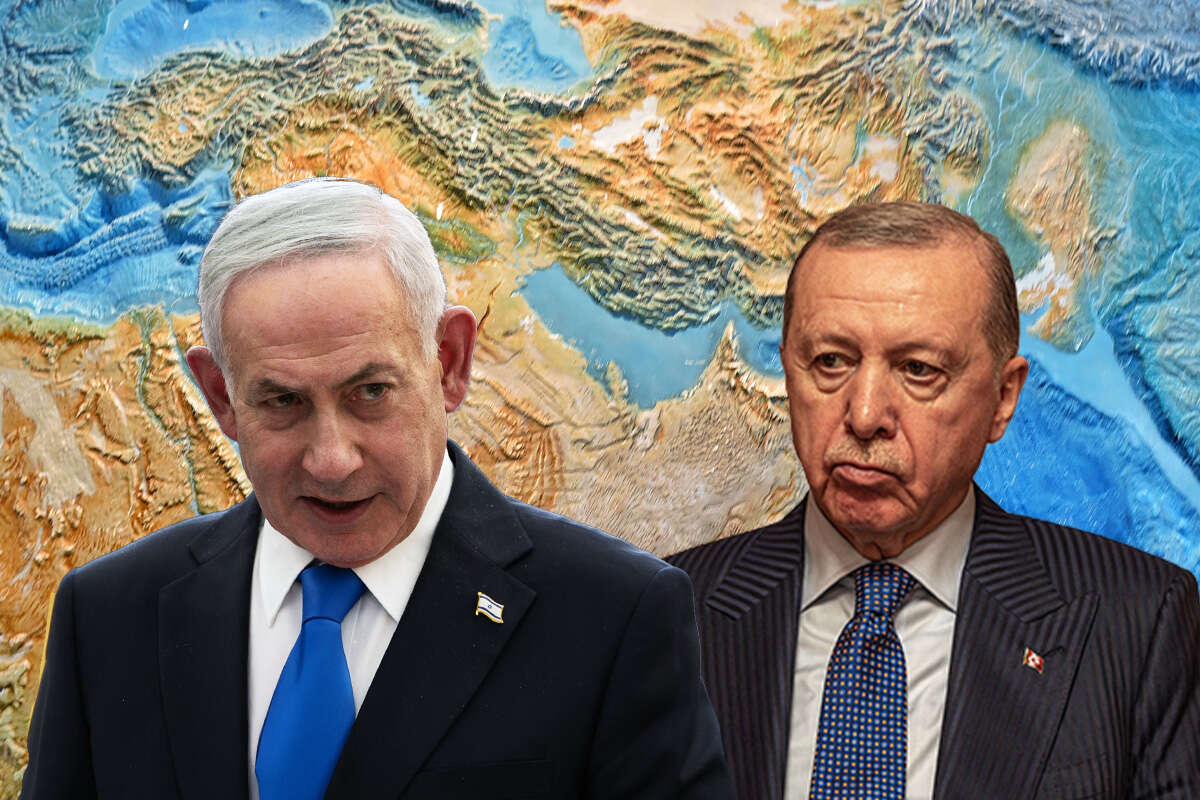
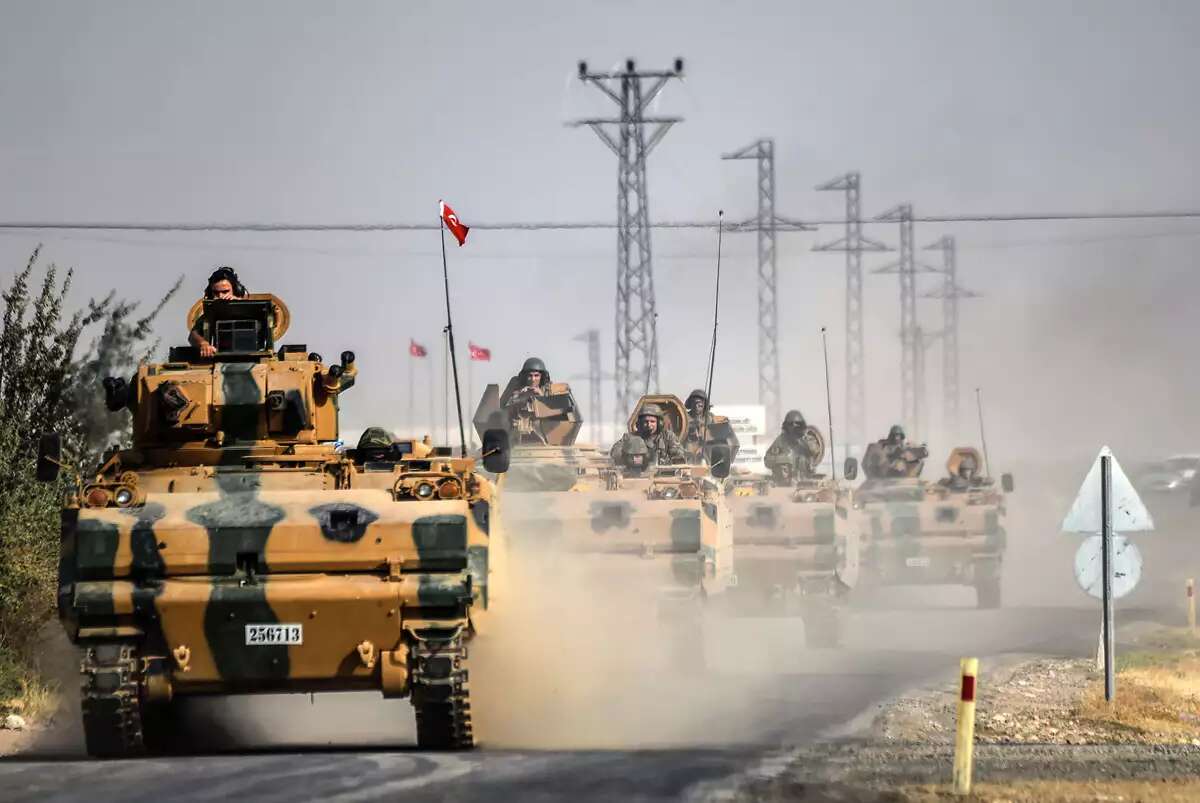
The Israeli airstrike in Syria two weeks ago, aimed at preventing the deployment of Turkish forces at the Abu al-Duhur airbase in the country's north, along with the public broadsides and even threats exchanged by the leaders of Turkey and Israel since then, mark an unprecedented escalation in the confrontation between the two countries. That confrontation has steadily intensified since the Oct. 7 massacre, fueled and inflamed with appalling irresponsibility by Turkey's leaders.
Could this confrontation, diplomatic, media-driven and even economic, deteriorate into a military conflict between Israel and Turkey? Logic and common sense say no. But in the Middle East, emotion, wounded pride or messianic conviction often set the tone.
The problem is that relations have virtually nowhere left to fall. Moreover, many of the restraints and barriers that for years prevented the deterioration and escalation of ties between the two countries have gradually eroded. A military confrontation can therefore no longer be ruled out, particularly one sparked by a miscalculation, events spiraling out of control or one side misunderstanding the other's actions.
The two countries have traveled a long road over the past eight decades. Turkey was the first Muslim-majority country to recognize Israel, doing so in 1949, and in the late 1950s it joined Israel, Ethiopia and Iran in the secret "Periphery Alliance," intended to counter the threat posed to those countries by Egyptian President Gamal Abdel Nasser.
Relations underwent a breakthrough in the 1990s, a period marked by diplomatic, economic and even security cooperation. Media reports at the time claimed that Israel helped Turkey capture Abdullah Ocalan, leader of the Kurdish insurgency that Ankara regarded as a terrorist organization.
All that changed after Recep Tayyip Erdogan came to power in 2003. At first, it seemed little more than a minor setback. Many believed the Turkish military would intervene and remove him from power. In any case, Erdogan was widely regarded as a pragmatist who would be careful not to damage relations with Israel, from which Turkey had much to gain.
But Turkey underwent a profound transformation under Erdogan: from a Western, modern and secular society into one rooted deeply in its past, in Islam and tradition; from a society looking toward Europe and seeking integration with it into one that sees its place and future in the Arab and Muslim world, and even seeks to lead that world.
It is therefore hardly surprising that Israel became an obstacle to much of what Erdogan seeks to achieve, as well as a convenient punching bag through which he could win support and legitimacy at home and abroad.
In fact, from the moment Erdogan took power in Turkey, we witnessed a continuous deterioration in relations, sometimes rapid and sometimes gradual. Each time, we told ourselves there was still a limit to how far relations could sink, that shared interests created a floor beneath which Erdogan would hesitate to go. We said so, and we were proven wrong.
Then came the Oct. 7 massacre. The masks came off in Ankara, relations suffered a profound rupture and almost complete estrangement followed. Even so, geographical distance and the absence of a shared border helped contain the confrontation. Now, however, Turkey is drawing ever closer to Israel.
First, in the Mediterranean, where Turkey has long cast an eye toward the region's gas fields. And now in Syria as well, where Ankara is seeking to exploit Syrian President Ahmed al-Sharaa's dependence on Turkey. Turkey wants to resolve the Kurdish issue in Syria, which it views as a strategic threat, while using Syria as a bridge into the heart of the Arab world. Israel, however, stands in its way.
Meanwhile, the US administration, traditionally the "responsible adult" in the room, is losing interest in the quarrel between Turkey and Israel. Some within it are even encouraging Erdogan.
Both sides benefit from their noisy public disputes. Until now, however, they have been careful not to move from words to deeds, because doing so would run counter to every rational calculation and national interest. But the path we are now on leads toward an increasingly difficult-to-avoid collision. One can only hope that someone applies the brakes before it is too late.


