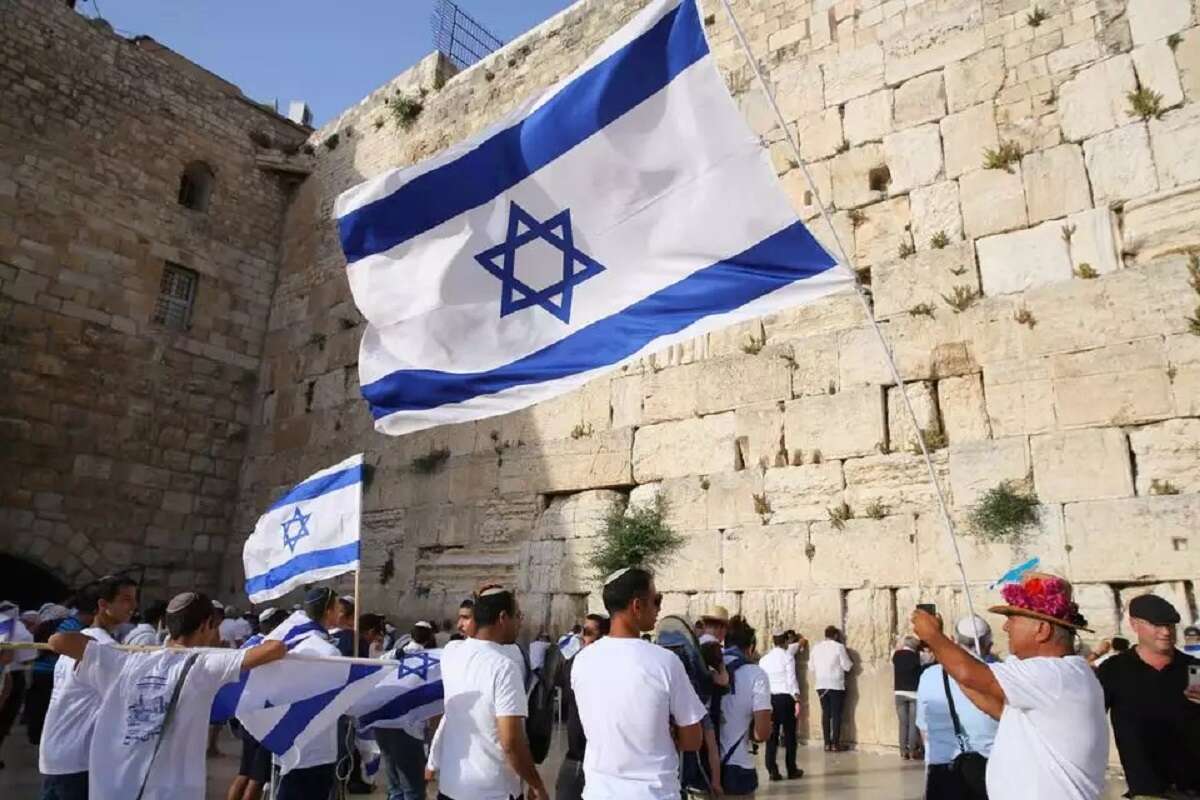
Each year, Tisha B'Av calls us to reflect not only on the destruction of the Temple, but also on the collapse of human relationships. The Second Temple wasn't destroyed by an external enemy or by sheer military force; it fell because of sinat chinam, baseless hatred. Division. The inability to see the other as part of a greater whole.
Generations have passed since then. The Jewish people have returned to their land. Sovereignty was established. A vibrant society was built. But the existential threat of that time has reemerged in a modern form, all too familiar: baseless hatred.
Today, it wears new clothes. It surfaces as religious arrogance, as the monopolistic claim of one denomination—or sometimes one sector—over what is considered "authentic Judaism." As public discourse heats up, tolerance cools down. The very existence of other Jewish streams, like Reform or Conservative Judaism, is often viewed as a threat. Is it really possible that in 2025, some Jews feel less legitimate simply because they observe differently or believe differently?
Recent data support this troubling trend. An April 2025 report by the Jewish Federations of North America reveals that only about 31% of North American Jews feel more connected to Jewish life since the events of October 7th, down from the previous year. Among younger Jews, the sense of belonging to the Jewish people and to Israel is even lower. In Israel, a survey by the Israel Democracy Institute found that roughly 40% of secular Israelis believe the state is promoting religious coercion, not pluralism. These are not just numbers; they represent fertile ground for a profound social fracture. And as Jewish history repeatedly shows, fracture begins when solidarity fades.
The ultra-Orthodox sector often claims to represent "authentic Judaism," as if all other denominations, even Religious Zionism, are merely unendorsed drafts. But Judaism was never handed over to one authority. It is not private property. It is a rich tapestry of interpretations, traditions, and identities. It has been shaped, and continues to be shaped, by women and men across the spectrum, in Israel and the Diaspora.
It's time for a new kind of conversation: one that respects even without agreement. One that sees, even without identification. One that recognizes every Jew as part of the whole, not merely by right, but by the essence.
In just two months, the World Zionist Congress will convene in Jerusalem, a historic yet strikingly relevant institution that brings together Jewish representatives from around the world: Haredi and secular, Reform and Orthodox, young and old, Mizrahi and Ashkenazi. It is a moment of great potential but also great responsibility. If the Congress is to reflect the true spirit of Zionism, it must also reflect the true spirit of the Jewish people: diverse, inclusive, expansive.
We must ensure that everyone feels part of it, regardless of stream, belief, or gender, just as envisioned at the very first Zionist Congress. Formal representation is not enough; values become reality only when every voice is heard and has influence.
Destruction doesn't begin with stones. It begins in the heart.
But so does repair.
Because this time, sinat chinam may not destroy the Temple, but it could destroy our shared home.
The writer is a member of the Executive of the World Zionist Organization and the representative of the Reform Movement. She heads the department organizing the upcoming World Zionist Congress, which will take place in Israel in October.