

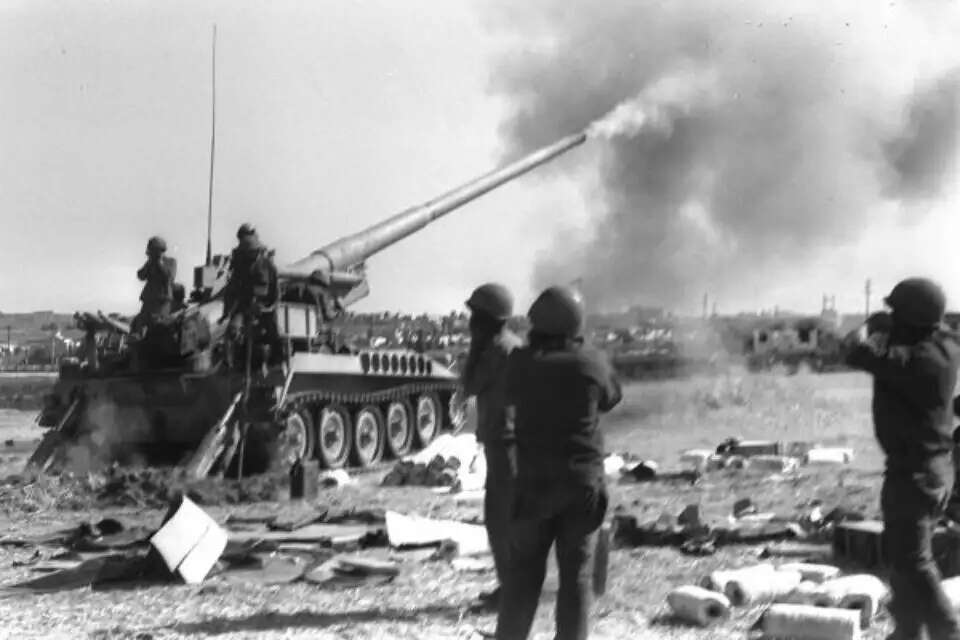
Yom Kippur, a day of soul-searching between a person and himself, those around him and his Creator, has since October 1973 also become a day of national reckoning in Israel. It is a day of remembrance, marked by the most difficult war Israel had known until the catastrophe of Oct. 7.
The opening moments of a war often determine how we remember it. In the case of the Yom Kippur War, those memories are of the surprise and anxiety that gripped us when the air-raid sirens sounded, the grim reports of the military collapse during the first days of fighting and, above all, the images of Israeli prisoners of war, the anguish over the fate of the missing and the seemingly endless list of the fallen, the likes of which Israel had not seen since the 1948 War of Independence.
Almost overnight, we went from the arrogance and intoxication with power of a country that felt omnipotent after its dazzling victory in the 1967 Six-Day War to the fear and panic of a nation that believed its very existence was at risk, raising fears that the Third Temple, a metaphor for the modern State of Israel, might be destroyed.
For decades, we carried with us the memory of the failure and the lessons it taught. Eventually, we tired of that burden and stopped repeating those lessons to those who came after us. Perhaps our hearts once again grew overconfident. Perhaps we once again came to see ourselves as all-powerful in the face of Hamas fighters, and in doing so sowed the seeds of the calamity that struck us on Oct. 7.
But the Yom Kippur War must not be remembered solely as a failure that began with an intelligence breakdown and continued with a military collapse along the Bar-Lev Line of fortified positions on the Suez Canal and the line of volcanic hills in the Golan Heights, extending to the Israeli outpost on Mount Hermon, which Syrian forces captured in the opening hours of the war.
The Yom Kippur War must also be remembered as a conflict that brought Israel two of the most consequential victories in its history.
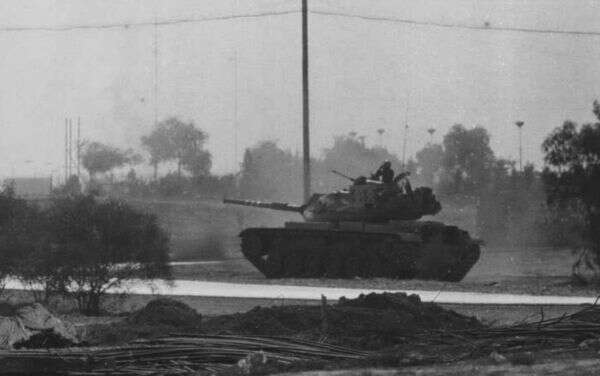
The war was, first and foremost, a major military victory, despite, and perhaps precisely because of, the way it began. From the low point Israel found itself in during the first days of the fighting, the IDF launched a counteroffensive, halted and drove back the enemy, crossed the Suez Canal and broke through the Syrian lines on the Golan Heights. It ultimately reached the approaches to Cairo and Damascus, and only US pressure on Israel saved the Egyptian and Syrian armies from a decisive defeat.
But that military achievement was accompanied by a no less important diplomatic victory, as Israel's leadership succeeded in translating the gains on the battlefield into a political breakthrough that transformed the Middle East.
In November 1977, Egyptian President Anwar Sadat made his historic visit to Jerusalem. The diplomatic process that followed culminated in the 1979 Israel-Egypt peace treaty, removing Egypt, Israel's most formidable Arab adversary and a country that had posed a strategic threat to it for a generation, from the cycle of war with Israel.
Sadat did not become a lover of Zion. But Israel's military achievements in the Yom Kippur War, following the Arab defeat in the Six-Day War, led him to conclude that the path of war Egypt had followed since 1948 had reached a dead end.
If, even with the highly favorable circumstances enjoyed by the Egyptian military in October 1973, Egypt had still failed to achieve a decisive victory over Israel and the war ultimately ended with Israeli forces west of the Suez Canal and the Egyptian Third Army encircled, then, in this view, the Arabs would never be able to defeat Israel militarily. In every new confrontation, Israel would eventually strike back.
Accordingly, if Sadat wanted to put Egypt on a new path toward stability and security, and above all economic prosperity, while also regaining the Sinai Peninsula, he would have to choose the path of peace.
The peace treaty with Egypt was first and foremost an achievement of Prime Minister Menachem Begin, who demonstrated leadership, initiative, determination and foresight. Like David Ben-Gurion after the War of Independence and the 1956 Sinai Campaign, Begin knew how to seize the opportunity before him and turn it into a victory, even a decisive one. This time the victory was diplomatic, bringing the Israeli-Egyptian conflict to an end and producing benefits Israel continues to enjoy to this day.
The lesson we must remember from the Yom Kippur War is never to underestimate the enemy or diminish its capabilities, always to be prepared for the worst and, above all, to remember our capacity to recover, mobilize all our strength and achieve victory both on the battlefield and in the diplomatic campaign that invariably follows after the guns fall silent.


