

1.
We have had more than enough generals. What qualifies them to become statesmen, manage a country's economy or negotiate with foreign governments? They have spent most of their adult lives in the military, dealing with routine security matters. They have operated within a rigid organizational culture built on orders and commands rather than decisions reached through dialogue, persuasion and compromise. They are unaccustomed to democratic systems, and most have hardly distinguished themselves as brilliant businessmen.
Nor have they demonstrated any particular insight into the political and historical realities of our region. Quite the opposite. Most of these generals promised peace in the wake of the blood-soaked Oslo Accords. They insisted that the 2005 disengagement from Gaza would improve security and ridiculed warnings that the agreements would eventually bring rocket fire to Ashkelon and Tel Aviv. During the latest war, they urged Israel to capitulate in order to secure a hostage deal "at any price." And that was before we had defeated Hamas leader Yahya Sinwar, Hezbollah leader Hassan Nasrallah and Syrian President Bashar Assad, and before we had even struck Iran.
To advance through the military ranks, they pursued academic degrees. I encountered quite a few of them while teaching at university. Most were not seeking wisdom but rather a degree that would help them win promotion. As a rule, an academic degree is no guarantee of superior wisdom, much less exceptional intellectual ability. In any event, they devoted little attention to Torah and history, statecraft and economics, law and society, or the hopes and redemption of the Jewish people.
2.
Theodor Herzl recognized this problem as a citizen of the Austro-Hungarian Empire. He observed the monarchies of Vienna and Prussia, where the military and religious establishment wielded enormous political power, often fostering unproductive conservatism, nationalism and institutional antisemitism, as he witnessed during the Dreyfus Affair. That is why he wrote in "The Jewish State" that military personnel should remain in their barracks and refrain from interfering in affairs of state.
After the 1973 Yom Kippur War, and even more so after the October 7, 2023, massacre, when Israeli intelligence failed to foresee the attack and the military failed to respond effectively in the crucial opening hours, it is clearer than ever that military officers have no inherent advantage over anyone else when it comes to civilian leadership.
3.
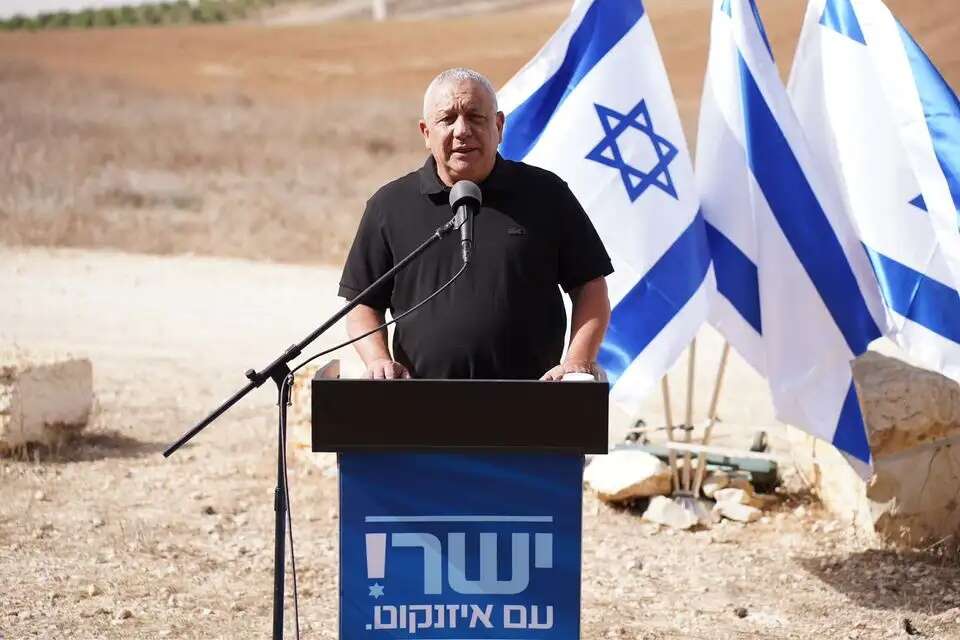
So what qualifies former IDF Chief of Staff Gadi Eisenkot to become prime minister of the world's most complex country when he has barely served in any meaningful capacity as a Knesset member, let alone as a minister? What exceptional military achievement can he claim?
Eisenkot is a quintessential product of the Oslo school of thought, the old strategic mindset that interpreted the conflict between Israel and its neighbors in rational, territorial terms. According to this worldview, the Arabs of Samaria, Judea and Gaza have always preferred prosperity to war. Give them jobs and funding, the thinking went, and they would provide quiet in return. More broadly, divide the land and peace will follow.
I hope everyone understands that Eisenkot supports a "diplomatic settlement" and the "partition of the land," which would mean establishing a Palestinian state along the mountainous ridge of Judea and Samaria, within shoulder-fired missile range of our international airport and major population centers.
As chief of staff, Eisenkot displayed no exceptional qualities as a military commander. A disciple of Oslo, he abandoned the pursuit of decisive military victories and called for accommodating a nuclear Iran. He is unlikely to join US President Donald Trump in delivering a decisive, final defeat to Iran.
His interviews suggest precisely the opposite approach: agreements, negotiations and all the familiar diplomatic formulas we have heard before.
In historical terms, Eisenkot represents the October 6 mindset, the failed security doctrine that prevailed in Israel before the October 7 massacre.
Prime Minister Benjamin Netanyahu, incidentally, rebuilt the military from the ashes on October 8 and fundamentally transformed that doctrine, particularly Israel's defensive strategy, turning the Israel Defense Forces into a force capable of taking the offensive. Under this approach, hostile intentions alone are sufficient grounds for Israel to strike rather than wait for its enemies to act.
4.
Military thinking is inherently rigid and tends to become entrenched in monolithic assumptions, known in Israeli discourse as conceptziot, or fixed strategic conceptions. Such thinking discourages intellectual flexibility and struggles to accommodate other dimensions of reality, including history, culture, religion, economics, diplomacy and social tensions.
A leader shaped by such an institution is likely to reproduce the same patterns in politics.
It is fascinating to watch the opposition's infatuation with generals. Is this a form of psychological compensation for its antiwar, compromise-oriented views, which sometimes even amount to advocating surrender? In other words, here is a general who has spent most of his life fighting wars, yet validates our antimilitarist worldview.
Or is the aim to mislead coalition voters into believing that here is a credible security figure worthy of their support?
More broadly, Eisenkot's election campaign is reminiscent of Yitzhak Rabin's campaign in 1992. Back then, too, Rabin was marketed to the public as a security hawk, in contrast to Shimon Peres, and the result was the disaster of Oslo.


