
Over the past four years, Israel has faced an unprecedented wave of sanctions covering a wide range of activities, including arms sales, academic cooperation, financial transactions and international trade. The cumulative impact is already beginning to weigh on the economy and academic research. Without a significant change in government policy, particularly in Judea and Samaria, the future looks considerably more dangerous.
Everyone knows that the US, European countries and other nations have imposed sanctions on Israelis and on Israel itself. But the broader picture is deeply troubling. A few days ago, the Jewish People Policy Institute (JPPI) completed a database documenting sanctions against Israel. As of early October, it listed 121 measures, 93 of which remain in force, imposed by 62 countries. The financial sector accounts for the largest number of measures, followed by arms and defense, and then trade.
Most of these measures are unprecedented. Never before has the import of products from Judea and Samaria been banned, nor have individual sanctions been imposed on Israeli government ministers. But the reality has changed.
Several examples illustrate the scale of the problem. Ireland and Luxembourg have, one after the other, refused to facilitate Israeli government bond offerings in the European Union. Britain, France and Canada have announced sanctions against companies operating in Judea and Samaria, and these restrictions are expected to expand to cover economic activity more broadly. Such a move could also threaten banking operations in the area.
In an unprecedented step by an ally, the Netherlands has banned imports of products from Judea and Samaria and the Golan Heights. Meanwhile, increasingly severe academic sanctions are causing substantial harm to Israeli researchers and the country's research community.

The greatest danger lies in the defense sector. Even our highly developed defense industry produces almost no complex systems made entirely from Israeli components. Sanctions on dual-use products, such as semiconductors, would make it extremely difficult to manufacture weapons systems in Israel. The call for complete self-sufficiency in arms production is a populist fantasy.
What is driving this wave of sanctions? Some were imposed in response to the war in Gaza or because of domestic political considerations in the countries introducing them. But a substantial proportion are directly linked to Israeli government policy in Judea and Samaria.
In recent years, unprecedented levels of construction have been approved in the area, and numerous outposts have been legalized. The practical result, openly acknowledged by the minister responsible for the policy, is the de facto annexation of the territory.
At the same time, law enforcement against violence perpetrated by extremist Jews against Palestinians is virtually nonexistent. Many Israelis regard this as a problem affecting only residents of Judea and Samaria. That is a mistake.
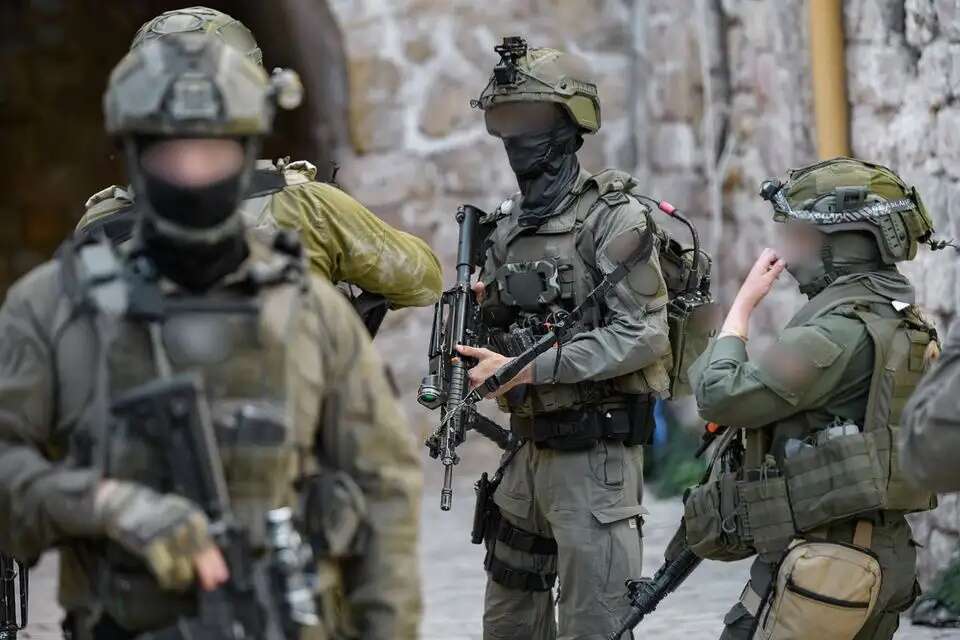
Even when sanctions target specific individuals or a particular geographic area, their effects ripple across the entire economy. A European importer required to establish the origin of every product, for example, may simply decide to stop importing from Israel altogether. An investor concerned about the risk of sanctions may choose to invest elsewhere.
Until now, Germany within the European Union and the US on the international stage have stood between Israel and the most severe measures. But that protection could also disappear.
Democratic legislators in the US are already advancing initiatives to restrict arms and ammunition sales to Israel. If the Democrats secure a majority in the House of Representatives in the November midterm elections, their prospects of passing such restrictions will improve. President Donald Trump would probably veto them, but in two years, a different president and administration could take action against Israel.
Under those circumstances, the gravest threat of all could become reality: International sanctions imposed on Israel by the UN Security Council, with the US declining to exercise its veto.
Israel is effectively an island nation, dependent on the outside world for its survival. Such sanctions therefore represent a strategic threat that could escalate into an existential one.
To confront this danger, Israel needs a national mechanism capable of monitoring the full scope of the sanctions and coordinating action on the economic, legal and diplomatic fronts to prevent further restrictions and mitigate those already in place.
But preparation alone will not be enough. Without a significant change in government policy in Judea and Samaria, coupled with meaningful law enforcement there, even our closest friends may abandon us to sanctions that, at best, will make life here far worse and, at worst, undermine our security and very existence.
Dr. Shuki Friedman is director general of the Jewish People Policy Institute (JPPI), a law lecturer at the Peres Academic Center and former chairman of Israel's government committee on sanctions against Iran.