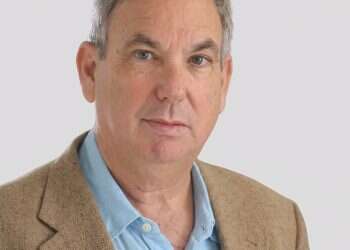
Israeli political pundit Shmuel Rosner said this week that for Prime Minister Naftali Bennett, an accomplishment at the UN General Assembly would be if he took to the podium and the fact that his party only has six Knesset seats won't show.
Follow Israel Hayom on Facebook and Twitter
By that criterion, one of the issues in the speech was that the fact that Bennett is not a leader representing a nation, rather an Israeli delegate addressing an international forum did come through – in his monotone, sometimes erratic delivery, and his motionless face.
Israeli media spared no effort to lower expectations before Bennett's UN speech. Against the backdrop of the UN General Assembly, the Israeli public envisions a different leader, one who knows how to represents the people's strength.
Seeking to downgrade the significance of the speech, some argued that speeches are not that important anyway, as they do not produce policy. Bennett's speech raised the question if Israeli views at home weren't glued to their screens to hear what the prime minister had to say, who other than a cadre of pundits was listening? What did Iran take away from this address? Or the Americans? Or Israel's neighbors?
There was an awkward tone to Bennett's remarks and it sounded like he was being defensive while on the most important stage in the world, talking about him and his friends who are going out to fight. "Do not judge them," he said of an issue that is far too complex for any audience; "it's the political polarization." A global plague, in addition to the coronavirus pandemic.
It is very possible that at this point various listeners, especially in Tehran and Washington, breathed a sigh of relief. Something along the lines of, he's not speaking to us, he's justifying his political moves with convoluted explanations about social media. Tehran knows it won't have to sleep tonight with one eye open. In fact, the ayatollahs have been sleeping soundly for months.
It is said that Bennett directed a threat to Tehran. "Our patience has run out," he said, choosing the word "patience." Vis-à-vis those who have long since reconciled with the idea of a nuclear Iran, Israel is not reconciled to it and is not tired of acting.
Before the speech, one of the military commentators said that Israel is now beginning to formulate the military capability to act. Maybe it's a ploy, but the message that Israel will not tolerate a nuclear Iran didn't really get through.
Policies are conveyed by state leaders delivering credible messages. Did Bennett convey a message of a credible threat that could cause the Iranians to stop? He mentioned a little-known nuclear site, Turquzabad, where there is no supervision. This means that the deal some are hoping for is irrelevant. Former Prime Minister Netanyahu revealed the site's location three years ago.
Amid clichés surrounding the Iranian nuclear program, Bennett spoke of a UAV siege developed and distributed by Iran to the terrorist organizations under its control. These could deliver deadly strikes anywhere in the Middle East. He was not specific or sharp enough, apparently so as not to embarrass the United States.
Iran has been testing this military strategy against Israel via the Houthis in Yemen – its testing ground for the next war against Israel. But the US is pulling defense system batteries from Saudi Arabian and exposing it to attacks.
Bennett concluded is address with an apologetic tone, stressing how good Israel is for mankind.
It was a replay of the national-religious sector's elite yearning for recognition from the establishment elite in Israel, but this time we heard this plea from the UN stage. We, too, want to be cast as the good guys in this blockbuster you are directing. We, too, have something to contribute because "a bit of light dispels much darkness."
Subscribe to Israel Hayom's daily newsletter and never miss our top stories!