


This week, four contenders to succeed UN Secretary-General António Guterres will pitch their visions to the UN General Assembly. The competition to elect a new UN chief is now in full swing.
One candidate, Rebeca Grynspan, might well become the UN's first Jewish secretary-general, a historic milestone for a global institution long marred by perceived anti-Israel bias and ingrained antisemitism.
Grynspan's candidacy is quietly being sold to select member states, especially the US and Israel, wrapped in a carefully crafted personal narrative: daughter of Holocaust survivors, familiar with Hebrew, with close family living in Israel.
In the transactional world of UN politics, this is not incidental; it is strategic. It is a targeted appeal to Washington and, indirectly, to Israeli stakeholders who may be inclined to read symbolic reassurance where substantive alignment is far less clear.
The problem is that her record does not match the narrative.
During her tenure at UNCTAD, the United Nations Conference on Trade and Development, her reports on Israel, particularly regarding the West Bank and Gaza, were among the most severe in the UN system, echoing a familiar UN script that fixates on Israeli actions while giving comparatively little weight to Israeli security realities. Rather than distinguishing herself as a moderating or balancing voice, she operated comfortably within the prevailing institutional consensus that singles out Israel for disproportionate criticism.
That may not be disqualifying in UN politics, but it does undercut any suggestion that her background translates into a more sympathetic or even-handed posture. Her framing of Israel is not the language of a reformer willing to challenge institutional bias; it is the language of someone fully at home within it.
Nor does her earlier political career offer much evidence to the contrary. As vice president of Costa Rica, she did not build a track record of sustained engagement with Jewish communities, launch notable initiatives on antisemitism, or prioritize ties with Israel. The sudden prominence of identity in her international candidacy raises an obvious question: If her Jewish connection was so central, where was it reflected in her professional record?
There is also the question of continuity. Grynspan is not an outsider; she is part of António Guterres's inner circle, the very system that has presided over years of rhetorical acknowledgment of anti-Israel bias without serious structural change. Guterres himself has admitted that bias against Israel exists at the UN, yet that admission has not translated into meaningful reform. Elevating a close ally is not a course correction; it is an endorsement of the status quo. Within the halls of the UN, it is an open secret that Guterres is promoting her candidacy as a means of perpetuating his legacy.
There is also a more subtle political dynamic at play. Identity does not necessarily predict policy, and in some cases it can create countervailing incentives. A secretary-general with a personal connection that observers expect to translate into sympathy may instead feel pressure to demonstrate independence, and even toughness, to avoid accusations of favoritism. We have seen analogous dynamics elsewhere, where leaders overcorrect against perceived affinities to establish credibility. In the UN context, that could mean a posture toward Israel that is not more protective, but more exacting.
Taken together, Grynspan's record and proximity to Guterres make clear that a Jewish secretary-general atop an unreformed UN system risks being less a break with the past than a fig leaf for it, no more proof that identity translates into support than any leader's personal heritage is proof of alignment with a particular national cause.
Jews are not monolithic, and a Jewish biography tells you little, on its own, about how a leader will approach Israel, antisemitism, or Jewish concerns in practice. To assume otherwise is wishful thinking that confuses symbolism with substance.
Like Grynspan, I am the daughter of Holocaust survivors from Poland and Lithuania. I advised previous secretaries-general on antisemitism, establishing the UN's first conference on antisemitism and the UN's annual International Day of Holocaust Commemoration. Therefore, I am compelled to ask:
Where was Grynspan's voice during any of the UN's annual Holocaust commemorations?
Where was Grynspan's voice on October 7, when the world was being told by Guterres that the largest massacre of Jews since the Holocaust did not happen in a vacuum?
Where was Grynspan's voice proclaiming that no political grievance could ever justify Hamas' brutal terrorist attack and the UN's false moral equivalence?
Did she use those moments, institutional remembrances of the Shoah and the slaughter of Jews in Israel, to challenge the prevailing UN narrative or to stand publicly with Jews once again under existential threat? Or has her identity now surfaced primarily as a tactical campaign asset?
For member states frustrated by the UN's persistent imbalance on Israel, her elevation would almost certainly signal more of the same: lip service to fairness and reform paired with entrenched institutional bias and inertia.
For Israeli policymakers and their allies, this should be the central point: Jews are not a monolith, and shared heritage is not a proxy for aligned interests. The relevant questions are concrete: How has the candidate spoken about Israel in multilateral forums? When faced with the UN's structural biases, has she challenged them, or has her silence reinforced them? Does her career reflect a willingness to depart from institutional orthodoxy when doing so is politically costly?
In a role where the past is often prologue, the answers to these questions should be evaluated with clear eyes rather than hopeful assumptions.
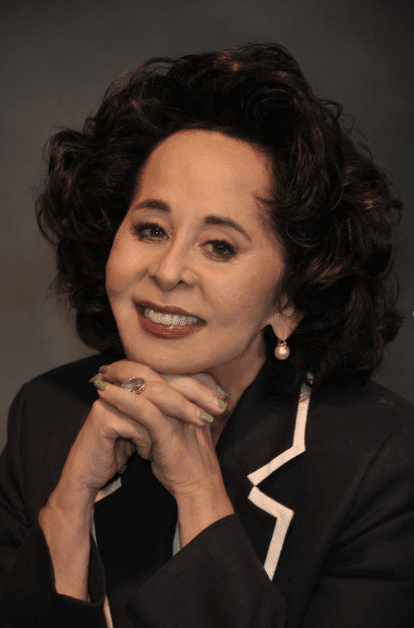
Eve Epstein, Ph.D., is the founder and principal of Epstein & Associates, a strategic communications and media management firm located in New York City. She has advised a two-term UN Secretary General and other top UN officials throughout the Secretariat and related UN agencies.


