The current election campaign proves that everything is about emotion. There is a new, impressive party led by three lieutenant generals and a former finance minister. It is running against the party now in power, whose prime minister has proven that when it comes to political professionalism and plucking the public's heartstrings, he, too, is a lieutenant general.
We have an anti-Netanyahu candidate. Netanyahu himself is, as always, a candidate for victory, but he could also find himself beaten.
Netanyahu, by his very existence, awakens strong feelings among us. I don't know anyone who is indifferent to him, anyone who has no opinion about him. It ranges from "hail, Bibi" to "Bibi is a disaster" – from "King Bibi" to "anyone but Bibi."
Campaign activists and communications advisors work hard to crack the genetic code for the sake of their candidates who known how to play to voters' hearts. The strategy meetings currently taking place handle not only words but also – even mainly – the music. What you say doesn't matter so much. What's important is how you say it, and mostly how you sound and how you appear to the voters' subconscious.
The Likud campaign (effectively Netanyahu's campaign) isn't lacking in professional errors, but luckily for it, the Blue and White campaign is making more mistakes. At the end of the day, we remember a few words or a standout sentence, but mostly images, or a few images that will tip the scales.
Everyone remembers the tiny, miserable image and pinched face of former Labor leader Isaac Herzog contrasted with the enormous images and calm expression of Netanyahu on "Meet the Press" three days before the 2015 election, and Herzog's pathetic remark, "I'll keep Netanyahu united."
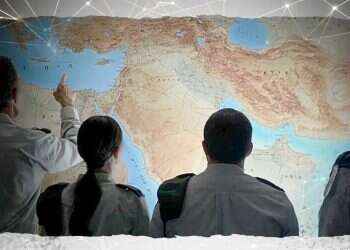
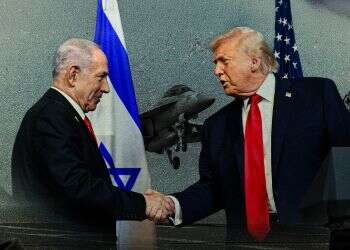
As of now, there are three main images that will be remembered from the current campaign: the first from the night Blue and White announced its joint list, four leaders against one Netanyahu; the second of the Blue and White leaders on the Golan Heights, dressed in their combat jackets (which looked like a pathetic attempt at mimicry) – in contrast to Netanyahu and the Likud ministers in their tailored suits a day later, with Jerusalem in the background; and the third – which will be taken two weeks before the election – Netanyahu with U.S. President Donald Trump.
Judging by the campaigns right now, Netanyahu could close the gap created by the initial excitement over the united front against him, and stay in power. Netanyahu could also ruin things for himself if he doesn't realize that because a risky or controversial move happened to work out in his favor in the 2015 election doesn't make it a smart tactic.