

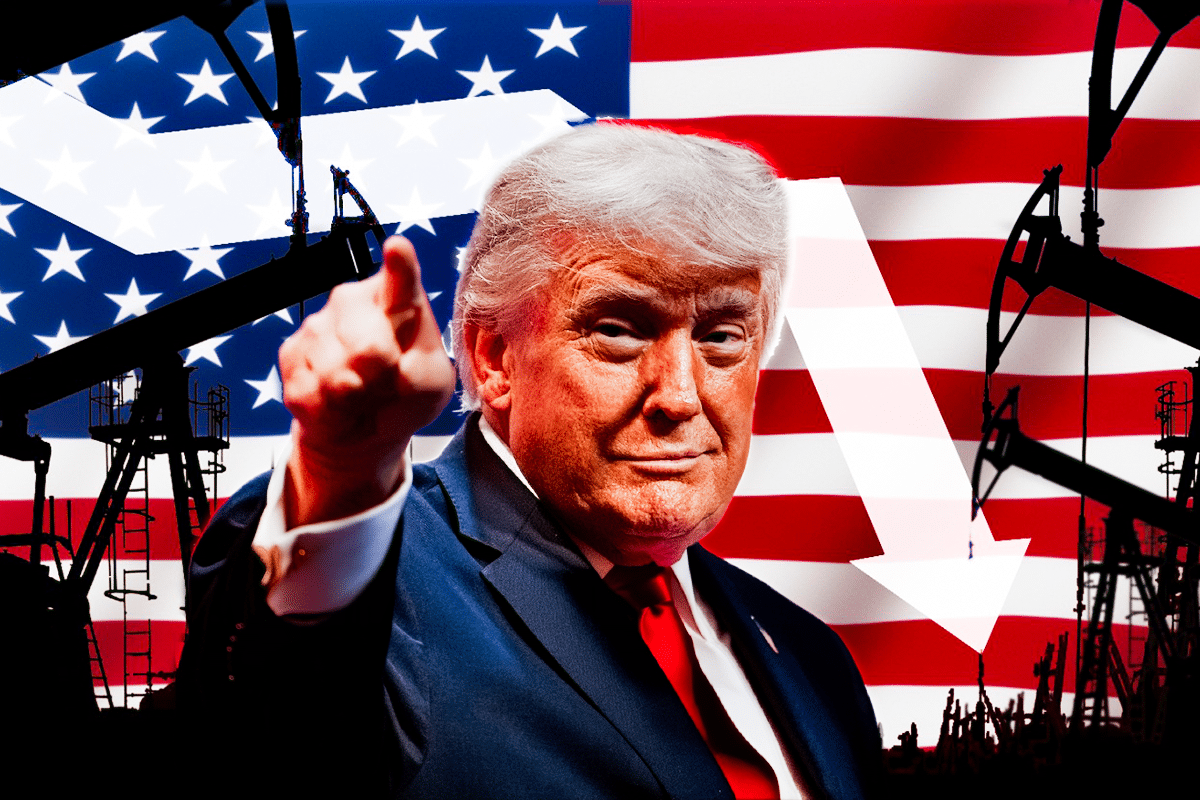
Since US President Donald Trump signed the agreement with Iran that will bring the war to an end without achieving any of the goals he had set for himself, and worse, an agreement that strengthens the Iranian regime and grants Tehran the status of a regional power it never had before, Trump has repeatedly justified his surrender to the Iranians by saying that he did not want a "global economic catastrophe," and that because of the agreement, the stock market in New York "soared like a rocket" and oil prices fell dramatically.
Trump's remarks reveal a simple and bitter truth: economic interests dictate American policy, and they are the decisive factor. It is a pity only that Trump did not think all this through before withdrawing from President Barack Obama's nuclear deal from the previous decade, an agreement far better than the understandings he is now seeking to reach with the Iranians, or when he decided to go to war with Iran this past February.
It must be admitted that Trump is not the first president to give absolute priority to the economy and oil. One recalls the famous phrase attributed to an adviser to President Bill Clinton: "It's the economy, stupid." In other words, this is how the American voter makes his decisions, and so does any president who wants to be reelected or is thinking about his legacy.
How does this concern Israel? To answer that, one must go back more than 70 years, to the famous meeting between US President Franklin D. Roosevelt and Saudi King Ibn Saud. The two met in February 1945 aboard the US cruiser Quincy in the Suez Canal. A Bedouin tent, with all its contents, was brought onto the deck, carpets were spread out and sheep were slaughtered.
Roosevelt wanted to ensure American control over the energy sources in the Gulf and a steady supply of oil from Saudi Arabia to the US. In return, he promised sponsorship and protection for the Saudi ruler.
But the meeting also had a part that concerned us: The two leaders also discussed the Jewish-Arab conflict in the Land of Israel, and at its conclusion Roosevelt declared that he had learned more from his Saudi guest about the conflict in "five minutes of conversation than I had learned in my whole life."

That statement fixed US policy on the question of the Land of Israel for many years to come. Its essence was principled support for the Arab position and suspicion and hostility toward Israel. This was expressed, among other things, in opposition to the establishment of a Jewish state in the Land of Israel, or in an embargo on arms sales and on the development of economic ties with Israel. In this respect, President Harry Truman, who recognized Israel immediately upon its establishment, was the exception that proved the rule, and he too had to contend with fierce opposition to his moves from senior officials in his administration. So it was with Roosevelt, so it was with Truman's administration, and so it was with the administrations that followed, whether Democratic or Republican.
The friendship that blossomed between Israel and the US during the administrations of Lyndon Johnson and Richard Nixon in the late 1960s was rooted in the American recognition that the Arabs had failed to deliver and preferred the friendship of others, such as the Soviet Union, over friendship with Washington, and that US-Israeli friendship paid off in economic terms, not only in security terms, and did not harm American interests vis-a-vis the US oil suppliers in the Gulf. But it must be admitted: Every time a contradiction emerged between the two, the Gulf interest prevailed, for example, in the Reagan administration's sale of advanced AWACS aircraft to Saudi Arabia.
Now we have returned to the starting point, where economic interests and the question of oil prices are what matter most, because oil prices are more important than a historic friendship with a reliable and loyal ally, a friendship based on shared values.
This is the simple truth, even if it is bitter. There is no need to get worked up over it. We simply need to take it into account and understand that there are areas in which we cannot rely on the US, and that there are limits even to what for years appeared to be Washington's total commitment to us, a commitment that could not be shaken or cracked.
After all, oil is thicker than blood.


