

US President Donald Trump's decision last April to halt the attack on Iran before its objectives had been achieved handed the ayatollahs' regime a victory it had not expected. Iran's sense of triumph grew after it signed a memorandum of understanding with the United States in June, granting it the status of a regional power and guaranteeing that hundreds of billions of dollars would flow into its coffers.
It is no surprise that hubris took hold among Iran's decision-makers. The more Trump and Vice President JD Vance conveyed distress and an eagerness to reach an agreement with the Iranians at any cost, the more Tehran became intoxicated with power and increasingly willing to take risks and challenge the United States.
This is, of course, one explanation for Iran's puzzling conduct, which has brought disaster after disaster upon the country in the past and once again led it to keep pulling on the rope until it snapped.
Rather than capitalize on its gains through a diplomatic initiative toward a US administration that appeared alarmed by the prospect of renewed fighting, the Iranians chose to provoke Trump, offend his pride and even humiliate him. They began firing at ships attempting to pass through the Strait of Hormuz, in violation of the memorandum of understanding they had signed.
That proved to be a mistake. Trump is not known for overlooking an affront to his dignity, and Iran's audacity forced him to change course and return to the fighting. He initially did so in a measured and cautious manner, but the pace and scope of the strikes have increased with each passing day.
There is even a possibility that Trump will carry out his threats and launch a full-scale attack on Iran's economic infrastructure, something he refrained from doing during the March-April war, in what amounted to a strategic mistake by both him and Israel. For Iran, sliding into a renewed confrontation is a grave error, because its real condition is worse than media reports or Iranian propaganda suggest.
True, the Iranian regime survived the failed attempt to topple it and retained many of its military capabilities. But the Iranian economy is on the verge of collapse, if it has not collapsed already, as reflected in the plunge in the value of the Iranian currency and in reports of shortages and growing economic distress.
After all, it was the economy that brought masses of Iranians into the streets at the end of last year, and it is the economy that could ultimately bring down the ayatollahs' regime.
All this raises the question: Who is actually making decisions in Iran today? Is it the pragmatic camp, represented by Iran's smiling faces, Foreign Minister Abbas Araghchi, Parliament Speaker Mohammad Bagher Ghalibaf and President Masoud Pezeshkian? Or is it the hard-line camp led by senior figures in the Islamic Revolutionary Guard Corps?
Under normal circumstances, Iran's supreme leaders, Ayatollah Ruhollah Khomeini and his successor, Ali Khamenei, settled power struggles within the Iranian leadership and had the final say. Their leadership enjoyed legitimacy and was accepted by all sides.
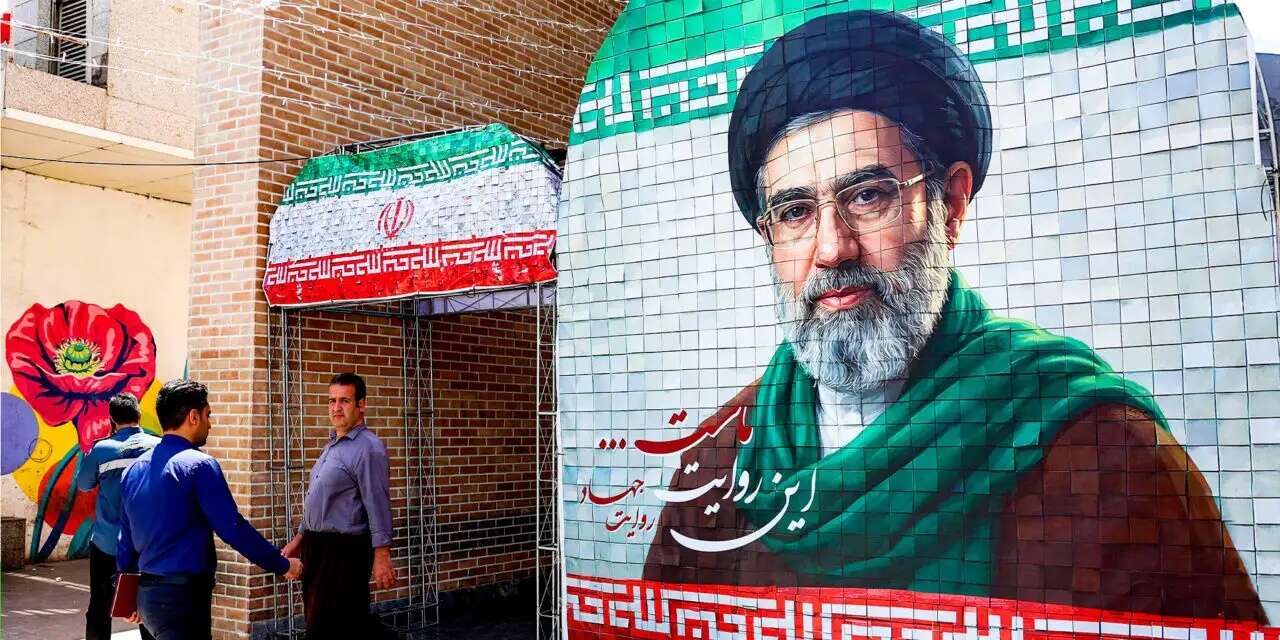
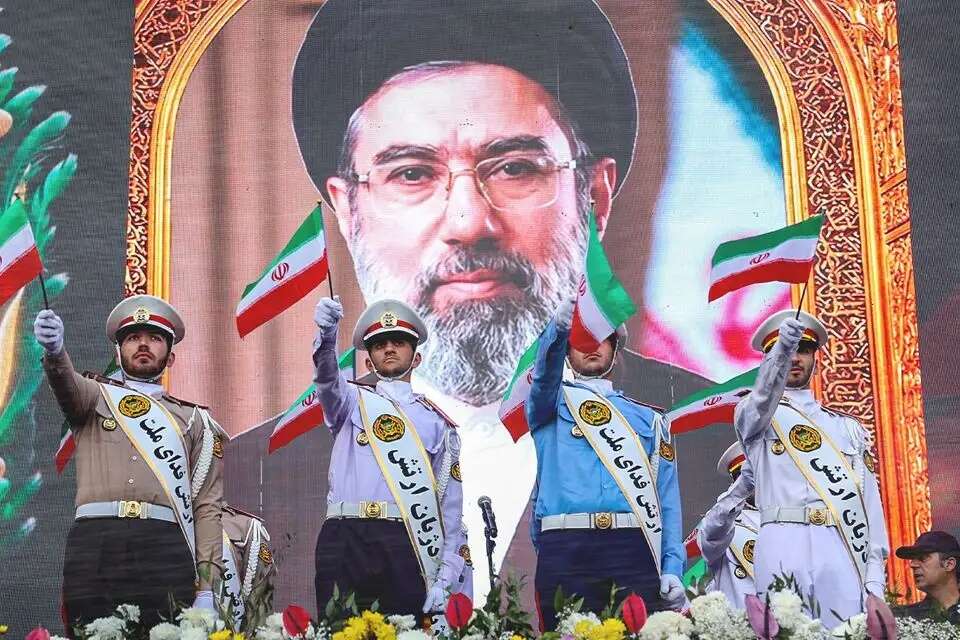
That is no longer the situation. Iran is now headed by Mojtaba Khamenei, a "present but absent" leader who has yet to appear in public and whose voice has not been heard. Some even claim that he is no longer alive or was critically wounded in the attack that killed his father, Ali Khamenei.
According to this view, Mojtaba Khamenei does not control the country at all. Decisions are presented as though they are being made in his name, while real power lies with the Revolutionary Guards, who installed him as leader in the first place.
Fears that a public appearance by the leader or other senior officials, or even a meeting of the leadership, could be detected by the Americans and Israelis and lead to their elimination make it difficult to maintain an orderly decision-making process. They also raise doubts about who is making decisions in Iran today and how those decisions are being reached.
Despite the conciliatory messages and smiling faces presented by Iran's foreign minister and president, it appears that the Revolutionary Guards are making the decisions in practice.
These are extremist and fanatical figures with little interest in acknowledging reality or constraints, and even less interest in calm and stability.
Under such circumstances, Iran is voluntarily placing itself on a collision course with the United States. All that remains is to await Trump's decision on how to respond to the Iranians and what action to take.


