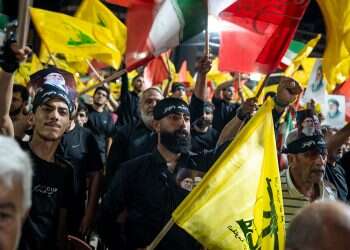
Israel and Hamas have shed blood repeatedly since the terrorist group violently took over the Gaza Strip in 2007. But none of the flare-ups over the past decade or so have changed the fundamental reality in the Gaza Strip, primarily because for both sides there are vested interests in the current situation remaining unchanged.
For Hamas, having Israel at its doorstep allows it to maintain its identity as an entity and challenge the Palestinian Authority by being the only entity that is willing to raise the flag of resistance to Israel.
As far as Israel is concerned, it prefers the devil that it knows – Hamas – than toppling it and then having to deal with the severe consequences.
This is the reason why the two sides have been holding indirect talks through Egyptian and Qatari mediators to achieve an extended truce that would essentially cement the status quo.
The underlying rationale behind the talks is the same one that has guided Israel vis-à-vis the Palestinian Authority: improving the Palestinians' standard of living and enhancing their self-government in exchange for a cessation of hostilities.
These talks have only been partially successful because while Israel has acted conservatively and avoided any big confrontation, Hamas has taken on Israel head, undeterred by the potential escalation.
For Israel, any round of hostilities means not only that rockets will hit Tel Aviv and other communities deep inside Israel, but also that the economy will take a hit.
As far as Hamas is concerned, the fact that it is fighting for its existence blunts the blow it may receive when it fights Israel.
That is why Hamas has over the past year constantly walked on the brink. It escalated the violent protests along the Gaza Strip fence, increased the intensity of the attacks using airborne explosive devices, and effectively used any compromise with Israel as the starting point for renewed negotiations aimed at getting more concessions.
Israel will most likely tread carefully during the election campaign, but after the April 9 vote it will have to decide between two options: playing according to Hamas' rules and getting dragged into a confrontation or changing the rules of the game by imposing its will on Hamas by force.
Such a drastic paradigm shift can be done in two ways. The first, as part of the "deal of the century" that the Trump administration will soon unveil, which would presumably marshal support from Arab states to pressure Hamas. The second, as part of another flare-up that would force Israel to wage a sophisticated campaign that would, on the one hand, ensure Hamas does not get toppled, but on the other hand deal it a major blow to force it to accept a long-term truce.
The new government formed after the election will have to come up with a policy that would put an end to Hamas' foot-dragging and attrition.