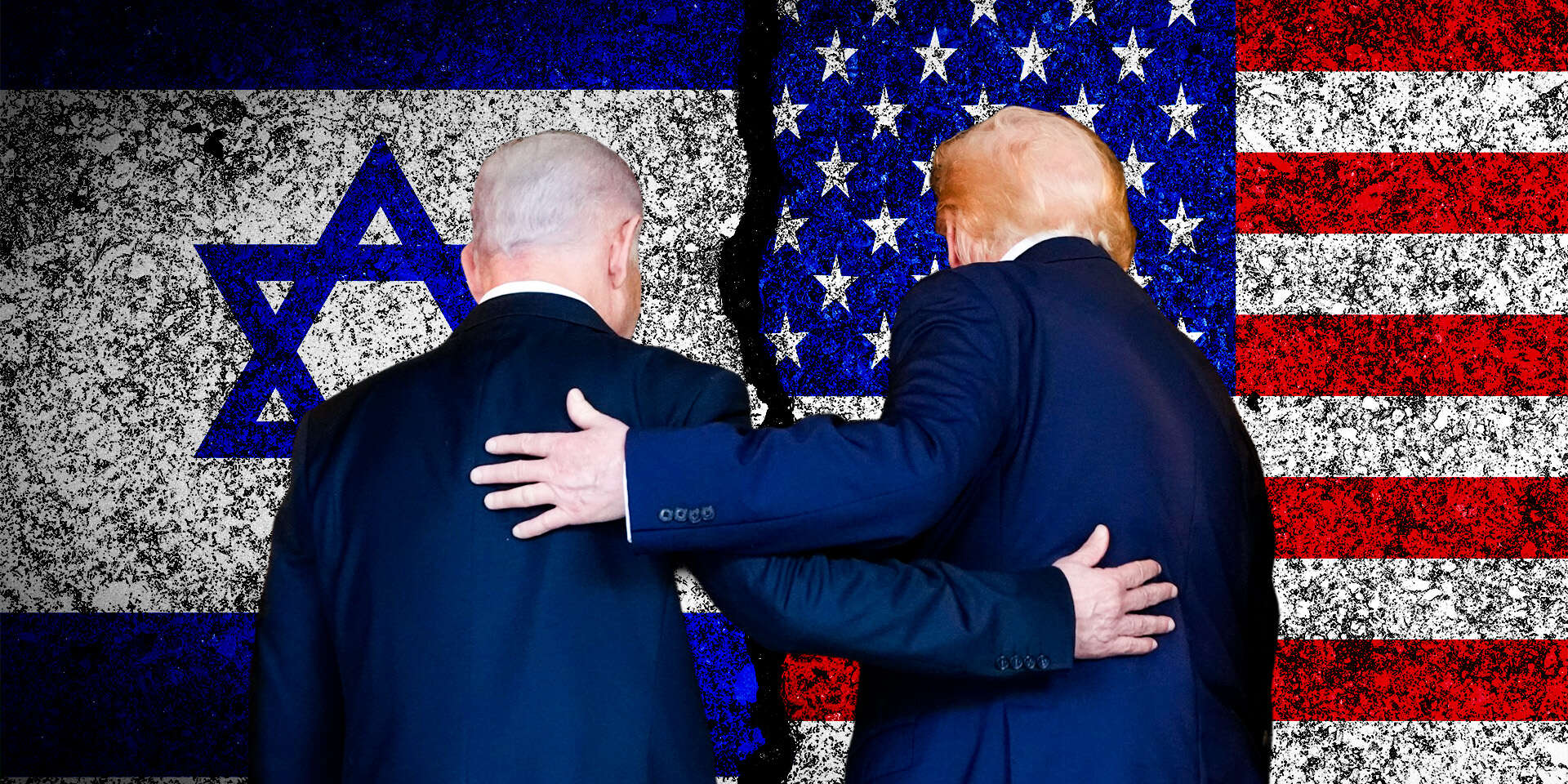
Over the past two years, Israelis have grown accustomed to learning what lies ahead for us, whether we are headed for escalation or for a ceasefire, from President Donald Trump's tweets. Today, he makes fateful decisions on our behalf that determine our future. Sometimes he updates the Israeli government on his decisions, but at other times he bypasses it and delivers the order directly to us: to turn back our planes on their way to strike in Iran, or to cease fire in Lebanon.
President Trump is a great friend of Israel, and in that he joins a long line of American presidents who stood by our side in moments of crisis, presidents whom some people ungratefully go out of their way to make us forget. But Trump is the president of the US, and he has interests and a set of considerations that sometimes align with ours, but sometimes contradict them. For example, Trump sees Turkish President Recep Tayyip Erdogan or the emir of Qatar as close friends and allies, while we see them as bitter rivals.
Because of the understanding that the US is a close friend that sometimes has interests of its own that conflict with ours, Israeli governments made a point of preserving their freedom of decision, as well as the ability to withstand, and even oppose, American decisions and moves. But this independence, and the ability to stand up and say "no" even to our closest friends, has been lost to us in recent years. President Trump himself attested to this honestly and bluntly when he declared that Prime Minister Benjamin Netanyahu does what he tells him to do.
Is dependence to the point of self-effacement before the Americans inevitable? Not at all. In June 1981, the Israeli Air Force destroyed the nuclear reactor the Iraqis had built. Israel did not ask the US for approval, nor did it even inform Washington of the strike, and as punishment, the Americans suspended the supply of new fighter jets to the Israeli Air Force. Six months later, in December 1981, another crisis erupted in Israel-US relations after Prime Minister Menachem Begin decided to annex the Golan Heights to Israel. In response, President Ronald Reagan announced the suspension of the strategic cooperation agreement with Israel, as well as the cancellation of a grant worth hundreds of millions of dollars. But Begin was not intimidated. He summoned the US ambassador to Israel and told him: "We are not your vassals. We are not a banana republic."

He also announced that Israel was canceling the cooperation agreement with the US that Washington had suspended. In both cases, Begin's forceful response led the Americans to back down, and relations between the two countries returned to their previous course. But Begin was not the first prime minister who dared to stand his ground. He was preceded, and in fact had the path paved for him, by Israel's first prime minister, David Ben-Gurion, who in December 1949, despite the fury of the US and the world, decided to move the capital to Jerusalem. Ben-Gurion also stood his ground in the face of pressure from President John F. Kennedy, who sought to halt the construction of the nuclear reactor in Dimona.
Israel knew how to stand up to pressure from the US administration because it had the resolute and unequivocal support of the Jewish community in the US, the backing of American public opinion, and finally, bipartisan support in Congress in Washington. But anyone who turns the Democratic Party, which may return to the White House in two years, into an enemy is eroding the broad, cross-party support from which we benefited in the past. And anyone who damages unity among US Jews loses wall-to-wall Jewish support for Israel, support that was a key factor in mobilizing backing for us among the wider American public. Needless to say, anyone who does not show the ability to stand firm projects weakness and invites pressure.
All that remains is to hope that after we wipe off the spit and claim it was rain, we will know how to rebuild the bridges we destroyed with our own hands to our friends and supporters in the US. By doing so, we can restore the system of checks and balances that collapsed in our relations with Washington, something that will restore our independence and our ability to withstand pressure from our American friends.