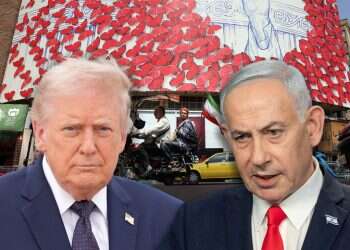
This Monday, one day before midterm elections in the U.S., the second round of economic sanctions will be imposed on Iran as a result of the Trump administration's withdrawal from the nuclear deal in May 2018. These sanctions will comprise a wide range of economic and financial measures, intended primarily at decreasing the regime's oil exports and financial transactions via the country's central bank to a bare minimum. Consequently, the Trump administration hopes to inch the regime closer to its breaking point and threshold of willingness to accept the inevitable and radically alter its "operational code" – whether in regard to its plans and ambitions for its nuclear and ballistic missile programs or its far-reaching and unrelenting subversive activities across the Middle East.
In contrast to early prognostications, whereby Iran is expected to retaliate swiftly, defiantly and provocatively to the newly imposed sanctions, U.S. President Donald Trump notched another win in his favor by deterring the Iranian adversary from breaking the rules of the game and heading for a head-on, perilous collision with the American superpower. With that, the regime still hasn't shown any signs it is ready to temper its fanatical positions or sponsorship of terrorist groups such as Hezbollah and Hamas.
The main reason for this is the regime's disposition and willingness to continue paying an increasing price for its intransigence (particularly in light of the country's plummeting currency and soaring cost of living) – but also the limited nature of the sanctions apparatus. Not only are they not a declaration of all-out economic war by the administration; other key players in the international arena, such as China and India, still don't fully support this strategy.
Moreover, although the threat of punishment continues to deter large corporations from Europe, Japan and South Korea from making wide-ranging deals with Iran, countries in the European Union have recently created a joint system to bypass the sanctions and continue doing business with Tehran. To be sure, the sanctions campaign is far from its full potential and illustrates the difficulties still preventing hermetic, comprehensive enforcement. All this being said, and although it's hard to assume these harsher American sanctions will trigger an immediate diplomatic breakthrough without broad international consensus regarding their breadth and scope, the new sanctions package is significant and potentially potent, very much in the image of America's 45th president – who has methodically and consistently kept the promises he has made to his electorate.