The Israel Prize is awarded by the education minister, in the presence of the president, to citizens that have demonstrated excellence, achieved a breakthrough in their field, or deserve recognition for their contribution to society and the state. The Supreme Court has ensured the purely professional nature of the award and the independence of the members of the committee. It also ruled that as jarring as they may be, statements by an Israel Prize winner that do not relate to their profession should not be taken into consideration when deciding who is worthy of the award to prevent any attempts at censorship in a democracy.
Follow Israel Hayom on Facebook and Twitter
Does signing a petition that calls for the EU to end cooperation with Ariel University institutions and programs not relate to the professional work for which the award is being granted?
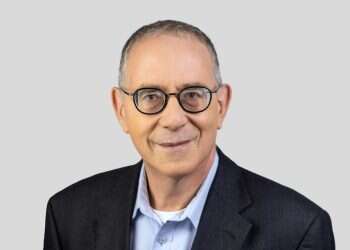
Professor Oded Goldreich was to receive the Israel Prize for mathematics and computer science in recognition of his work at the Weizmann Institute of Science and not for any particular statement he made in the past. In reality, though, the situation is more complicated.
In his role in academia, Goldreich publicly supports the prevention of academic collaboration with researchers whose only sin is that they are employed by an academic institution situated in Judea and Samaria. It is in this way that Goldreich takes advantage of his academic position to support the boycott of academic research by his colleagues. This support for a boycott is issued from within the professional field for which he was to be awarded the prize.
I am not saying this is enough to tip the scales. As a rule, academic freedom of expression must be protected. A political statement by a university lecturer, outrageous as it may be, is not grounds to be fired. An academic institution that extolls freedom of expression must be tolerant of the opinions and worldviews of its lecturers. Moreover, academics' freedom of expression must be protected. A ban on members of the academia expressing their opinions on controversial subjects when there is no connection between the remarks and the courses taught would harm their intellectual choices as an academic. The role of higher education is to increase understanding, criticize, and challenge the government. To that end, when a faculty member emphasizes their positions are their own, and when they allow fruitful discussion in the classroom, they should be allowed to share their positions on the issues dividing society with students even if those issues have nothing to do with the course material.
Goldreich, however, sawed off the branch he was sitting on: the encouragement of pluralism, broadening of horizons, and exposure to diverse opinions. He has the same right as every other citizen to engage in political activity and speak as he sees fit both on- and off-campus.
Is it fitting to award the Israel Prize to an academic who uses their status to try to censor other academics due to the location of the institutions where they are employed? As the Supreme Court noted in one of its rulings: "A decision to award the Israel Prize to a person, although almost immune from substantial intervention on the part of the education minister and judicial criticism, is not immune from public criticism."
Subscribe to Israel Hayom's daily newsletter and never miss our top stories!