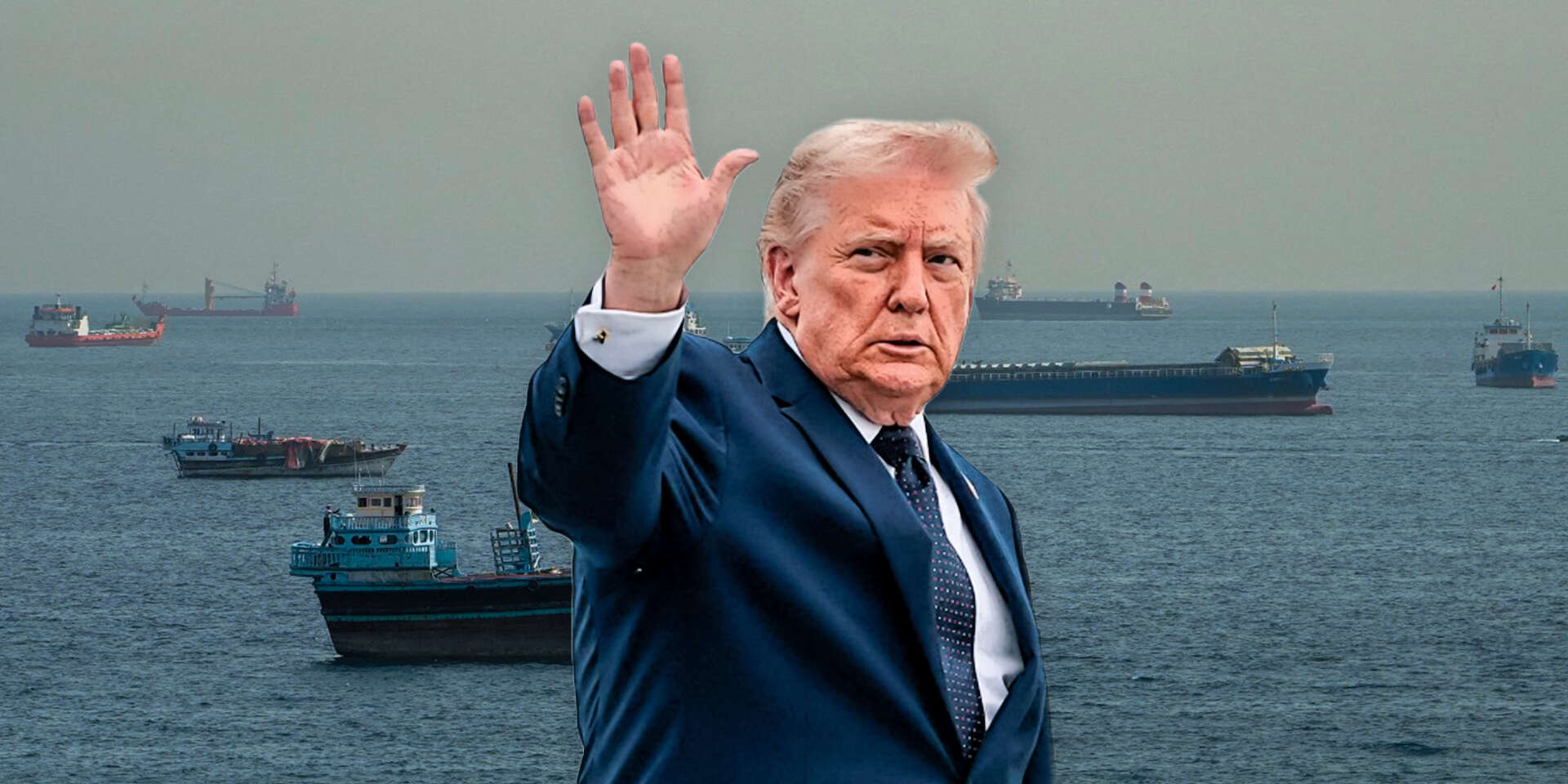
President Macron loves symbols and commemorating major events in French history. His all-out, pretentious diplomatic activism aims to secure a prominent position on the international stage, dictate the agenda, attract attention, garner positive press, and achieve rapid, even if fleeting, success. This approach was once again confirmed at the G7 Summit held recently in Evian.
Fascinated by the royal welcome, the sumptuous dinner offered at the Palace of Versailles, and Macron's excessive flattery, a vain Donald Trump decided on the spot to initial the memorandum of understanding with Iran and also signed it in Persian, under the curious gaze of Emmanuel Macron, and to bursts of applause…
How can we explain these machinations, describe this impulsive and nonchalant behavior, this duplicity, this veritable theatre of the absurd? …
The masks have finally fallen. All of Trump and Macron's attempts to gloss over this charade and downplay Iran's threats are deceptive and hypocritical. Worse, voices are rising to say: Iran has the right to nuclear weapons like any other country, and that it can possess ballistic missiles…
Incredibly, no one explicitly states that the goal of the ayatollahs' regime is the destruction of the Jewish state. The deadly indifference of the West, and America in particular, has remained unchanged since the dark years of World War II.
No one is fooled; the lie is obvious, blatant. The agreement signed remotely with Iran is certainly not a historic peace treaty with the United States, nor is it the treaty signed on June 28, 1919, in the famous Hall of Mirrors that ended the First World War.
This atypical and bizarre agreement in the annals of diplomacy is in reality a declaration of intent, a preliminary non-binding agreement with a limited duration of 60 days, a kind of "non-paper" which each party could interpret differently and even violate. We are already seeing misunderstandings because one does not sign a treaty hastily, blindly, without obtaining guarantees and the approval of all factions within the Iranian theocratic regime, and above all, the endorsement of the Revolutionary Guards.
This agreement is worse than the one signed by Barack Obama in Vienna in 2015; it is bad on all fronts because it has renounced all the demands that Trump and Netanyahu had previously made of Iran, particularly regarding its nuclear capabilities, ballistic missiles and support for Hezbollah, not to mention the promises concerning the fall of the Islamist regime.
By signing, Trump legitimizes and strengthens the power of the ayatollahs. He plunges the Iranian people into misery and despair, and he will destabilize the entire Middle East for years to come.

In the context of an energy crisis, facing the risk of losing commercial contracts, including those that would benefit his family, Trump found himself backed into a corner. He could no longer dictate the global agenda. He was bewildered and also unable to launch new strikes against Iran at a time when most nations were competing in the FIFA World Cup on its soil.
In his fervent desire to end the war and achieve a diplomatic success, Trump chose to restore his image at the Palace of Versailles.
In fact, the conflict with Iran has proven that the United States is indeed a great and impressive military power but lacks a clear and deterrent strategy to be able to lead the world and dictate a true Pax-Americana.
President Trump, his deputy Vance, and advisors Witkoff and Kushner made several mistakes during the negotiations. How do they explain the immediate cessation of the Twelve Days War in June 2025? Why did they allow the survival and consolidation of the ayatollahs' power for an entire year? They negotiated from a position of weakness, with a lack of understanding of Iranian culture, and ignoring the stubbornness of the ayatollahs' regime, their cunning, lies, and manipulations.
The result: Trump's threats are repeatedly ridiculed, and the Islamist regime now dictates the agenda, emerging victorious from this war against the United States, the world's most powerful nation. The Chinese are rubbing their hands together, skillfully advancing their interests and gaining ground on the international stage, while Europe remains absent. Its role is limited to warmly welcoming the Superpowers.
The demands regarding the right of passage and control of the Strait of Hormuz also recall the Suez Crisis of 1956. That campaign humiliated France and Great Britain and failed to prevent Nasser's nationalization of the Suez Canal Company. Colonel Nasser continued his belligerent activities, fostering a Pan-Arabism similar to that which Iran now seeks with its Shiite militias.
Deeply disappointed by Trump's policies, Israelis are watching the unfolding events with concern and dismay. How can this rogue state, through this agreement, manage to end the strikes, obtain the lifting of sanctions, race towards nuclear weapons, and continue its crimes against its own people?
Trump is undoubtedly largely responsible for this dangerous situation, especially since he accepts Iran's irreversible support for Hezbollah and demands an immediate ceasefire in Lebanon as well, at a time when our soldiers are falling heroically on the battlefield every day.
Exalted and too quickly carried away by the successes of the IDF and the Mossad, Netanyahu misinterpreted the numerous discussions with Donald Trump and underestimated without question the whims, contradictions, hesitations and real intentions of the American president.
Netanyahu also mismanaged diplomatic negotiations and, above all, allowed his ministers to deliver arrogant, provocative, and irresponsible speeches. Vice President Vance's impulsive reactions, fiery warnings, and vehement intimidation demonstrate that current relations with the United States are in serious crisis.

Certainly, we have had misunderstandings with all American administrations in the past, but this crisis could have major repercussions on the future of strategic, military and economic relations and also on the support of the Jewish community.
Netanyahu has lost his main battleground. He is being singled out by all foreign ministries and international opinion, and especially by the majority of Israelis, as solely responsible for the situation.
In the midst of the turmoil, facing existential dangers, in this complex, dangerous and alarming context, a meeting between Netanyahu and Trump in Washington to explain the situation becomes urgent.