


Iran, Lebanon and Gaza, the three main fronts, differ greatly in terms of what Israel can do in each of them.
For now, the Iranian regime is proving resilient in the face of Netanyahu and Trump's bombing campaigns in 2025 and 2026. Defeating it is essential in order to remove the threat to Israel, and not only to Israel. But even if this succeeds, one way or another, it will take time. This leads to a conclusion regarding Lebanon and Gaza: In the short term, there is no hope of deciding those two fronts by achieving victory in Iran. But that does not mean victory cannot be advanced in both, albeit in a different way in each.
The US and Israel, in an unprecedented and resounding partnership, succeeded in setting Iran's nuclear project back, apparently by several years, severely damaging its surrounding industrial infrastructure and inflicting heavy economic, financial and physical losses on Iran, adding to the severe economic distress it had already faced before the war.
Even if, as appears likely, the US blockade of Iranian ports is lifted under an interim agreement for the mutual reopening of the Strait of Hormuz, Iran will most likely suffer from extremely severe employment and budget crises. There is reason to believe these crises will further destabilize the regime. This could be a short process, and in any case one can hope it will not be as long as the fall of Saddam Hussein's Baath regime after the period between the US invasion in 1991 and its invasion in 2003, or as drawn out as the slow collapse of the Assad family's Baath regime from 2011 to 2024.
The Islamist regime succeeded in halting the latest US-Israeli bombing campaign, as well as the US' brief and failed attempt to forcibly open the international trade route through the Strait of Hormuz. With their backs to the wall, the Islamists succeeded in blocking trade in the Gulf and signaling to the Gulf states, through missile attacks, that they are capable of destroying their water, oil and gas production facilities, thereby bringing them down and, with them, the global energy market. That is a cost the US has no interest in absorbing. The Iranians will therefore apparently succeed in forcing the US to lift the blockade on their ports.
But what will be included, and what will be excluded, in the interim agreement for the mutual reopening of Hormuz? Will Israel be restricted in its attacks on the terrorist armies in Gaza and Lebanon? Will Iran be released from financial pressure? Will the US continue to insist on the elimination of enriched uranium at all levels, and on halting the nuclear project and dismantling its facilities? Prime Minister Benjamin Netanyahu is apparently an ally who has influence over President Donald Trump's position on these vital issues, but he is of course not the one who decides them.
By contrast, in Lebanon and Gaza, Netanyahu has relatively greater room for maneuver. In both fronts, he has achieved international delegitimization of the continued existence of the Hamas and Hezbollah terrorist armies.
Too little territory
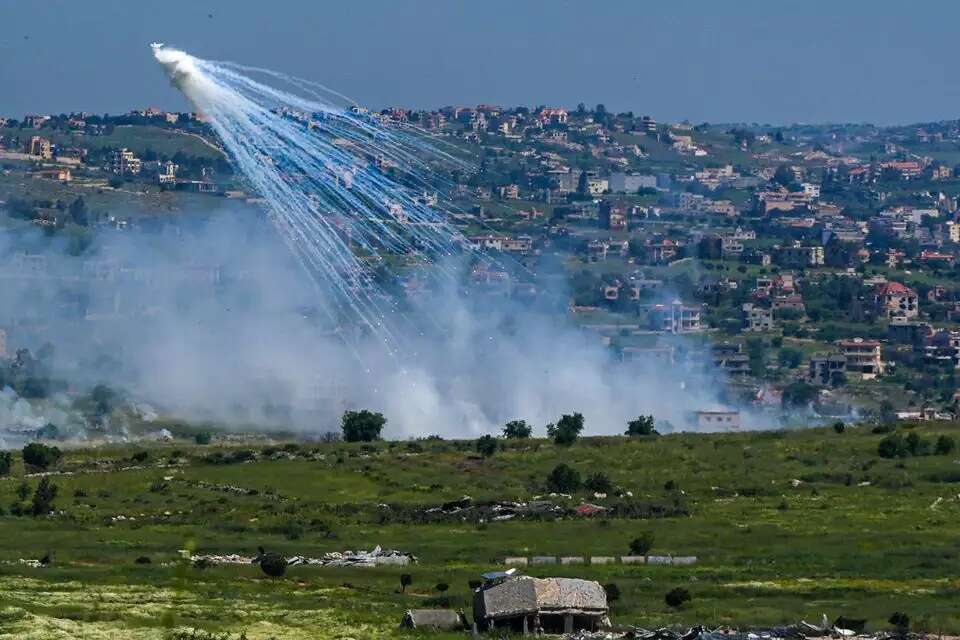
The prime minister faces a decision over which front to attack first, since the Israel Defense Forces' flawed force buildup does not allow for simultaneous offensives. In Gaza, the IDF needs to continue biting off territory and eliminating terrorists, but Lebanon is more urgent because of the drone threat to the Galilee. So far, the IDF has captured too little territory in southern Lebanon due to a shortage of combat units, and because the US feared such a conquest would help Iran in the negotiations and prove that American appeasers, on the right and the left, are correct in claiming that Israel is leading the US.
The IDF needs to capture the entire large area up to the Litani River in the western and central sectors, vital territory that has not been captured, and also capture territory beyond the Litani, north of Metula. This is necessary to prevent, though not hermetically, the drone threat to the Galilee.
Israel needs to destroy infrastructure throughout this entire area, bomb Hezbollah facilities and commanders to the north, and announce that the conquest and the bombing will continue until Lebanon dismantles the terrorist army that has taken control of it. Indeed, the occupation could become prolonged and expand, unless the "State of Lebanon" wishes to leave the quotation marks behind and become a real state.
In Iran, the war will drag on. In Lebanon, we will seize an improved position, and then turn to the complete elimination of Hamas.


