

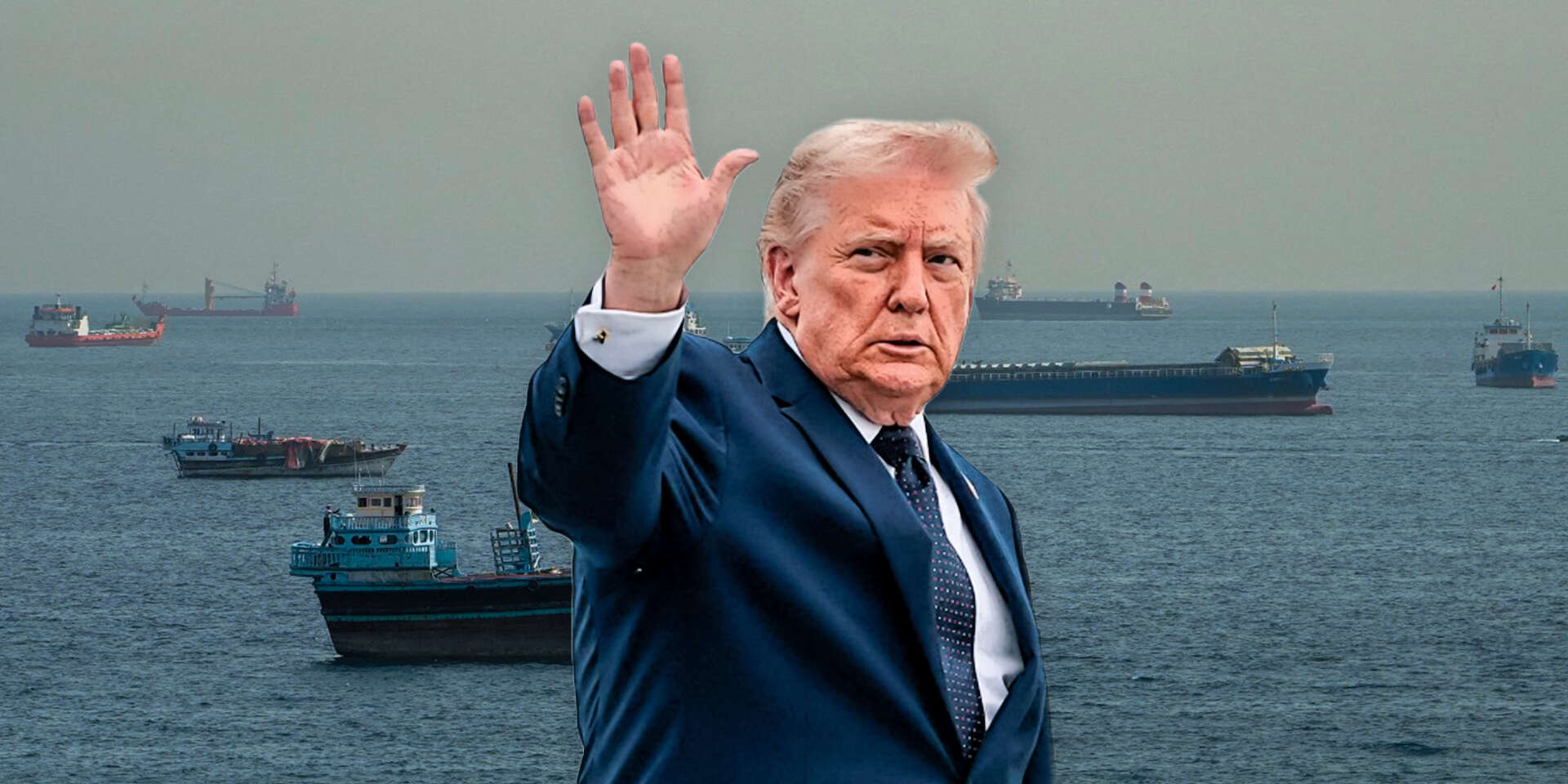
Suddenly, US President Donald Trump is talking up Abraham Accord peace treaties between Israel and Arab and Islamic countries.
On Wednesday he suggested that he might not sign a war-ending agreement with Iran if America's Arab partners in the region do not agree to recognize Israel. Trump listed Saudi Arabia, Qatar, and Kuwait as among the countries that should join the Abraham Accords (– accords that in 2020 established diplomatic relations between Israel, the United Arab Emirates, and Bahrain, and that were subsequently joined by Morocco and Kazakhstan).
"I think they owe that to us, to be honest," Trump said. "I'm not sure we should make the deal [with Iran] if they don't sign."
I am all for more Abraham Accord partners, but Trump is mistaken if he thinks that such advances can sugarcoat a bad deal with the Islamic Republic of Iran; a deal that might leave Iran with much of its enriched uranium and its nuclear and missile production facilities, and that would give Iran tens of billions of dollars of sanctions relief and leave it in de facto control of the Strait of Hormuz.
No, a thaw in Indonesian ties with Israel or a Paki and Saudi smile at Israel cannot compensate for a bad deal with Iran. Such US-brokered delicacies would not be any consolation. Not even a booby prize.
Neither Israeli nor Arab leaders in the region are so gullible. Nobody will be mollified by nice handshakes on the White House lawn. Nobody will consider them a sufficient or substantive conclusion to the US military campaign to cripple Iran.
Trump must more decisively crush Iran, period. Only on top of that could additional Abraham Accord treaties be viewed as very fine refinements to the Mideast situation.
THREE central strategic considerations undergird my assessment.
First, nothing is more important than ending Iran's hegemonic march to control the Mideast, to intimidate the West and Western allies in the region, and to annihilate Israel. Operations Epic Fury and Roaring Lion, as well as the 12-day war against Iran in 2025, have gone a long way in doing so.
But the job is incomplete. America (and Israel) have the ability to knock Iran back much father, and collapse of the radical Islamic clerical regime in Tehran is within reach too. The military and economic siege on Iran is truly effective, and additional strikes on that country's energy and internal security nodes could drive the mullahs over the cliff.
Trump ought not retreat now. He certainly should not try to sell us a JCPOA Mark II accord (a reheated, slightly varnished version of then-President Obama's rotten 2015 nuclear deal with Iran) with a puny Abraham Accords cherry on top.
The second strategic consideration is the seriousness of the Abraham Accords. The Accords truly were and remain the bedrock for a transformed Middle East; the most exciting and promising foundations for Arab-Israeli peace and regional stability, and for ideological rehabilitation from within of the Arab world towards modernity, moderation, and tolerance.
In other words, the Accords are too meaningful and meaty, too brave and consequential, to be treated as chickenfeed; as watery icing meant to smooth over defeat in the Arabian Gulf. You cannot whitewash the survival and strengthening of the ayatollahs with diplomatic pronouncements that merely promise featherlike melting of hostilities toward Israel.
Again, give us real victory over Iran, and then give us substantial Abraham Accord partnerships. Fudging either would be a grave mistake.
THE THIRD strategic consideration is that the Trump administration, for all its brave and forceful confrontation of Iran, has blinders on regarding the double-dealing and back-stabbing of Saudi Arabia and Turkey (and Pakistan too). Both countries have undermined the American and Israeli war effort, and neither is anywhere close to, or deserving of, upgraded ties with Israel.
Mohammed Bin Salman (MBS) of Saudi Arabia denied basing rights for assault on Iran to the US Air Force and failed to contribute his own large US-supplied air force to the war effort – unlike his courageous counterpart Mohammed Bin Zayed of the UAE. MBS also has not really backed American efforts to force-out Hamas in Gaza and Hezbollah in Lebanon.
Recip Tayyip Erdogan, the dictator of Turkey, has supported Iran, not the US, throughout the war in multiple ways, while continuing to back Hamas and to undermine US attempts to draw Syria out of the radical Islamist camp.
Peace between Israel and Saudi Arabia? Yes, that has been the holy grail of regional peacemaking since the dawn of the Abraham Accords, but now it seems not only distant but unworthy. At this point, the Saudis need Israel more than Israel needs the Saudis, and the ungrateful Gulf kingdom does not deserve Israeli felicitations.
Israel should not pay any ridiculous price for rapprochement with Riyadh. It certainly should not bend to the outrageous Saudi demand for Palestinian statehood as the cost of an embassy staffed in Tel Aviv by a representative of MBS; certainly not after October 7 and Saudi lassitude in confronting Hamas and Iran.
In sum, Trump should not be treating the Abraham Accords as candy to cover-up capitulation to Ayatollah Mojtaba Khamenei, the IRGC, and whoever might be in charge in Tehran today.
Strike now to enervate Iran; save the sweet glaze for later.


