


Good morning to Israel's elected leaders. Here's the news: You have no choice but to sit down together.
The blue wave, dark as it was, that swept across the US this week with sweeping victories for Democratic candidates has made Israel's need for stability more urgent than ever. We cannot afford to be dragged into endless political disputes and election campaigns.
The newly elected Democratic candidates are not the Democrats of old, in the mold of Hillary Clinton or Joe Biden. Those Democrats had a soft spot for Israel, even when they were critical of it in their rhetoric and actions. The new breed of Democrats is bad news for Israel. They are hostile, they advocate boycotts, and they are overflowing with sympathy and affection for the Palestinians, extending even to Iran. These are people who justify the October 7 massacre without so much as blinking.
Above all, this is an antisemitic breed that hides behind a supposedly innocent facade of anti-Zionism. These are the people who gained momentum in the latest congressional elections. Not all Democrats fit this description, but the new Democrats are pulling the party so forcefully in their direction that far too many moderates are falling into line.
These people, driven by an ideology hostile to the West and to America itself, will set their sights on Israel first. We are the weak link. Make no mistake about it.
Extremely difficult days await us in just two months, when the newly elected members of the House and Senate take office. We can expect vicious, hateful rhetoric directed at Israel and, of course, at the Jewish communities in Judea and Samaria, along with anti-Israel legislation involving sanctions, arms embargoes and more.
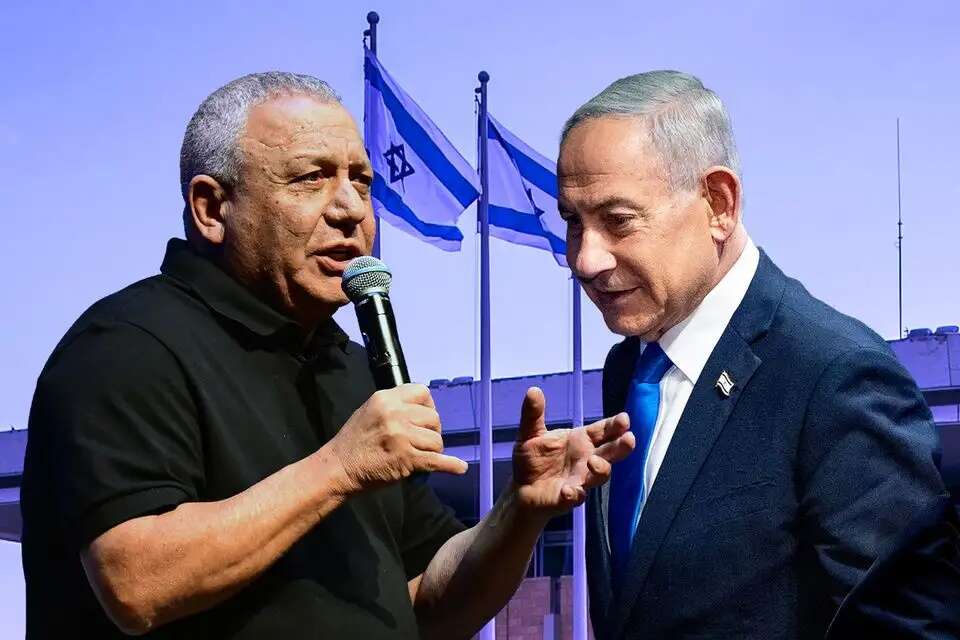
The mainstream media rediscover a convenient euphemism
But back to Israel, because every ripple in America is felt here.
Israeli voters did not ask for unity in the last election. In fact, the very parties that campaigned on bringing the country together have disappeared. Some failed to cross the electoral threshold, while others withdrew before election day. We, the voters, chose to retreat into our respective political blocs and hoped for a decisive outcome. But that outcome never came, and now we find ourselves trapped in a political dead end.
The so-called change bloc, and what a change it has turned out to be, has spent the days since election night flirting with the ultra-Orthodox and Arab parties.
The very politicians who promised an alliance of those who serve, who advocated economic, criminal and personal sanctions against ultra-Orthodox men who refuse military service, who supported arresting ultra-Orthodox draft dodgers, and who built their entire political campaigns in recent years around military service, fairness, an equal sharing of the burden and benefits for those who serve, are suddenly talking about a moderate conscription law, political cooperation and outside parliamentary support.
And as we all know, that support will not come for free. Incidentally, notice how the mainstream Israeli media have stopped using the term "draft evasion law" to describe legislation granting military service exemptions to ultra-Orthodox men. Lo and behold, the more neutral term "conscription law" has returned to the headlines and news broadcasts. The hypocrisy is staggering. I won't even get into the disgraceful political tango with various supporters of terrorism in the Arab parties.
The coalition bloc, meanwhile, has decided to climb onto the "stolen election" bandwagon. To my mind, that is a strange and shaky position to take. For one thing, the entire affair seems murky and unclear. The media briefings and bombastic declarations are creating chaos and distrust, without necessarily strengthening support for the bloc among its voters.
But beyond that, even if there was electoral fraud, it was hardly on a scale that would change the balance between the political blocs. Even if the matter is resolved, it would shift a seat or two in one direction or the other. That is not what will produce a decisive outcome.
A national unity government has never been my ideal. It was only during the war that I began speaking about the importance of having a broad range of political representatives involved in decision-making, so that those heading into battle, prepared to sacrifice their lives, would know they had the backing of a broad national consensus. That remains true today.
The State of Israel faces enormous security challenges. Its diplomatic challenges are growing more severe. At home, there are pressing problems in education, the economy and public security. And yes, in light of the alarming trends around the world directed against Israel and Jews, we must also prepare for a wave of aliyah, Jewish immigration to Israel, and extend a steady, welcoming hand to anyone who wishes to come here.
The Israeli public did not vote for unity. It voted along political bloc lines. But every other option would simply be more destructive: narrow governments dependent on ultra-Orthodox or Arab parties, or yet another election that would most likely fail to produce a clear outcome. Please, sit down together and give the country what it needs: a unity government.


