

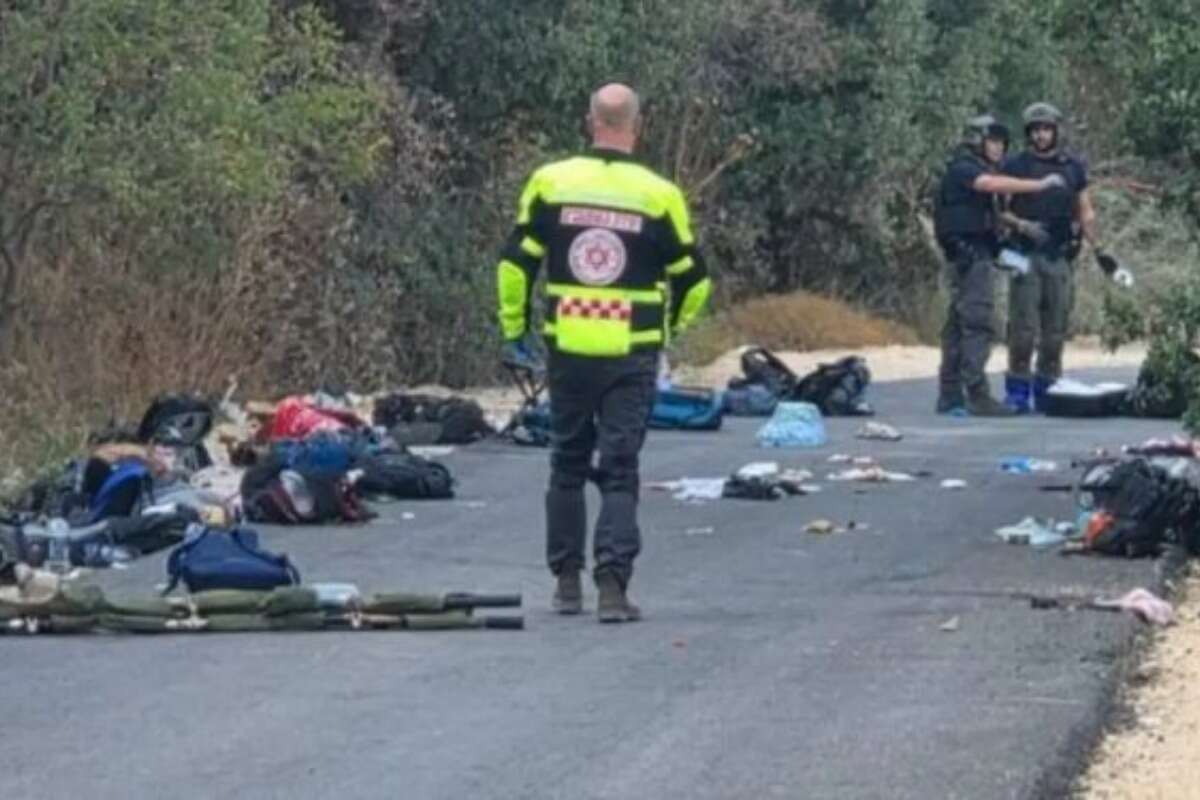
When you live in Israel, after a while, headlines such as 'terror attack', 'shooting', and 'soldier killed,' which would normally evoke shock and horror, have unfortunately become so common, or 'normal', that they no longer feel unusual, especially since October 7. Now add to this working in journalism, where you are faced head-on with such headlines on a daily basis.
On Monday, we read about a horrific mass-casualty incident in northern Israel, when a group of teachers and students from ORT Maalot Religious High School were injured after an unexploded munition detonated during a school trip. One person was killed and two others were seriously injured.
Devastating news like this, which would previously have caught you off guard and kept you up at night, has become just another 'regular' day at the office, to the point where 'smaller' incidents are sometimes not even reported because there are simply too many, occurring too often.
Soon, you find yourself reading and hearing such headlines and barely reacting at all.
At some point, you start to wonder: Do I not care anymore? How can I be this indifferent? How did I get to this point?
Is it because you don't care? Of course not.
The reality is far deeper and more complicated than that. Sometimes, what happens is so harrowing, so deeply disturbing, that your mind and body simply shut it out.
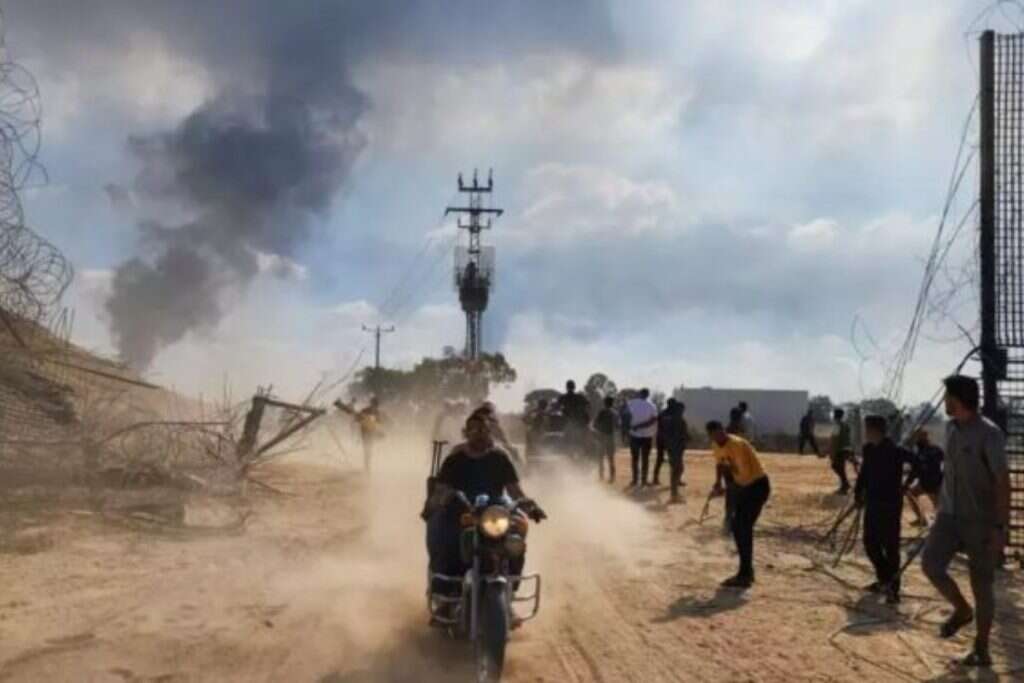
I experienced this personally in the aftermath of October 7 and through my work in journalism. Whenever I think about October 7 (or other horrific events), I feel as though it isn't real. How could such evil exist? How could humanity be so barbaric? It is unfathomable.
You can't believe it, so you block it out. It's a form of denial, or a coping mechanism, that is supposedly there to protect you.
There's only so much horror a person can process. Sometimes, your mind and body seem to shut down until you no longer feel anything - a kind of psychological disconnect that can occur when reality is simply too horrific to comprehend.
This is understandable. It doesn't mean that you don't care or that you aren't affected. If anything, quite the opposite.
A different but related phenomenon is compassion fatigue. This can occur when you work in a field that involves caring for others, such as healthcare, or when you are someone's primary caregiver, often in extremely difficult circumstances such as an injured partner, child, parent or loved one. The emotional burden can become so heavy that you begin to shut down.
People talk so much about the victims of war, people struggling with mental health issues, stroke patients, cancer survivors - and understandably so. But how often do we talk about their families, loved ones, partners or caregivers, and what they go through? Or the healthcare workers and first responders - MDA, Hatzalah, doctors, and therapists - who are repeatedly exposed to suffering and tragedy?
I remember when I worked as a speech therapist in a nursing home. I mainly treated stroke patients receiving palliative care, as well as patients with dementia. After a few months working there, I started feeling completely desensitized, detached and disconnected when my patients would tell me about their pain and struggles.
I felt awful and so guilty. I couldn't understand why I seemingly didn't care anymore. But I later learned that what I was experiencing was compassion fatigue. It was simply all too much. I no longer had the mental capacity to process it all, so I had become emotionally numb.
Now, working in journalism, I find myself disconnecting for the same reason: sometimes, it all becomes too much, too heavy to cope with.
On the one hand, you could say this is a useful protective mechanism, or even a skill: being able to stay level-headed and not fall apart when surrounded by tragedy. On the other hand, I fear there is also a danger in this 'natural' response to tragedy: desensitization and normalization.
It has become normal to hear about tragedy, brutality, and violence. It has become normal not to feel anything. We don't even question it anymore.
I think this is scary. What could be worse than feeling horrified?
When things that should horrify us no longer do.
So what is the antidote? How do we keep going without giving in to this normalization?
Despite the growing desensitization, what continues to shock me - in a good way - are the stories that often don't make the headlines. The heroes, often ordinary people who do extraordinary things, and choose to help others even when doing so puts their own lives at risk. These are the stories that should never become ordinary or normalized.
Unfortunately, good news is often pushed aside or overlooked because it is less shocking than tragedy. But these stories deserve to be heard. Sometimes, they are precisely what give us the strength to carry on, reminding us that even in the darkest times, there are still those who choose kindness, courage and compassion.
In the face of so much evil and atrocity, I am equally dumbfounded by how goodness continues to exist. It may be harder to find, especially when tragedy dominates our headlines, but it is there. For those who have suffered tremendously, sometimes it is the very thing that keeps them going.
Of course, we must not dismiss the tragedies that occur every day or the reality that the world can be a dark place. We must allow ourselves to be horrified and acknowledge the suffering around us. But paradoxically, we must also remember that the world can be a beautiful place.
Perhaps the antidote to desensitization is therefore not to force ourselves to feel the full weight of every tragedy, every single day, but to keep looking for the humanity that exists alongside the evil, to recognize the good when we see it, and to make sure these stories are heard, too.
These are the stories I hold on to. Not because they erase the darkness, but because they remind me that there is still goodness. And perhaps, in a world where horror has become just another headline, we need to make sure that goodness never does.


