
Last week, I stopped at a gas station. As I parked next to the pump, a man walked over looking confused and a little stressed. He asked if I spoke English and whether I could help him refuel his car. I said of course, and walked over to the machine, assuming I would simply switch the screen to English for him.
But there was no English option.
I found that strange, but did not think much of it. I helped him refuel and went on with my day.
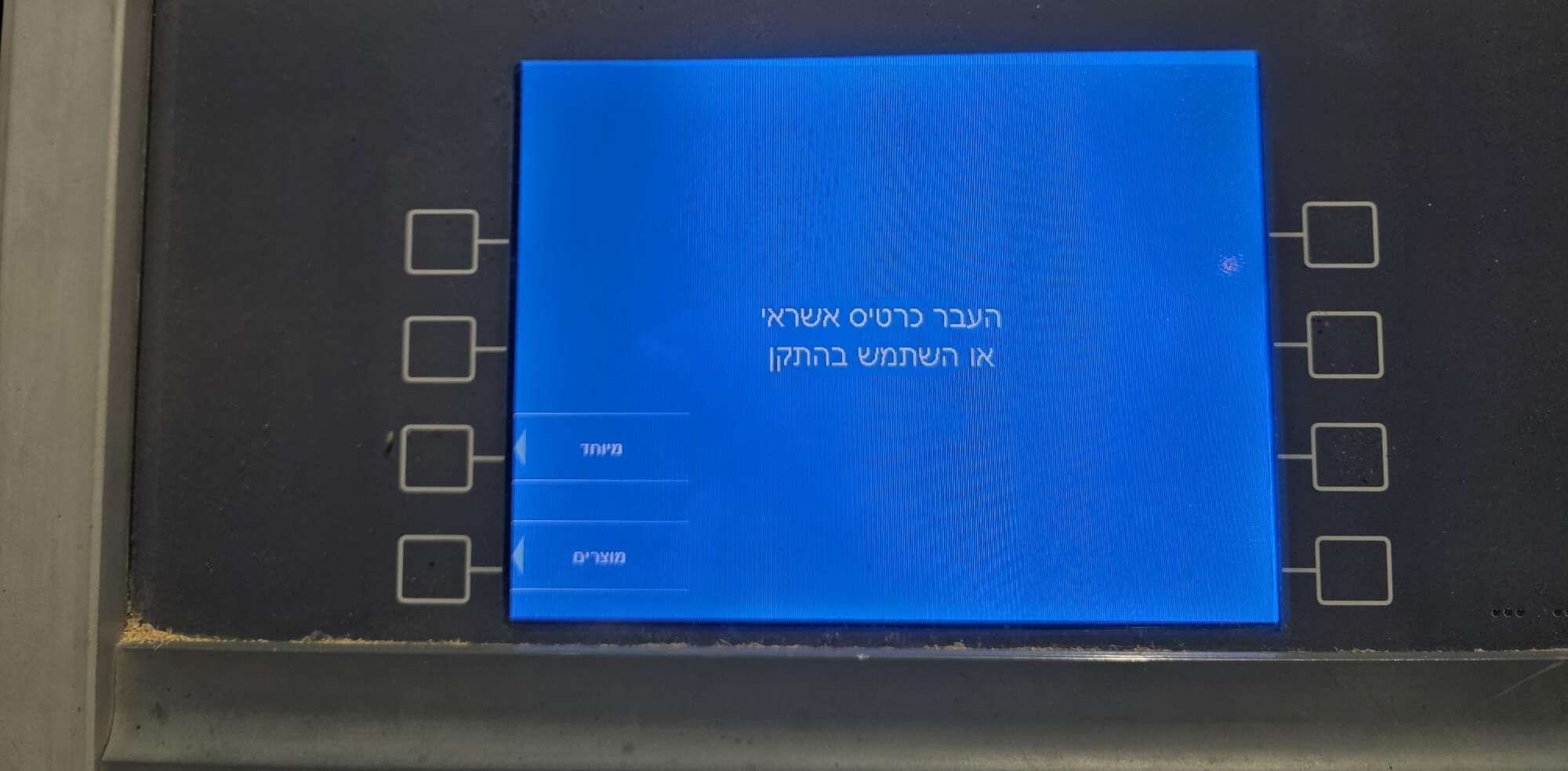
Two days later, I was at the local supermarket, waiting in line at the self-checkout machines. The man ahead of me kept letting other people go before him, even though he was holding only one item. When I asked why he was not paying, he told me he did not know Hebrew, and was waiting for a cashier to help him. No cashier came for several minutes, so I helped him.
Only then did I begin to notice something I had never really thought about before. Israel is not accessible to people who do not speak Hebrew.
This realization hit me again a few days later on the train to Jerusalem, where the recorded speaker announcements were strictly in Hebrew. At Ben-Gurion Airport, there will be an English announcement. But why only there? If a person who does not speak Hebrew needs to get to or from the airport, they will need to understand the instructions announced along the way.
To be clear, this is not an argument for replacing Hebrew with English, or for turning every sign in Israel into an English one. Hebrew is Israel's national language, and it should remain central to our public space. The question is narrower and more practical: when a machine, announcement, or basic service can easily offer an English option, why is that option missing?
Israel likes to think of itself as the Start Up Nation. We are proud of our technology, innovation, and global reach. English is taught here from a young age, Israeli companies work across the world, and we often present ourselves as an international hub. Yet for someone who does not speak Hebrew, even basic actions can become surprisingly difficult.
When pointing out this lack of accessibility, the common response is that people who live here should simply learn Hebrew. There is truth in that. Olim should be encouraged and supported in learning Hebrew, and many make real efforts to do so. But Hebrew is difficult, and learning it takes time. For the 22,122 new Olim who arrived in 2025 alone, should basic independence be impossible in the meantime?

The same is true for tourists. If Israel wants tourism to return, it cannot rely on the goodwill of strangers to translate every basic interaction. Many Israelis would help, but a functioning public space should not depend on whether a kind Hebrew speaker happens to be nearby.
The solution does not require a cultural revolution. It simply requires basic accessibility in the everyday systems people are expected to use on their own. Service providers must mandate basic English interfaces, allowing both tourists and Olim to manage their everyday lives independently.
When I was in Germany, I noticed that many machines offered an English option. Germany did not become less German because of it; it simply became easier to navigate. Israel can do the same. For a nation that prides itself on global innovation, breaking everyday language barriers should be our easiest problem to solve.