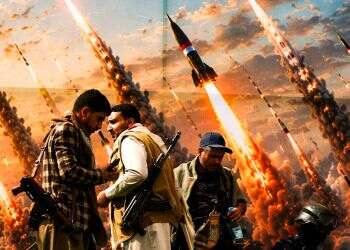
Despite the fiery declarations emanating from Hezbollah's stronghold in southern Beirut, senior Arab pundits believe the terrorist organization will have to swallow the IDF's activities along the border without responding in an escalatory manner. This, as long as Israel stays on its side of the border and doesn't violate Lebanese sovereignty.
Even though Hezbollah says it will retaliate harshly for any perception of Israeli aggression, the last thing it wants right now is a military clash with the IDF and to give the Israeli air force legitimacy to attack the missile and weapons factories Iran is constructing in Lebanon, in addition to other infrastructure and strategic targets belonging to Hezbollah and its allies in Lebanon and Syria.
Despite the tens, if not hundreds of thousands of long-range precision missiles in Hezbollah's possession, which can cover all of Israel and precisely hit almost any target, Hezbollah is not prepared for war with Israel. The majority of its armed force, which consists of around 40,000 fighters, is located in Syria. While the civil war there has given them more combat experience, Hezbollah's fighting force has also been exhausted; many of its fighters have been killed or badly wounded in battle.
Today, less than 15% of the organization's fighting force is ready and available for a military conflict with Israel. Within the framework of its preparations for war with Israel, Hezbollah established an elite unit – the Sheikh Radwan Battalions – whose entire purpose is to infiltrate Israeli territory to conquer land and towns in the Galilee.
It's clear to Hezbollah leader Hassan Nasrallah that shooting missiles at strategic targets and cities in Israel, or a disproportionate response against IDF forces operating to thwart the tunnel threat, will trigger a devastating wave of aerial strikes – and not just against Hezbollah and Iranian targets in Lebanon, but civilian infrastructure as well.