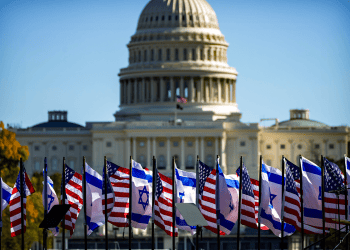
Israel and the war in Gaza have become issues in the campaign ahead of Spain's general election this Sunday, November 29, but almost exclusively on one side of the political spectrum. That is the conclusion of an analysis by the Spanish-Jewish website Enfoque Judío, examining the parties' positions toward Israel.
As seen recently in election campaigns in Sweden and Berlin, Israel has become a prominent issue for left-wing parties, particularly those on the far left. The right, by contrast, prefers to focus on domestic concerns such as housing, wages and pensions, which are of greater immediate concern to Spanish voters.
Trailing in the polls, the left has chosen to focus on Israel and attack the right over the issue, against a backdrop of overwhelmingly negative public opinion toward the Jewish state.
According to a July 2025 survey by the Elcano Royal Institute, 82% of Spaniards believe Israel is committing "genocide" in Gaza, up from 71% a year earlier. That view is shared by 97% of respondents who identify as left-wing, but also by 62% of those who identify as right-wing.
'Palestine's greatest friend'
The same survey found that 70% supported European sanctions against Israel, while only 23% agreed that Israel was doing what was necessary in Gaza to defend itself against Hamas terrorism. Other surveys paint a similar picture. A YouGov poll conducted in June 2025 found that Spain had the most negative attitudes toward Israel among six Western European countries. In a Pew Research Center survey conducted between February and May this year, 78% of Spaniards expressed an unfavorable view of Israel, the highest rate in the West alongside Sweden. At least half of respondents held a very unfavorable view.
Against this backdrop, the competition among left-wing parties to be seen as "Palestine's greatest friend" has become increasingly apparent. The platform of the far-left Podemos party calls for severing diplomatic, commercial and cultural ties with Israel, imposing a comprehensive arms embargo, defining Zionism as racism, and prosecuting Israeli soldiers and officials. On November 12, the party's candidate for prime minister, Irene Montero, attacked Prime Minister Pedro Sánchez's party, accusing it of saying "nice things about Palestine" while refusing to break ties with what she called "the genocidal state of Israel."
The Broad Front, a new far-left party replacing Sumar, which had taken a strongly anti-Israel stance, proposes similar measures. The party is led by former Barcelona Mayor Ada Colau, who participated in the Sumud flotilla in October 2025 and was detained and deported by Israel, along with other activists, including Greta Thunberg. Among other measures, the Broad Front is calling for a permanent arms embargo, an end to technological cooperation with Israel's defense industry, and legislation to sever relations with Israel.
These and other left-wing parties also support suspending the European Union's Association Agreement with Israel, a measure the Sánchez government has unsuccessfully sought to advance.
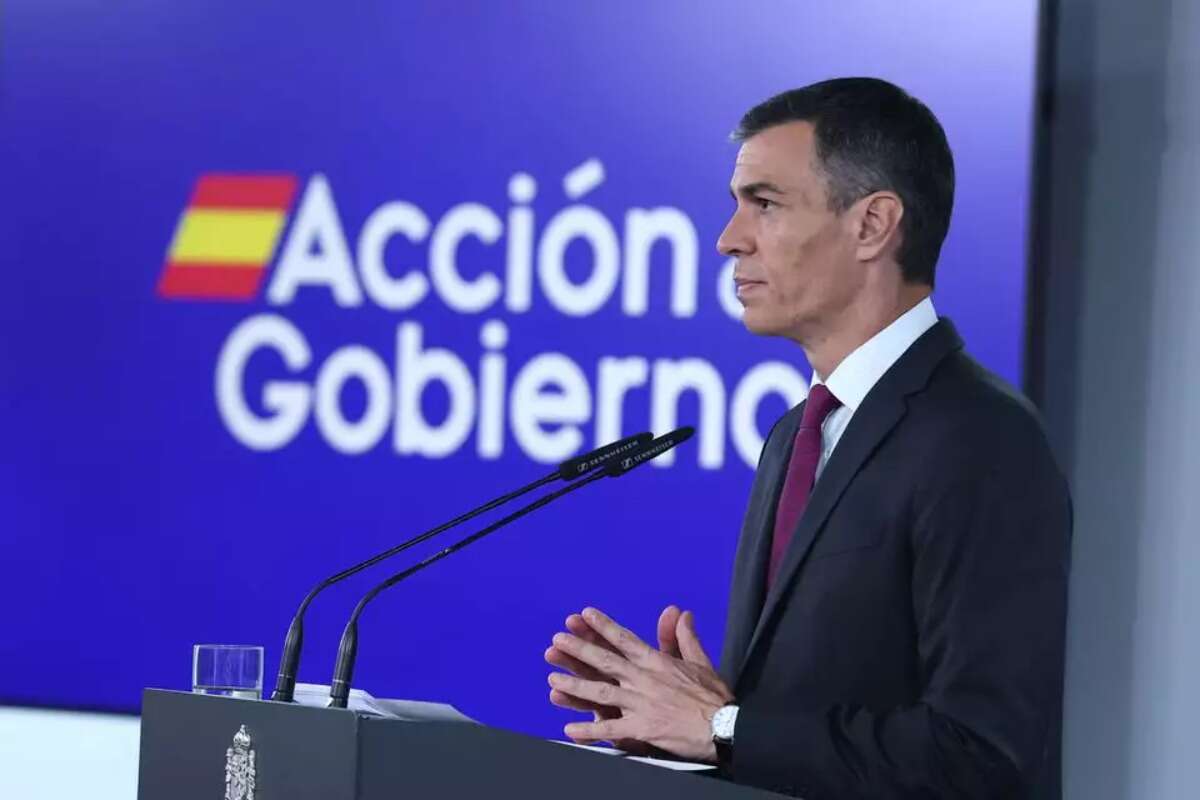
Sánchez's center-left Spanish Socialist Workers' Party (PSOE) has spearheaded most of Spain's measures against Israel during its current term, including recognition of a Palestinian state, an arms embargo and a ban on imports from Israeli settlements. Its current election platform, however, contains only two relatively moderate provisions on the issue.
Sánchez himself raised the subject during last Thursday's televised debate, challenging People's Party leader Alberto Núñez Feijóo to applaud the government's willingness to speak about "genocide in Gaza." Feijóo responded that he had described what was happening in Gaza as a "massacre," but objected to using the term "genocide."
'The massacre is intolerable'
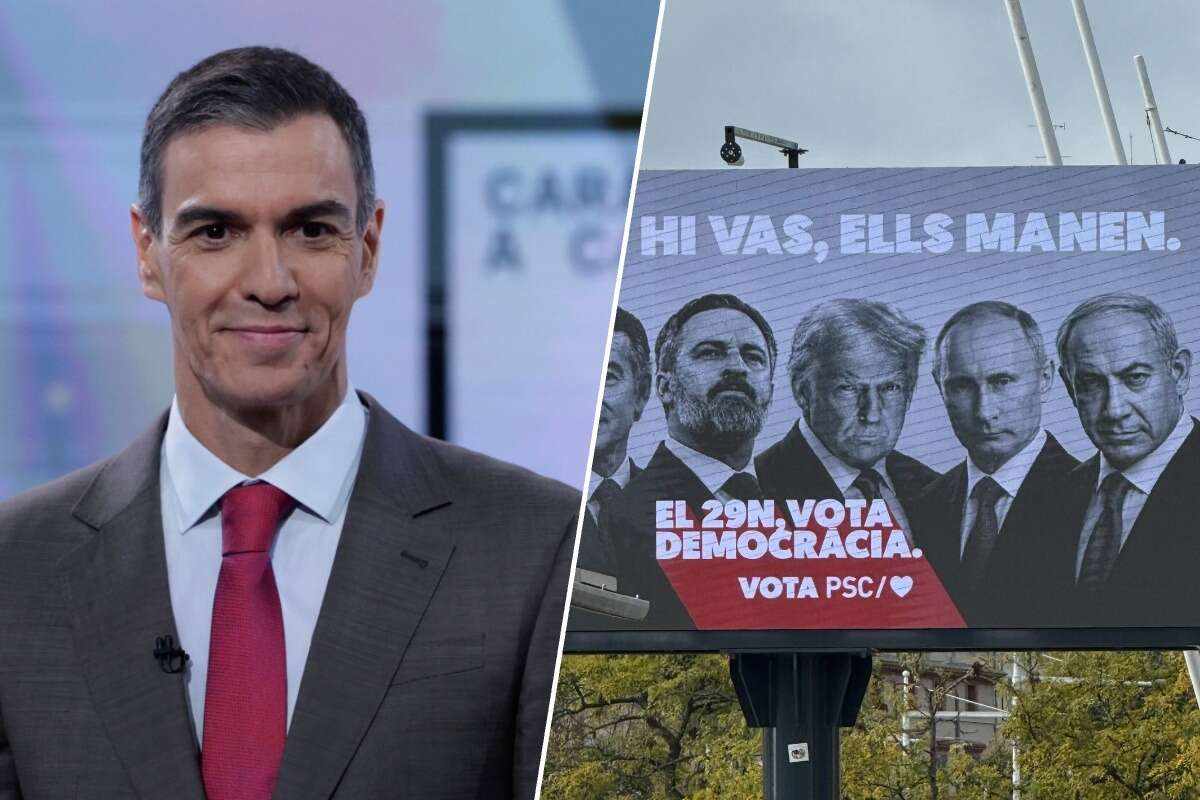
The PSOE's Catalan sister party featured Israeli Prime Minister Benjamin Netanyahu alongside US President Donald Trump, Russian President Vladimir Putin and Argentine President Javier Milei, as well as Feijóo and Vox leader Santiago Abascal, on a campaign poster bearing the slogan: "If you don't vote, they will rule."
The right, meanwhile, has largely chosen to remain silent on Israel. The center-right People's Party (PP), which polls suggest will emerge as the largest party, has barely mentioned the conflict during its campaign. Its platform describes Israel as a "key partner" in diplomatic solutions for the region, while declaring that "the massacre is intolerable and the civilian population must be protected, particularly in Gaza." The party immediately condemned Hamas' October 7 attack, while Isabel Díaz Ayuso, the PP president of the Madrid region, publicly declared: "I admit it, I'm pro-Israel."
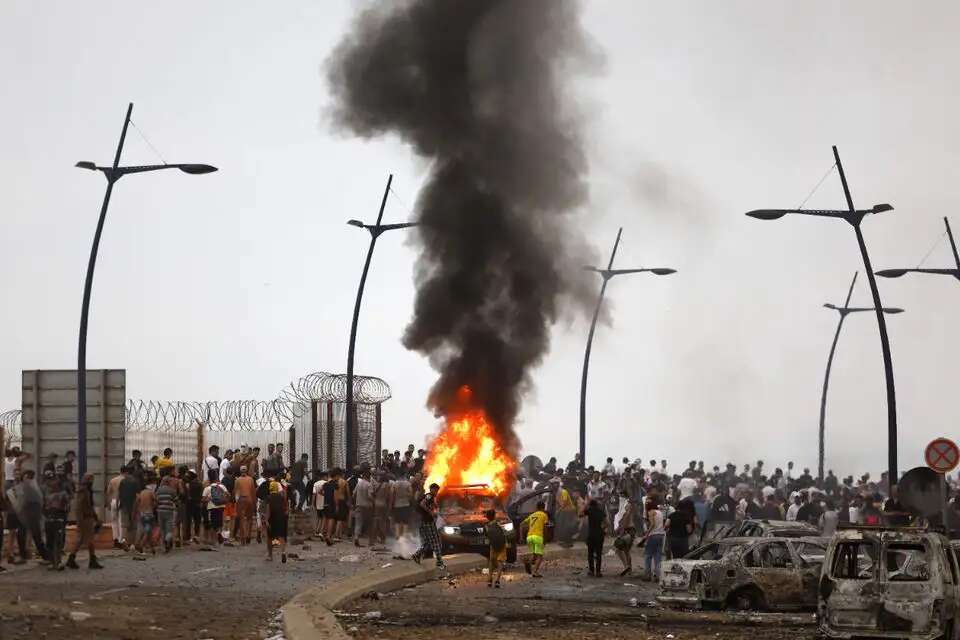
Vox, the party most openly supportive of Israel, makes no mention of the Middle East in its election platform. Instead, the platform's opening chapter focuses on Ceuta and Melilla, Spain's two enclaves on the North African coast. Against the backdrop of the crisis in Ceuta, it calls for sanctions against Morocco until it respects Spain's borders and sovereignty.
Abascal has discussed Israel only when asked about it. On November 9, appearing on the public television program La Revuelta, Abascal told host David Broncano that in conversations with the Israeli government, he had expressed solidarity following October 7, asked Israel not to recognize Catalan independence, and sought support for Spanish sovereignty over Ceuta and Melilla. Later, he placed responsibility for the war on Hamas.
Antisemitism disappears from the campaign
The conversation quickly shifted to an argument over the role of public television, and Israel dropped out of the discussion. In practice, Israel features in the campaign primarily as a means of distinguishing between the political parties. Spanish voters are far more concerned about other issues: housing prices, which have risen significantly during Sánchez's tenure; low wages that have failed to keep pace with the cost of living; rail accidents; and the situation in Ceuta.
According to Enfoque Judío, antisemitism is almost entirely absent from the campaign, even though Interior Ministry figures show that Spain's Jews, a tiny minority of the population, were victims of approximately 3% of the country's recorded hate crimes and incidents in 2025.
The final polls, published Monday before a ban on the release of election surveys took effect, indicate that the PP and Vox could secure a combined parliamentary majority, although Sánchez's Socialists have recently gained ground. All but one of the surveys projected more than the 176 seats needed for an absolute majority in Spain's 350-member Congress of Deputies for the two right-wing parties combined.
In the daily 40dB poll conducted for El País, the PP received 31.8% of the vote, equivalent to between 127 and 136 seats. The PSOE followed closely with 30.9%, or 116 to 127 seats, while Vox received 17.3%, equivalent to 51 to 61 seats.
The main exception was the government-run Center for Sociological Research (CIS), which gave the Socialists 34.4% of the vote, compared with 24.9% for the PP and 15.6% for Vox. According to that poll, the left-wing bloc, including the Broad Front and regional parties, could still secure a majority. Podemos, meanwhile, risks losing its parliamentary representation altogether, according to some surveys.
The election carries considerable significance for Israel. If the PP and Vox form a government, Spain, which under Sánchez has been a driving force behind anti-Israel initiatives in the European Union, could change course. A right-wing government is expected to work toward restoring ambassadors and rebuilding defense cooperation. It might also gradually repeal the sweeping legislation imposing an arms embargo and banning imports from settlements in Judea and Samaria. The legislation passed by a narrow majority, with both right-wing parties opposing it on the grounds that such measures should not be adopted without EU-wide agreement.
Nevertheless, the PP has been sharply critical of Netanyahu's government and would therefore likely proceed cautiously. Much could also depend on whether Israel undergoes a change of government, which could make it easier to restore relations. Vox, by contrast, would likely push strongly for improved ties.
The main obstacle is Spanish public opinion. Much of the public, including some right-wing voters, does not support closer relations with Israel. A right-wing government could therefore find itself pursuing rapprochement despite widespread public opposition, taking gradual steps to avoid a political backlash.