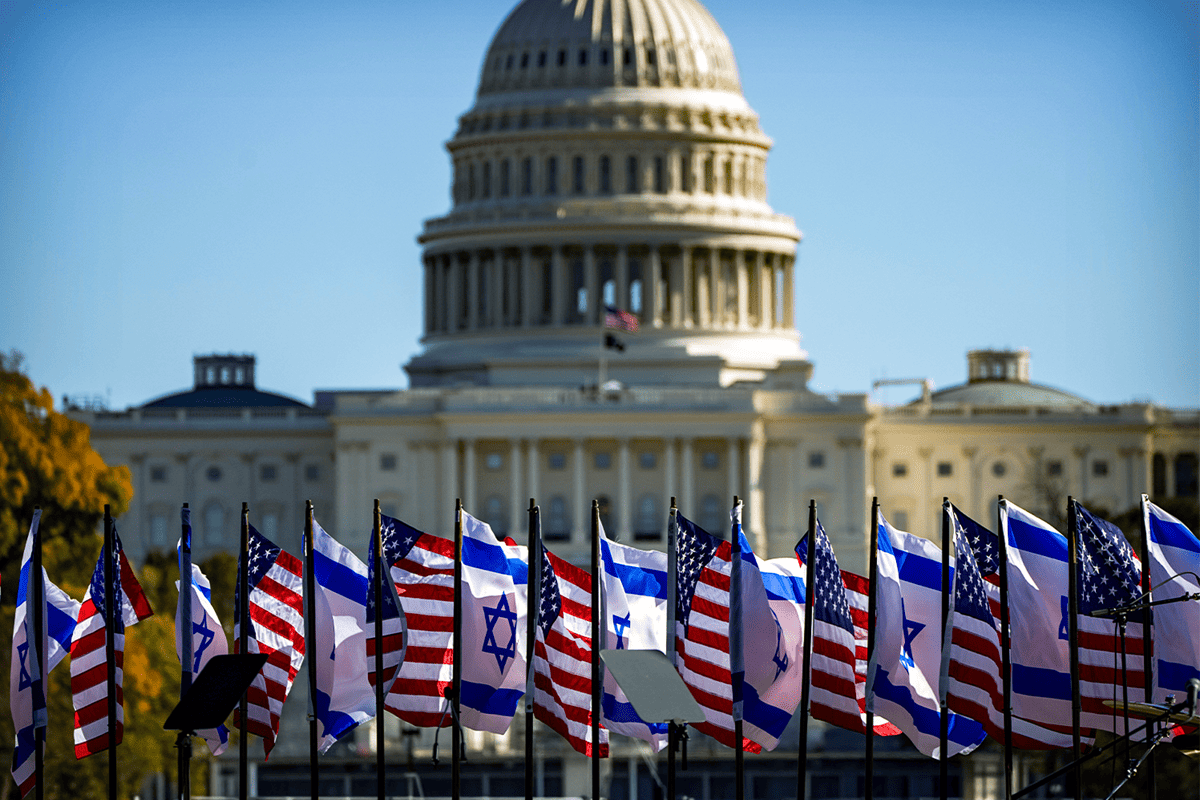
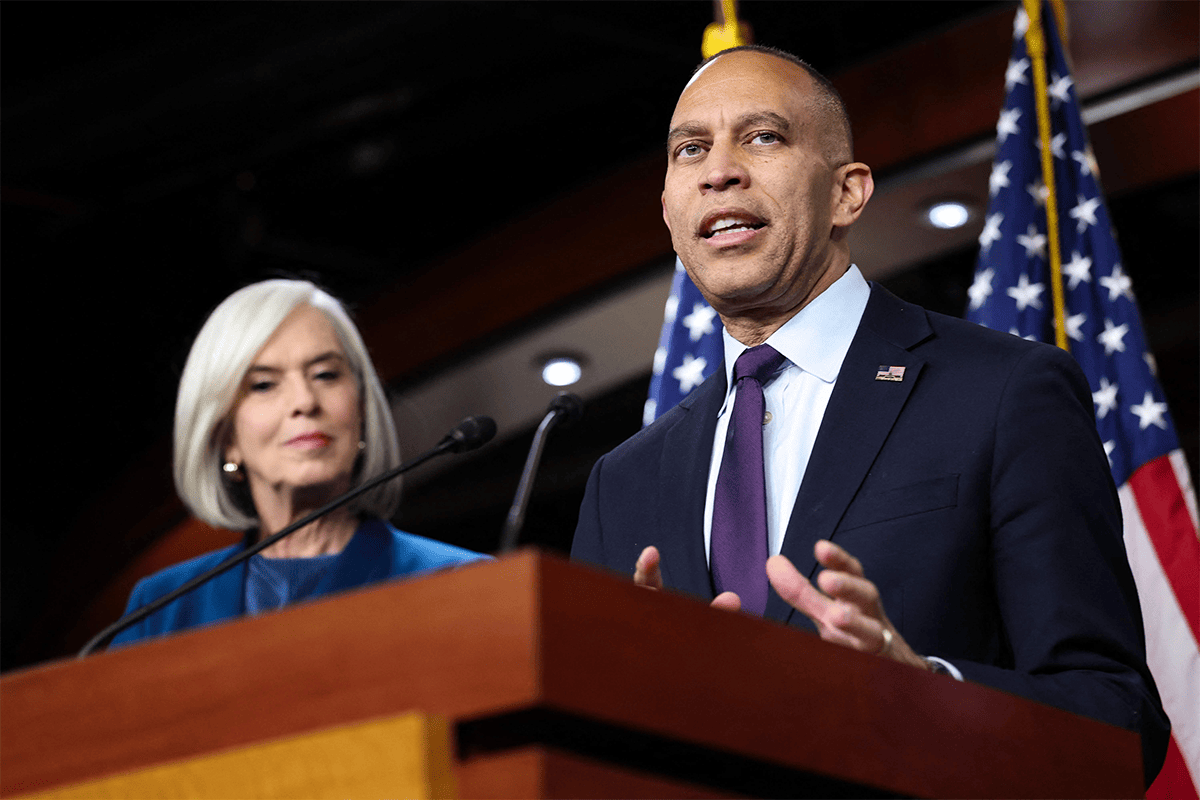
Incoming House Speaker Hakeem Jeffries' pledge to advance legislation targeting what he calls "settler violence" within the first 100 days of the new Congress has placed the issue at the center of Israel's relationship with the incoming Democratic majority.
In an interview with The New York Times, Jeffries called for "dramatic change" in Judea and Samaria and Gaza but stopped short of committing to proposals restricting US arms supplies to Israel or imposing broader sanctions on Israeli settlements.
The challenge extends well beyond Israel's critics within the Democratic caucus. "I am a strong supporter of Israel, and I've taken a lot of heat for supporting the country, but the violence in the West Bank has gotten out of control. This is a politically sensitive issue even for supporters of Israel," a Democratic member of the House of Representatives told Israel Hayom on condition of anonymity.
The congressman said Jeffries was trying to balance a diverse caucus that includes progressive members, interpreting his remarks as an attempt to postpone difficult decisions. "Hakeem is a big supporter of Israel. He's trying to position himself and buy time with what he said."
'Afraid to speak out'
The congressman's criticism also extends to Jerusalem. "Netanyahu's policies, because of the influence of Ben-Gvir and Smotrich, have gone too far," he said.
In his view, the preferable outcome would be a new Israeli government without Prime Minister Benjamin Netanyahu at its helm, with a different coalition capable of changing the dynamics. "Any coalition that is formed should not depend on these extremists."
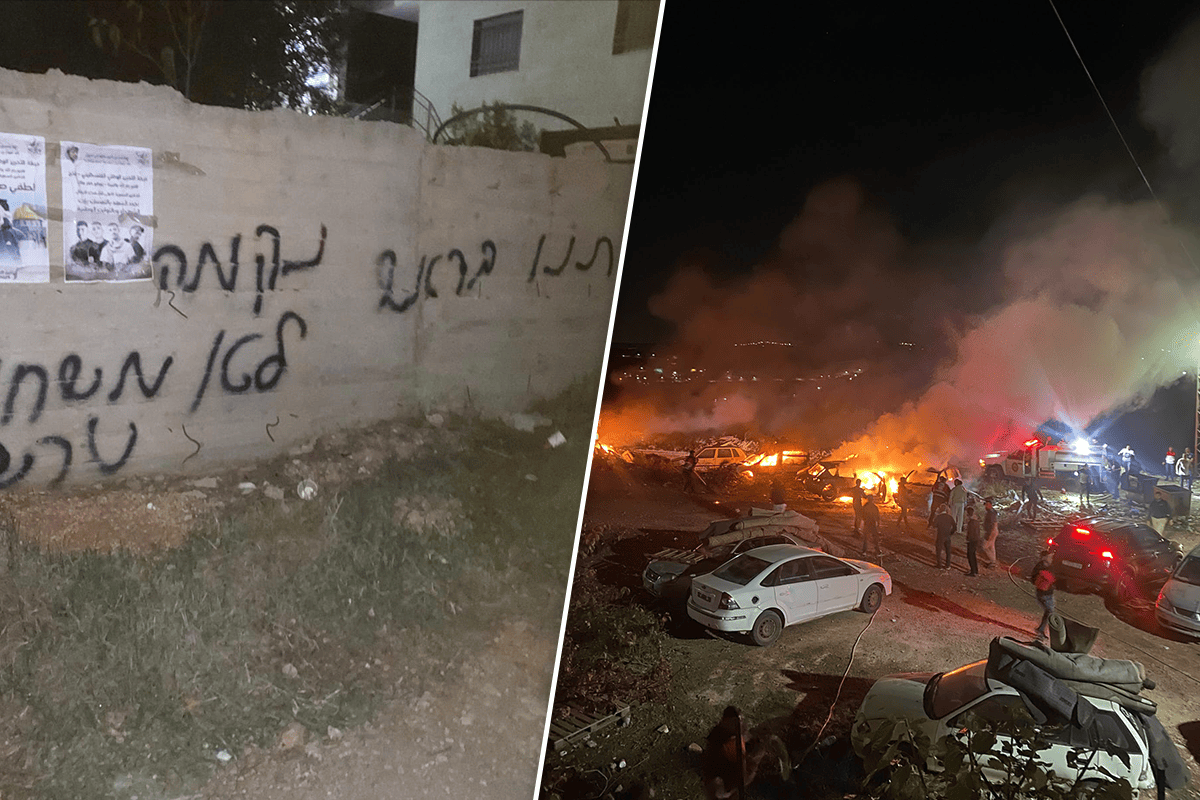
The congressman pointed to images of attacks by Jewish extremists in Judea and Samaria as a major obstacle for Israel's friends in Washington. "Most Democrats are pro-Israel, but there's a small group of anti-Israel voices that are very loud," he said. "There are pro-Israel members of Congress who are afraid to speak out in support of Israel. Even I find it difficult to defend what's happening in the West Bank."

According to the congressman, the problem has been building for years. Israel, once widely perceived as the underdog, is now seen by younger Americans as a "regional superpower," while efforts to portray it as an "oppressor" have not been adequately challenged.
The congressman also cited Netanyahu's 2015 address to Congress as a move that was perceived as partisan.
Despite his criticism, the congressman emphasized his continued support for the Jewish state. "I think we should continue to support Israel and provide assistance when necessary."
The limits of a presidential veto
Beyond the political debate, Miad Maleki, a senior fellow at the Foundation for Defense of Democracies (FDD) and a former senior US Treasury Department sanctions official, warned that measures targeting Israel could expand considerably.
In an interview with Israel Hayom, Maleki predicted that Congress would send legislation targeting extremist violence in Judea and Samaria to the White House, where President Donald Trump would likely veto it.
For now, the White House's position on the legislative effort remains unclear. Although the Trump administration revoked former President Joe Biden's sanctions targeting violent settlers in January 2025, it has also criticized extremist violence.
Maleki warned that a presidential veto would not necessarily end the matter. "If anything, the veto would make a future Democratic administration even more determined to reinstate the sanctions, and potentially expand them beyond settlers. That's when we would see serious consequences for the broader Israeli economy."
To explain how the sanctions mechanism works, Maleki pointed to February 1, 2024, when Biden signed an executive order imposing sanctions on four Israeli settlers. At the same time, the Treasury Department's Financial Crimes Enforcement Network (FinCEN) issued an alert to financial institutions concerning the financing of extremist settler violence.
"People focus on the sanctions list, but the alert is just as important," Maleki explained. "The list affects the individuals who are named. The alert tells banks what kinds of activity to look for and report."
In July, the warning signs were expanded to include transactions associated with outposts, crowdfunding campaigns and accounts belonging to family members of sanctioned settlers. "That's how you move from four names to an entire category of transactions that Treasury officials consider high risk," he said.
According to Maleki, Israeli banks also froze accounts because they were unwilling to jeopardize their access to the US dollar financial system.
The economic consequences
Maleki emphasized that the risk does not depend on the currency in which a bank account is held.
Even when an account is denominated in shekels and maintained at an Israeli bank, the possibility of sanctions against institutions providing services to designated settlers can influence a bank's decisions. "No Israeli bank is going to risk its access to the dollar system over this," he said.
Maleki recalled that supporters raised approximately $170,000 for two sanctioned settlers, only for the organizations behind the fundraising effort to face sanctions themselves. "In less than ten months, we went from four individuals to a major settlement developer," he said.
Maleki stressed that the sanctions framework introduced by Biden, which Democrats are now seeking to enshrine in legislation, extends far beyond what is commonly described as "settler violence."
It also covers officials in organizations, including government bodies, as well as individuals and entities providing support or services to designated parties. "Sanctioning officials, companies or banks doesn't require new legislation. It requires a decision," Maleki said.
Nevertheless, even if the legislation passes, the president would retain discretion over which individuals and entities meet the criteria for sanctions. One administration could choose not to exercise those powers, while another could use them extensively.
Maleki argued that Trump's decision to lift the sanctions did not erase the knowledge accumulated by US authorities or the infrastructure needed to reinstate them. In his assessment, a future sanctions campaign would not begin with just four individuals. Instead, it would pick up where the previous effort left off, targeting settlement developers and those financing their activities. His concern is that the consequences could extend well beyond Judea and Samaria.
Israel's major banks operate on both sides of the Green Line, and sanctions against a major developer, or even the threat of sanctions against a bank, could influence the behavior of foreign investors and financial institutions. "Foreign banks and investors see this and start treating Israeli banks as a higher risk," Maleki warned.
Rotem Oreg-Kalisky, founder and director of LIBRAEL, an organization working to strengthen support for Israel among American liberals, believes Israel should pursue a more practical dialogue with Democrats. "You don't have to give up Israel's interests to speak the other side's language. You need to understand what matters to them and how to explain our interests through those values," Oreg-Kalisky said.
Oreg-Kalisky also called for expanding cooperation in ways that would directly benefit American citizens. "Even among Democrats who are critical of Israel, there is a willingness to listen, debate, negotiate and find common interests."