Until recently, largely due to Prime Minister Benjamin Netanyahu's effective diplomacy, Israel was in an ideal situation, with good relationships with both the Trump administration and Russian President Vladimir Putin.
Until now, frequent consultations between Israel and Russia have served to avoid conflicts in Syria. Unfortunately, Israel is now finding it difficult to maintain the situation.
Syrian President Bashar Assad's employment of chemical weapons has outraged the international community. U.S. President Donald Trump succeeded in persuading the French and British to join a joint military intervention to punish Syria. It was a strictly limited operation in which four major installations were destroyed with minimal casualties. It was not an attempt at regime change.
However, the tension between Israel and Iran has escalated. In February, Iran dispatched a drone from a Syrian air base carrying explosives intended to devastate a location in Israel. It was shot down by an Israeli helicopter.
Israel launched a retaliatory raid, targeting Syria's T4 air base, and lost an F-16 fighter jet. In a second wave of strikes, Israel destroyed a significant percentage of Syria's air defenses.
Following the Syrian chemical attack on April 9, Israel was alleged to have launched additional surface-to-air missiles, which were said to have destroyed the Iranian control center and killed 14, including seven Iranians, one of whom headed the drone unit. The Russians protested and the Iranians swore to retaliate.
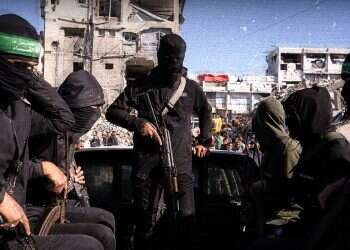
Early this month, Hamas initiated a campaign in which it enlisted thousands of Gaza residents to breach the Israeli border. Hamas gunmen and fighters hurling Molotov cocktails were interspersed among the demonstrators. The IDF took defensive action, using live gunfire only where necessary. Thousands were injured and dozens, primarily of identifiable Hamas terrorists, were killed.
The atmosphere is extremely tense and Israel is girding itself for the possibility that war could erupt at any moment.
We are fortunate that Netanyahu heads the nation at this crucial time. But he faces three major challenges:
- Preparing for war, if necessary, to prevent the Iranians from setting up bases in Syria that threaten Israel.
- Confronting attempts by Hamas to breach Gaza's borders while limiting the casualties.
- Employing his diplomatic talents both to maintaining the alliance with Trump and retaining the fragile relationship with Putin.
To deal with these challenges and avoid being dragged into the U.S.-Russia conflict is an extremely tough balancing act. Despite Russian reprimands and warnings that it intends to provide the Syrians with more sophisticated air defenses, Israel's lines of communication with the Kremlin, though fragile, are still open. Efforts are being made to retain maximum coordination, but Netanyahu must exert all his diplomatic skills to achieve this.
Even though Israel is stronger and more independent than ever before, there are clear storm clouds on the horizon. Keeping the 1973 Yom Kippur War in mind, we should never be overconfident.
If the Iranians respond disproportionately, war could erupt at any time. They may be waiting to see if the Americans cancel the nuclear deal before launching a full military confrontation. Likewise, if Hamas intensifies its efforts, it will lead to an armed escalation. In either case, Hezbollah is likely to become engaged and Israel would be obliged to decimate its bases in Lebanon.
This makes Israel's alliance with the U.S. critical. So far, the Americans have delivered, but Trump's apparent determination to withdraw all American troops from Syria would be an enormous inducement to the Iranians to attack Israel.
In this context, we would need to rely on the Russians to hold back the Iranians and Hezbollah. Could Netanyahu persuade Putin not to breach the uniquely good relationship with Israel and the Jews in the face of Russia's conflicting interests and the undermining of his military aspirations in the region?
None of the parties at this stage seek an all-out conflict but it would only take a few sparks to unleash a regional conflagration.
The IDF is geared up for such an eventuality and is confident it could overcome the combined forces of its potential enemies.
But the extent of casualties – especially on the homefront – would be heavily influenced by the role that the U.S. and Russia would assume under such circumstances.
It is here that Netanyahu may face unprecedented obstacles in directing military conflicts and engaging simultaneously in diplomacy at the highest levels. Critics and supporters alike cannot conceive of any other leader currently possessing similar capabilities, experience and the extraordinary diplomatic skills needed to navigate the delicate balance.
Netanyahu must be allowed to focus all his energies on Israel's defense and not be obliged to spend at least half his time with defense lawyers. The nation cannot be led by a part-time prime minister (who is also our part-time foreign minister).
If there is no one who could lead the nation like him, his critics should suspend their legal and political campaigns and unite temporarily until the immediate threats confronting us have been overcome.