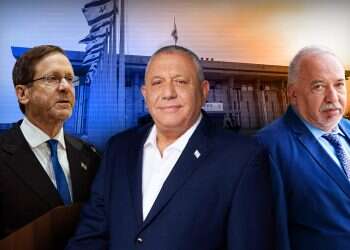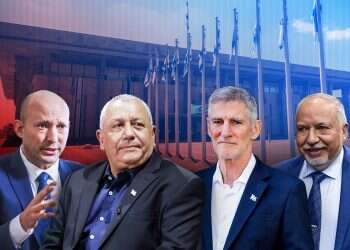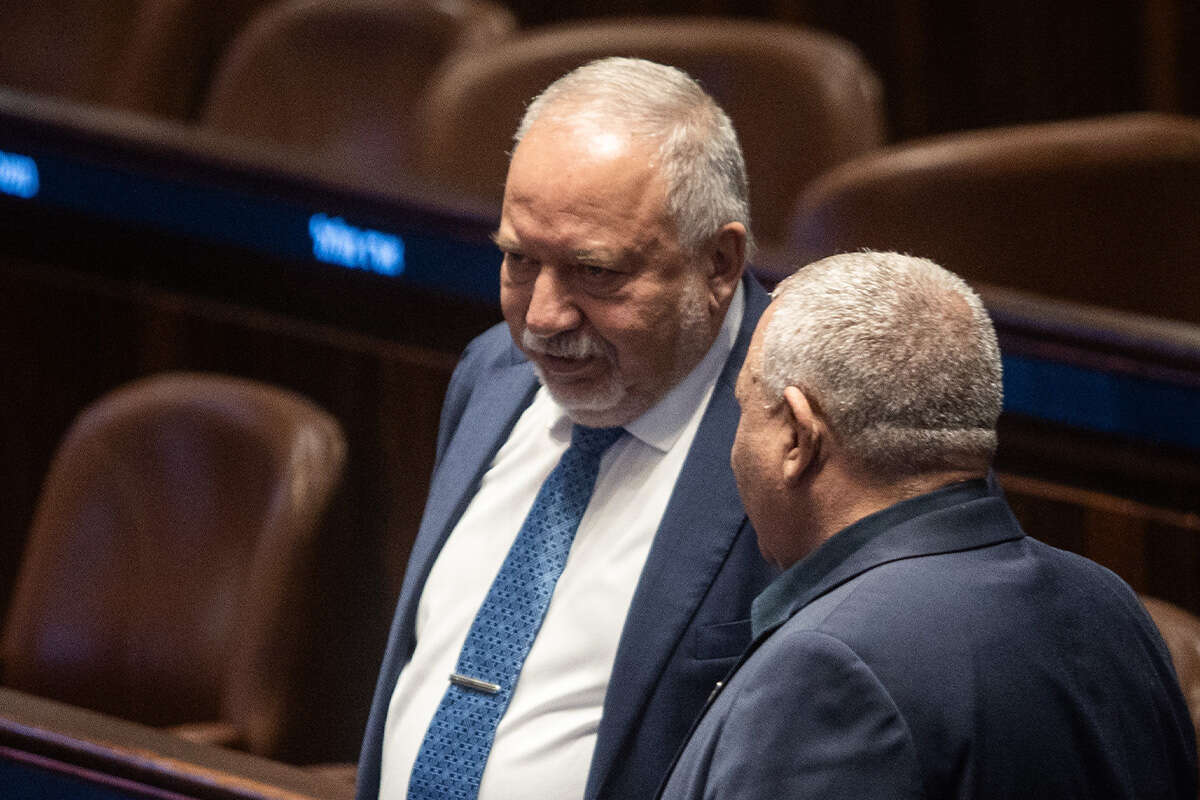
In the opening clash between the leaders of the change bloc, it was Yisrael Beytenu Chairman Avigdor Lieberman who blinked first, much to the surprise of nearly all the bloc's political veterans. Not the man tasked with forming the next government, despite his far more limited political experience: Yashar! Chairman Gadi Eisenkot.
After a power struggle that began as soon as the election results became clear, Eisenkot managed to persuade Lieberman to leave the position of Knesset speaker in the hands of someone from Eisenkot's party, most likely Eisenkothimself.
Monday's meeting between the two was described by all sides as positive, and an agreement does appear to have been reached, perhaps helped by a mutual commitment to continue coordinating their efforts. Previously, Lieberman had publicly backed Yair Lapid for the position, hoping to constrain Eisenkot and prevent him from pursuing a unity government.
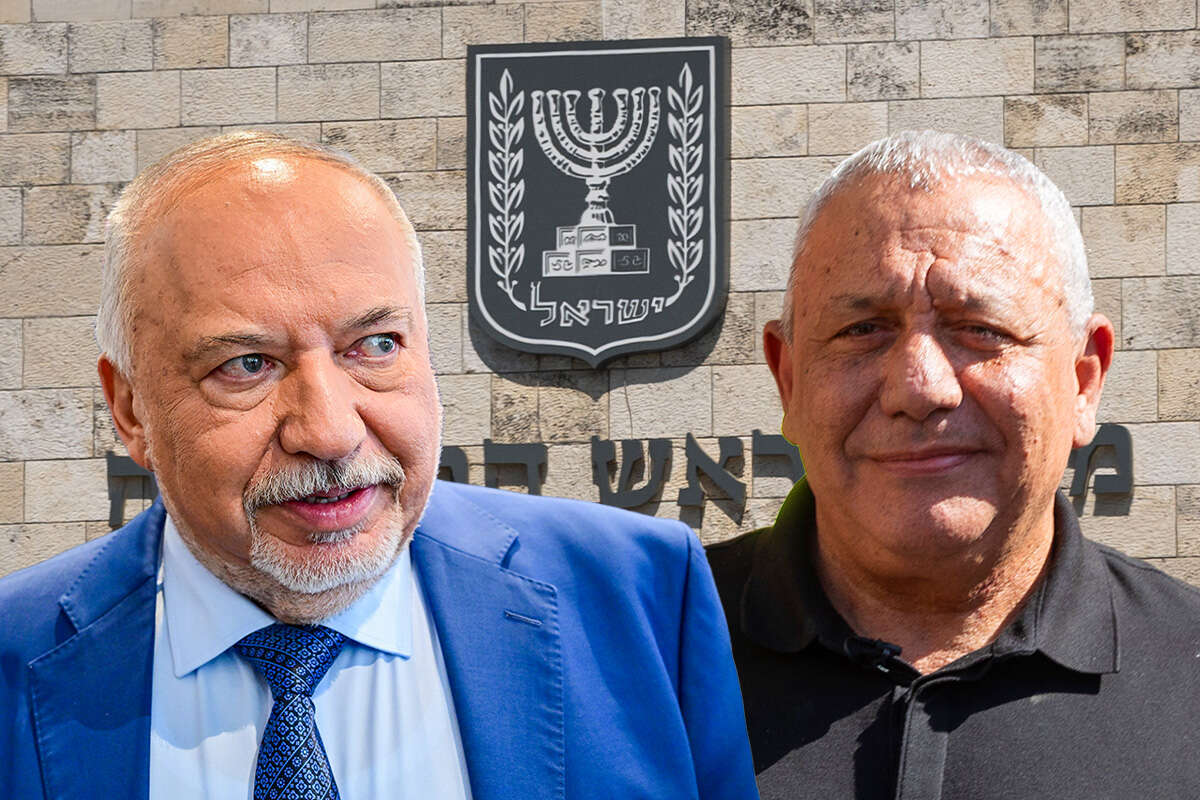
The reasoning was straightforward: Removing a sitting Knesset speaker requires a complicated procedure involving grounds of conduct unbecoming the office, a complaint backed by at least 61 Knesset members and a majority of 90 members in the plenum. It is difficult to imagine Eisenkot and Prime Minister Benjamin Netanyahu forming a unity government with a hostile Knesset speaker who could effectively paralyze its work.
That is why the change bloc floated the idea of appointing one of the party leaders as speaker, on the assumption that the appointee would voluntarily resign once a government was formed, allowing a new speaker to be elected. This would prevent a situation in which a speaker chosen during coalition negotiations remained in office even after a government with a different political composition took power.
A unity government is hardly a realistic option for Eisenkot at this stage, particularly after Netanyahu once again reaffirmed his commitment to his right-wing bloc partners and rejected a rotation agreement for the premiership.
Nevertheless, responding to Netanyahu's call for unity over the weekend, Yashar! made clear that Likud could join an Eisenkot-led government if it broke its alliance with those the party described as "extremists" and accepted "Gadi Eisenkot's four principles."
The mere possibility of forming a unity government therefore gives Eisenkot another bargaining chip in his dealings with Lieberman. If the Yisrael Beytenu chairman blocks the formation of an Eisenkot-led government and demands the premiership for himself, a scenario Lieberman emphatically denies intending to pursue, Eisenkot could threaten to turn to a unity government that would leave Lieberman in the opposition.

The Lieberman enigma
Lieberman himself rejected claims that he was motivated by personal ambitions to become prime minister. "I am not acting out of personal ambition to become prime minister at any cost. As far as I'm concerned, it's an option, not an obsession," he said Sunday.
According to Lieberman, his willingness to reach understandings with the ultra-Orthodox parties is intended to prevent another election and bring Netanyahu's rule to an end, without compromising his principles on military conscription. He also expressed willingness to consider different versions of a conscription law, including the 2018 proposal, subject to adjustments necessitated by the events of Oct. 7, 2023.
Lieberman says his insistence on bringing the ultra-Orthodox parties into the coalition stems from the conditions he has set for supporting a government: It must command a parliamentary majority without relying on Arab parties.
Eisenkot, by contrast, would prefer to swear in a government within days, based on the parties of the change bloc, with outside support from Ra'am, the Islamist Arab party, and the Joint List abstaining from the vote.Lieberman is firmly opposed to that arrangement.
His opposition extends beyond forming a government dependent on Ra'am. In response to a question from Israel Hayom, he made clear that he also rules out cooperating with the party in the Knesset, even before a government is formed. According to the same report, Naftali Bennett also opposes a minority government behind the scenes.
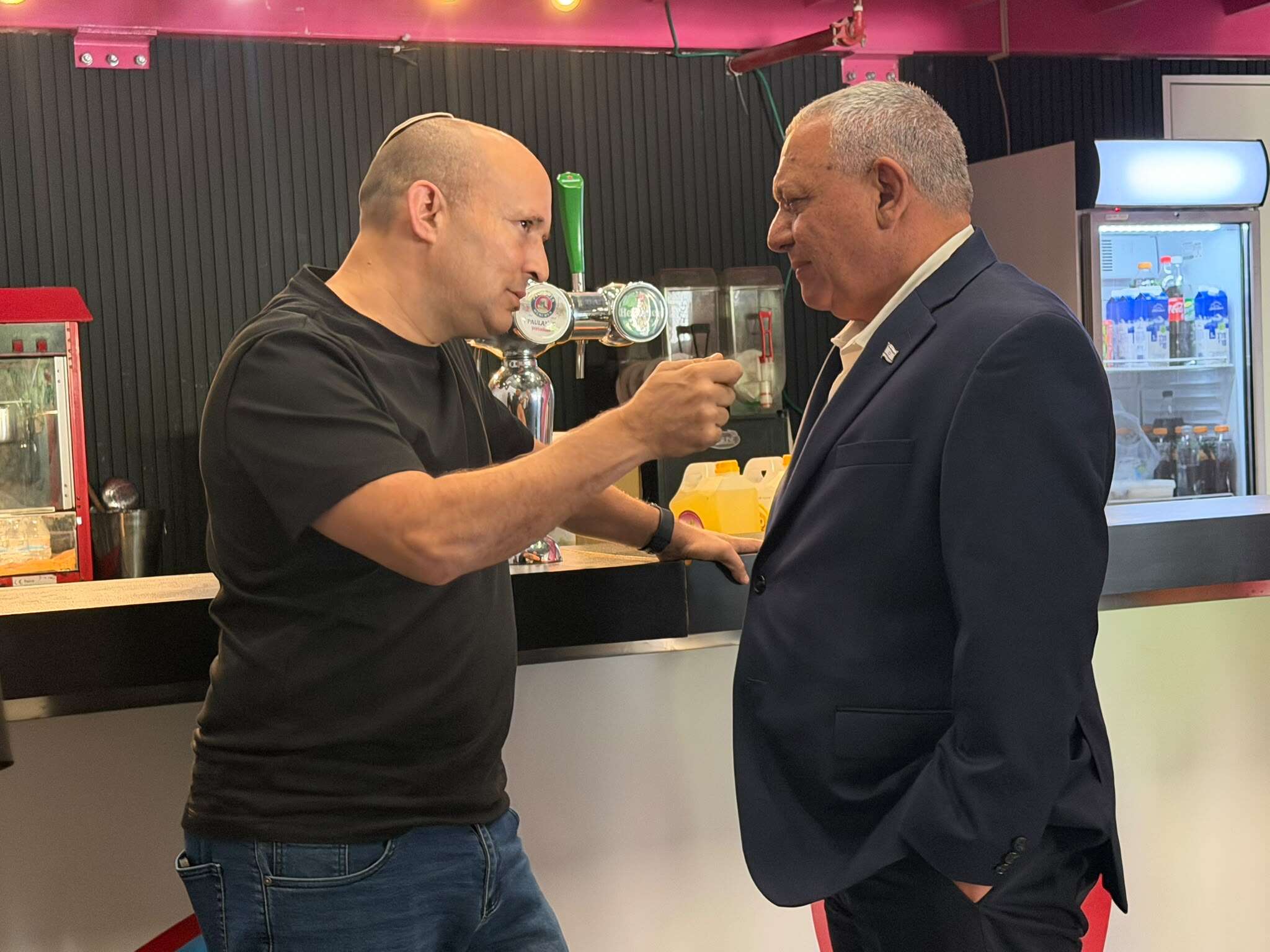
Within the change bloc, politicians are still trying to determine whether Lieberman's position is driven by personal ambition or by a principled stance he intends to maintain to the bitter end. For now, no one seems able to solve the Lieberman puzzle.
Eisenkot, for his part, is open to cooperation with the ultra-Orthodox parties. But whatever contacts are taking place are being conducted through indirect channels and remain at a very preliminary stage.
Over the next 40 days, Eisenkot will have to decide which path to pursue in forming a government. He managed to force Lieberman's hand in the battle over the Knesset speakership. The decisive question is whether he can do so again in the fight over the makeup of the government.