Israel Hayom is a media organization founded on the belief that the Israeli public deserves better journalism—more balanced, more accurate, and more reliable. Journalism that speaks rather than shouts. Journalism that is trustworthy, objective, and matter-of-fact. A different kind of journalism, offered free of charge. The first print edition was published on July 30, 2007, and in 2010 Israel Hayom became the Israeli newspaper with the highest weekday readership. The newspaper’s publisher is Dr. Miriam Adelson. Its Editor-in-Chief is Omar Lachmanovitch, and its founding editor is Amos Regev. Israel Hayom’s Hebrew and English websites, as well as its Android and iOS applications, provide around-the-clock news coverage, exclusive content, breaking news and updates, analysis and commentary, video, podcasts, and live broadcasts. The digital platforms of Israel Hayom include news and opinion channels covering culture and entertainment, lifestyle, technology, sports, business and consumer affairs, health, military affairs, food, Judaism, tourism, and automobiles. In 2021, a new Hebrew-language website and mobile application were launched to provide users with a fast, up-to-date, secure, and convenient experience. The content of the newspaper’s print edition is also available online through a daily digital edition and can be received via newsletter. “The Israel Hayom Clique,” the publication’s exclusive benefits club, offers website users discounts and special promotions on products and services. Israel Hayom welcomes feedback, criticism, and suggestions for improvement from its readers. You can contact the organization by email at hayom@israelhayom.co.il

Monday Jul 20, 2026
NEWSLETTER
www.israelhayom.com
  • Home
  • News
    • Israel
    • Israel at War
    • Middle East
    • United States
  • Opinions
  • Jewish World
    • Archaeology
    • Antisemitism
  • Lifestyle
    • Food
    • Travel
    • Fashion
    • Culture
  • Magazine
    • Feature
    • Analysis
    • Explainer
  • In Memoriam
www.israelhayom.com
  • Home
  • News
    • Israel
    • Israel at War
    • Middle East
    • United States
  • Opinions
  • Jewish World
    • Archaeology
    • Antisemitism
  • Lifestyle
    • Food
    • Travel
    • Fashion
    • Culture
  • Magazine
    • Feature
    • Analysis
    • Explainer
  • In Memoriam
www.israelhayom.com
Home News Middle East

Does Islamic State still pose a threat?

In Syria, its fighters still hold out in the remote desert area near the road from Damascus to Deir al-Zor.

by  Reuters and Israel Hayom Staff
Published on  02-21-2019 00:00
Last modified: 06-03-2019 08:13
Does Islamic State still pose a threat?

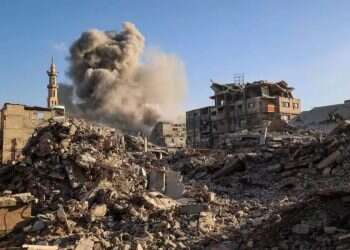
This image grab taken from a propaganda video released on July 5

Share on FacebookShare on Twitter

What has the territorial defeat accomplished?

Islamic State's possession of land in Iraq and Syria set it apart from other like-minded groups such as al-Qaida and became central to its mission when it declared a caliphate in 2014, claiming sovereignty over all Muslim lands and peoples.

Destroying the quasi-state it built there denies the group its most potent propaganda and recruiting tool as well as a logistical base from which to train fighters and plan coordinated attacks overseas.

It also freed its former subjects from summary executions and draconian punishment for breaking its strict laws or, for some minorities, sexual slavery and slaughter.

Warfare wiped out thousands of its fighters. And, financially, its defeat deprives it of greater resources than any modern jihadist movement has enjoyed, including taxes on its inhabitants and the proceeds of oil sales.

What threat does Islamic State still pose in Iraq and Syria?

In its previous guise as an al-Qaida offshoot in Iraq a decade ago, it navigated adversity by going underground, biding its time to rise suddenly again.

Since suffering devastating territorial losses in 2017, ISIS has steadily turned again to such tactics. Sleeper cells in Iraq have staged a scatter-gun campaign of kidnappings and killings to undermine the Baghdad government.

The group has also carried out many bombings in northeast Syria, which is controlled by U.S.-backed Kurdish forces, including one that killed four Americans in January. Kurdish and U.S. officials say its threat there persists.

In Syria, its fighters still hold out in the remote desert area near the road from Damascus to Deir al-Zor.

What has happened to its leaders, fighters and followers?

The fate of its leader, Abu Bakr al-Baghdadi, remains a mystery. The U.S. government's top experts strongly believe he is alive and possibly hiding in Iraq, U.S. sources recently said. Other top-echelon leaders have been killed in air strikes.

Thousands of its fighters and civilian followers have also been killed and thousands more captured. An unknown number remain at large in both Syria and Iraq.

Iraq is putting on trial, imprisoning and often executing Islamic State detainees. The U.S.-backed Syrian Democratic Forces (SDF) holds around 800 foreign fighters. More than 2,000 Islamic State wives and children are in its hands too. Many low-level local operatives have been released in Syria.

The SDF complains that Western states are reluctant to take back the foreign fighters, who are widely seen as a security threat at home but who might be hard to legally prosecute.

Can it still organize or inspire attacks overseas?

As Islamic State clung to its last scrap of land, the head of Britain's spy agency MI6 warned that the group would return to "asymmetric" attacks.

Even after it began losing ground militarily, the group still claimed responsibility for attacks made in different countries, though often these have been blamed on "lone wolves" without its direction.

It started years ago to call on followers abroad to plan their own attacks, rather than focusing purely on ones staged by trained operatives supported by the group's hierarchy.

In early 2018, the head of U.S. military central command said Islamic State was resilient and remained capable of "inspiring attacks throughout the region and outside of the Middle East."

What does its fall mean for the future of global jihad?

Although Islamic State's core territory was in Iraq and Syria, jihadists fighting in other countries, notably Nigeria, Yemen and Afghanistan, pledged their allegiance to it.

Whether those groups will still wear its mantle, especially if Baghdadi is captured or killed, is an open question, but there seems little chance they will soon end their campaigns.

Al-Qaida also retains numerous franchises around the world and other militant Islamist groups operate in countries where normal governance has broken down.

Jihadist ideology has long proven itself able to mutate as circumstances change, and there is no shortage of warfare, injustice, oppression, poverty, sectarianism and naked religious hatred for it to exploit.


Tags: al-QaidaIslamic StateU.S.

Related Posts

Iran and Houthis coordinate responses to potential Israeli-US strikesEPA/YAHYA ARHAB

Houthis declare naval blockade against Saudi Arabia

by Shachar Kleiman

Yemen's Iran-backed group threatens wider escalation as pro-government forces reinforce key battlefronts.

'Iran is playing its last cards'

'Iran is playing its last cards'

by Shachar Kleiman

Even as Tehran continues firing missiles and issuing threats, Gulf states believe the Iranian regime is losing regional influence, as...

Trump vows US response after Iran downs Apache helicopter over Strait of Hormuz

US-Iran escalation appears inevitable

by Neta Bar

Kuwait says it intercepted Iranian drones and ballistic missiles after another night of US strikes as Tehran threatens: “US troops...

Menu

Analysis 

Archaeology

Blogpost

Business & Finance

Culture

Exclusive

Explainer

Environment


Features

Health

In Brief

Jewish World

Judea and Samaria

Lifestyle

Cyber & Internet

Sports


Diplomacy 

Iran & The Gulf

Gaza Strip

Politics

Shopping

Terms of use

Privacy Policy

Submissions

Contact Us

About Us

The first issue of Israel Hayom appeared on July 30, 2007. Israel Hayom was founded on the belief that the Israeli public deserves better, more balanced and more accurate journalism. Journalism that speaks, not shouts. Journalism of a different kind. And free of charge.

All rights reserved to Israel Hayom

Hosted by sPD.co.il

  • Home
  • News
    • Israel at War
    • Israel
    • United States
    • Middle East
    • Sports
  • Opinions
  • Jewish World
    • Archaeology
    • Antisemitism
  • Lifestyle
    • Food
    • Travel
    • Fashion
    • Culture
  • Magazine
    • Feature
    • Analysis
    • Explainer
    • Environment & Wildlife
    • Health & Wellness
  • In Memoriam
  • Subscribe to Newsletter
  • Submit your opinion
  • Terms and conditions

All rights reserved to Israel Hayom

Hosted by sPD.co.il

Newsletter

[contact-form-7 id=”508379″ html_id=”isrh_form_Newsletter_en” title=”newsletter_subscribe”]

  • Home
  • News
    • Israel at War
    • Israel
    • United States
    • Middle East
    • Sports
  • Opinions
  • Jewish World
    • Archaeology
    • Antisemitism
  • Lifestyle
    • Food
    • Travel
    • Fashion
    • Culture
  • Magazine
    • Feature
    • Analysis
    • Explainer
    • Environment & Wildlife
    • Health & Wellness
  • In Memoriam
  • Subscribe to Newsletter
  • Submit your opinion
  • Terms and conditions

All rights reserved to Israel Hayom

Hosted by sPD.co.il