Israel Hayom is a media organization founded on the belief that the Israeli public deserves better journalism—more balanced, more accurate, and more reliable. Journalism that speaks rather than shouts. Journalism that is trustworthy, objective, and matter-of-fact. A different kind of journalism, offered free of charge. The first print edition was published on July 30, 2007, and in 2010 Israel Hayom became the Israeli newspaper with the highest weekday readership. The newspaper’s publisher is Dr. Miriam Adelson. Its Editor-in-Chief is Omar Lachmanovitch, and its founding editor is Amos Regev. Israel Hayom’s Hebrew and English websites, as well as its Android and iOS applications, provide around-the-clock news coverage, exclusive content, breaking news and updates, analysis and commentary, video, podcasts, and live broadcasts. The digital platforms of Israel Hayom include news and opinion channels covering culture and entertainment, lifestyle, technology, sports, business and consumer affairs, health, military affairs, food, Judaism, tourism, and automobiles. In 2021, a new Hebrew-language website and mobile application were launched to provide users with a fast, up-to-date, secure, and convenient experience. The content of the newspaper’s print edition is also available online through a daily digital edition and can be received via newsletter. “The Israel Hayom Clique,” the publication’s exclusive benefits club, offers website users discounts and special promotions on products and services. Israel Hayom welcomes feedback, criticism, and suggestions for improvement from its readers. You can contact the organization by email at hayom@israelhayom.co.il

Saturday Aug 8, 2026
NEWSLETTER
www.israelhayom.com
  • Home
  • News
    • Israel
    • Israel at War
    • Middle East
    • United States
  • Opinions
  • Jewish World
    • Archaeology
    • Antisemitism
  • Lifestyle
    • Food
    • Travel
    • Fashion
    • Culture
  • Magazine
    • Feature
    • Analysis
    • Explainer
  • In Memoriam
www.israelhayom.com
  • Home
  • News
    • Israel
    • Israel at War
    • Middle East
    • United States
  • Opinions
  • Jewish World
    • Archaeology
    • Antisemitism
  • Lifestyle
    • Food
    • Travel
    • Fashion
    • Culture
  • Magazine
    • Feature
    • Analysis
    • Explainer
  • In Memoriam
www.israelhayom.com
Home Jewish World

In Morocco, tiny Jewish community grapples with virus

There have been many funerals as the coronavirus, in its early days in Morocco, hit a Jewish community that is a shadow of what it once was numerically.

by  AP
Published on  06-05-2020 12:00
Last modified: 06-05-2020 11:24
In Morocco, tiny Jewish community grapples with virusAP/Mosa'ab Elshamy

A view inside the David Hemelekh Synagogue, which has been closed since the outbreak of Coronavirus, in Casablanca, Morocco, Thursday, May 28, 2020 | Photo: AP/Mosa'ab Elshamy

Share on FacebookShare on Twitter

When the phone rang on the second day of Passover, Chabad-Lubavitch Rabbi Levi Banon figured it must be an emergency.

Electronic devices were prohibited during the holiday. Any call must be urgent. It was.

Rabbi Sholom Eidelman, his godfather and a long-time Jewish leader in the Muslim country of Morocco, had died after contracting the coronavirus. It was the second virus death in as many days, Banon said. Once again, he left home to perform the funeral.

Follow Israel Hayom on Facebook and Twitter

There have been many funerals as the coronavirus – in its early days in Morocco – hit a Jewish community that is a shadow of what it once was numerically.

"There's a lot of old people in the community," said Banon. "That made it very alarming."

Some days have brought news of more than one coronavirus-related death, he said. One funeral, broadcast over zoom, had two caskets – the deceased, unrelated in life, united in death, both struck down by the virus.

At one point Banon hosted two kids until their parents were released from the hospital. At another, he comforted a young man after his father died while his mother was hospitalized.

"We've been hit very badly because we're a family and now we're all working very, very hard to stay confined and to stay separate," Banon said.
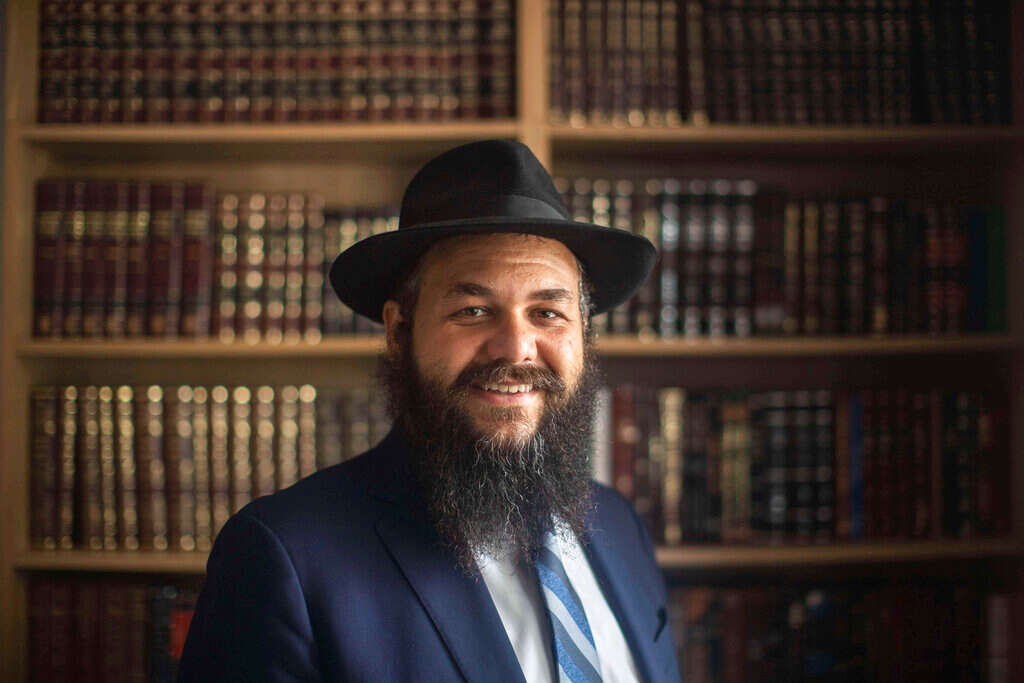
Rabbi Levi Banon poses for a portrait in his home in Casablanca, Morocco, Thursday (AP/Mosa'ab Elshamy)

Serge Berdugo, head of the Council of the Jewish Communities of Morocco, said 12 community members died in the country between late March and late April after contracting the virus. That's nearly six percent of the 206 coronavirus-related deaths that Morocco, a country of about 36 million, announced as of June 2.

Like many Muslim majority Arab countries with once-flourishing Jewish communities, the number of Jews in Morocco has dwindled. Roy Mittelman, director of the Jewish studies program at The City College of New York estimates it is about 1,500 today, mostly in the city of Casablanca. Berdugo put the figure at around 2,500.

Jewish presence in Morocco dates back at least two millennia, with a large wave of arrivals later as a result of the Spanish Inquisition, Mittelman said. The community numbered around 270,000 before the 1948 creation of Israel and waves of departures spurred by geopolitical tensions, Arab-Israeli wars and periods of uncertainty, he said.

In Casablanca, the community that remains is vibrant. The city boasts about 15 functioning synagogues and five kosher restaurants, said Berdugo, an ambassador at-large for Morocco's king.

Officials and community leaders tout Jewish life in Morocco as a model for Jewish-Muslim co-existence and a testament to Morocco embracing a diverse heritage. They point to renovations of Jewish sites – which attract tourists and others – and a constitutional recognition since 2011 of "Hebraic" influences.

While "moments of tension" can be sparked by Middle East conflicts, they tend to blow over quickly, said Vanessa Paloma Elbaz, a University of Cambridge research associate who has also been collecting oral histories of Moroccan Jews.

In Rabat, David Toledano, president of Rabat's Jewish community of about 100 people, said he lost a "close friend" and a "pillar of the community" in Rabat to the virus.

The man ran Rabat's only kosher restaurant, performed Jewish burial rites and helped at the synagogue, often calling others to make sure they show up for services, he said.

"He loved to sing and he loved to lead," he said. "The loss is heavy."

Why the virus has pummelled the community early on is open to debate.

Subscribe to Israel Hayom's daily newsletter and never miss our top stories!

Berdugo said he believed infections started at a Jewish wedding in the south which had people coming from France. Days later, a Purim gathering at a Casablanca synagogue, attended by some guests from the wedding, likely helped spread the virus, he said.

Banon rejects theories that any one event could have spread infections.

At a different Purim celebration organized by Jeunesse Chabad of Morocco of which Banon is the director, revelers decked out in costumes for the occasion donned gloves as they danced, he said. Alcohol gels were given out and people stayed "more spread out than usual" in a "very spacious and very airy" tent, he said.

The gathering was held before Morocco announced later in March a health emergency, restricting movement across the country, and attracted about 400 to 500 people, Banon said. "We took all the precautions."

The virus cast a grim pall over Passover.

Ordinarily, Toledano hosts young Americans in Morocco to learn Arabic for the holiday. This year, he spent it alone with his wife. Like many in the community, his children left to study abroad and have since started new lives there.

In Casablanca, Rabbi Jacquy Sebag spent Passover at a hotel after he was released from a hospital where he was treated for the virus. In his solitude, he reflected. The bottom line, he said, is to understand that "only the almighty God is driving and leading His world," and "to do the best we can do for others; it doesn't matter Jewish or non-Jewish."

Passover was on Rabbi Eidelman's mind. He wanted to ensure that the holiday staple known as "shmurah matzah" was brought in time from France, Banon said.

Born in Soviet Russia, Eidelman had been in Morocco since 1958 as an emissary for Chabad-Lubavitch, an Orthodox Jewish Hasidic movement.
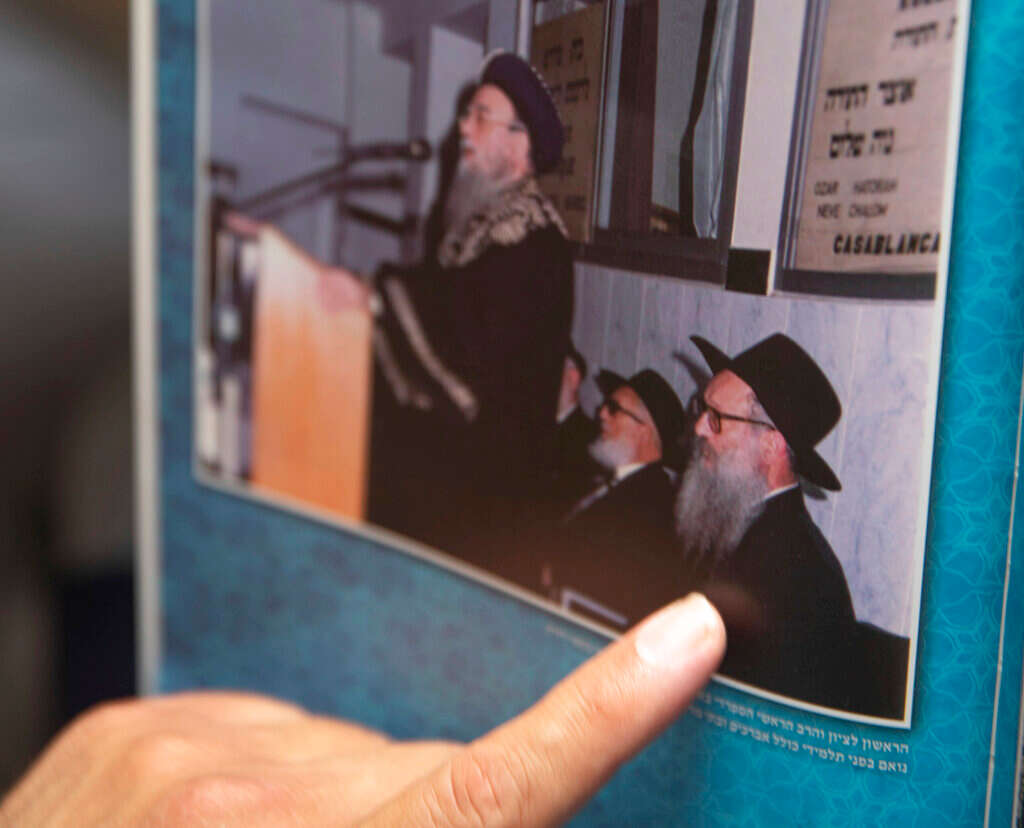
Rabbi Levi Banon points at a photo showing Rabbi Sholom Eidelman who recently died after contracting the coronavirus (AP/Mosa'ab Elshamy)

For his work mentoring and training others – from rabbis to rabbinical judges to kosher slaughterers – Eidelman became known among students as "the rabbi of rabbis," Banon said.

"Chief rabbis of... different countries and rabbis of a lot of different communities around the world are his pupils," he said. "He spent his time working and giving the credit to others." There are three Lubavitch households in Morocco, Banon said, including his and Eidelman's.

Amid the loss, Banon takes heart in the solidarity of the tight-knit community.

"We are grieving right now and we're hoping for better days."

Tags: Chabad-LubavitchCoronavirusJewish communityMorocco

Related Posts

'Bondi was my Oct. 7': Jewish influencers on a mission to change how the world sees IsraelMasa Israel Journey

'Bondi was my Oct. 7': Jewish influencers on a mission to change how the world sees Israel

by Adi Nirman

Despite ongoing regional tensions, a delegation of Jewish content creators came to Israel, trading hasbara for authentic personal stories.

Beyond the rabbi's wife: The unsung women shaping European JewryRobert Gongoll

Beyond the rabbi's wife: The unsung women shaping European Jewry

by Adi Nirman

Rabbanits and leaders in European Jewish communities face unvoiced challenges that every woman can relate to, as a four-year-old Conference...

New kinnah added to Tisha B'Av liturgy commemorating Oct. 7Oren Ben Hakoon

Tisha B'Av 2026: Start and end times across Israel

by Assaf Golan

The Tisha B’Av fast will begin on Wednesday evening and continue until Thursday evening, on the ninth of Av, July...

Menu

Analysis 

Archaeology

Blogpost

Business & Finance

Culture

Exclusive

Explainer

Environment


Features

Health

In Brief

Jewish World

Judea and Samaria

Lifestyle

Cyber & Internet

Sports


Diplomacy 

Iran & The Gulf

Gaza Strip

Politics

Shopping

Terms of use

Privacy Policy

Submissions

Contact Us

About Us

The first issue of Israel Hayom appeared on July 30, 2007. Israel Hayom was founded on the belief that the Israeli public deserves better, more balanced and more accurate journalism. Journalism that speaks, not shouts. Journalism of a different kind. And free of charge.

All rights reserved to Israel Hayom

Hosted by sPD.co.il

  • Home
  • News
    • Israel at War
    • Israel
    • United States
    • Middle East
    • Sports
  • Opinions
  • Jewish World
    • Archaeology
    • Antisemitism
  • Lifestyle
    • Food
    • Travel
    • Fashion
    • Culture
  • Magazine
    • Feature
    • Analysis
    • Explainer
    • Environment & Wildlife
    • Health & Wellness
  • In Memoriam
  • Subscribe to Newsletter
  • Submit your opinion
  • Terms and conditions

All rights reserved to Israel Hayom

Hosted by sPD.co.il

Newsletter

[contact-form-7 id=”508379″ html_id=”isrh_form_Newsletter_en” title=”newsletter_subscribe”]

  • Home
  • News
    • Israel at War
    • Israel
    • United States
    • Middle East
    • Sports
  • Opinions
  • Jewish World
    • Archaeology
    • Antisemitism
  • Lifestyle
    • Food
    • Travel
    • Fashion
    • Culture
  • Magazine
    • Feature
    • Analysis
    • Explainer
    • Environment & Wildlife
    • Health & Wellness
  • In Memoriam
  • Subscribe to Newsletter
  • Submit your opinion
  • Terms and conditions

All rights reserved to Israel Hayom

Hosted by sPD.co.il